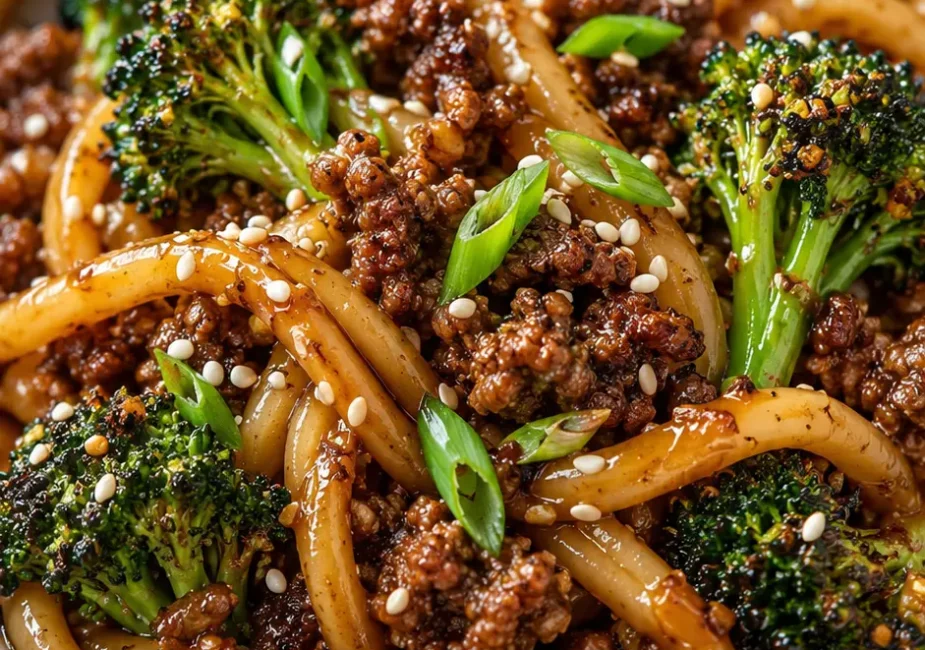
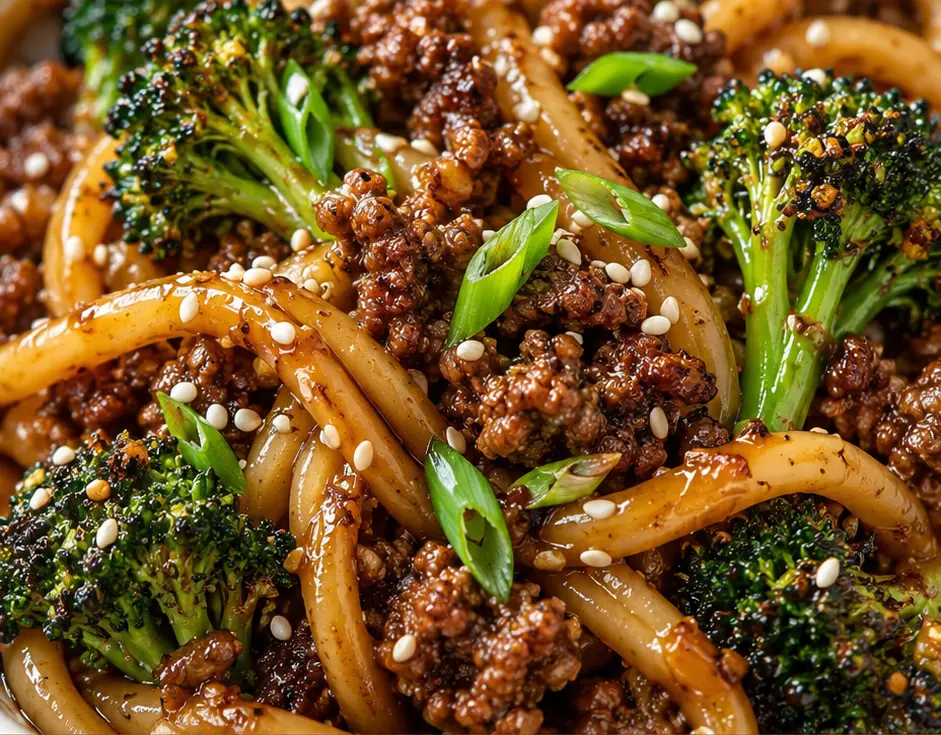
Some nights you don’t want a recipe. You want a plan something that uses what’s already thawed in the fridge and doesn’t ask you to dirty four pans to get there. That’s this dish.
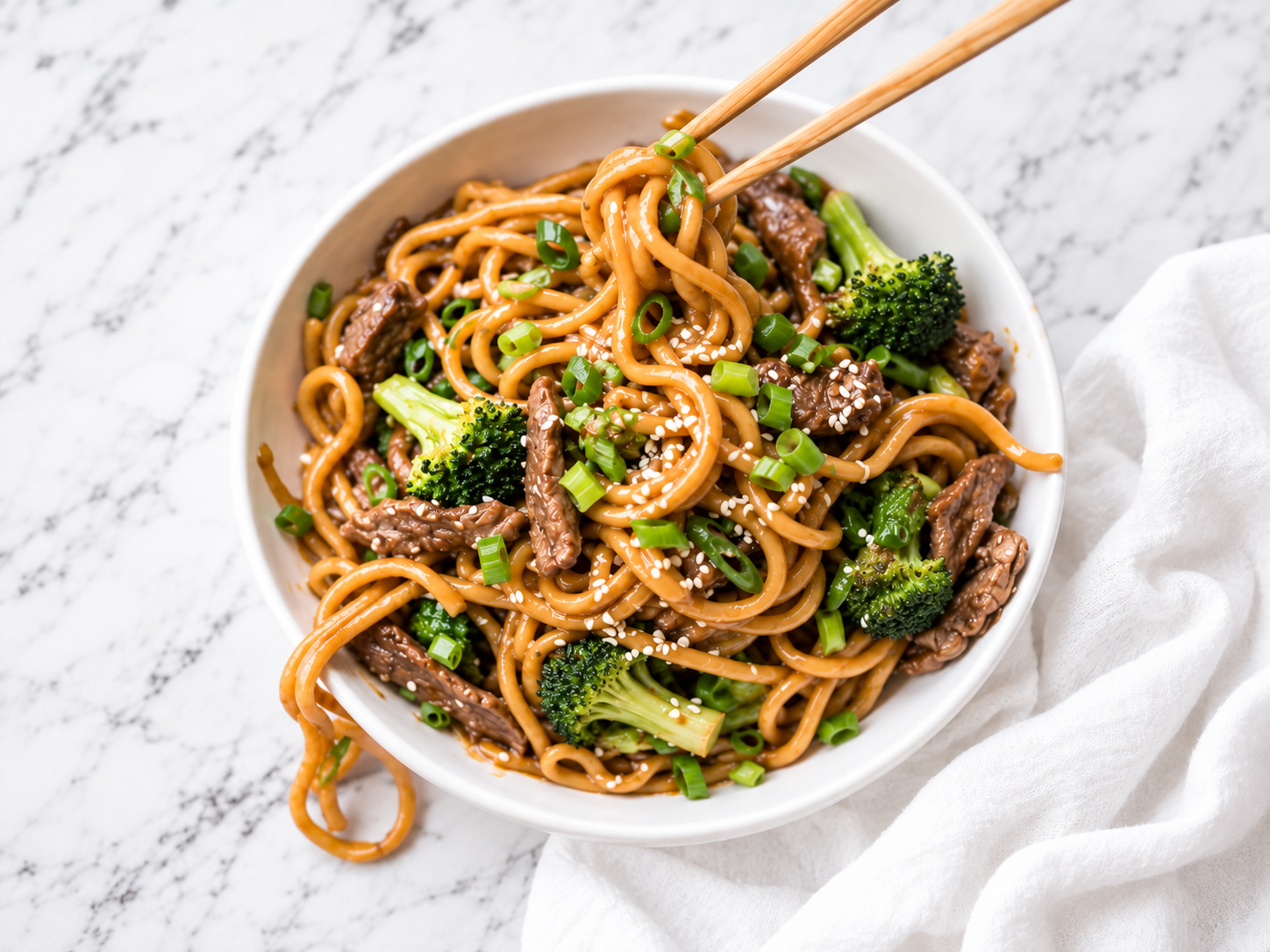
Ground beef browns fast, broccoli cooks in minutes, and a sticky garlic-ginger sauce ties the whole thing together over noodles in the time it takes water to boil twice. It’s the kind of dinner that tastes like you tried harder than you did. Here’s how it comes together.
Why You’ll Love This Recipe
- One skillet, minimal cleanup. Everything except the noodles cooks in a single pan, so there’s less standing at the sink afterward.
- Ground beef instead of steak strips means no slicing against the grain, no tenderizing just a hot pan and about six minutes.
- The broccoli actually stays crisp-tender. Most versions of this dish turn the broccoli either raw-crunchy or gray and mushy. Cooking it in two separate stages (more on that below) fixes that.
- Pantry-friendly sauce. Soy sauce, oyster sauce, a little brown sugar, and cornstarch no specialty bottles required.
- Budget-stretching. One pound of ground beef feeds four people when it’s built out with noodles and vegetables, which makes this noticeably cheaper per serving than a beef-and-broccoli takeout order.
- Kid-approved without being bland. The sauce is savory-sweet rather than spicy, so it’s an easy sell for picky eaters, and you can add chili flakes at the table for anyone who wants heat.
Recipe At a Glance
- Prep time: 10 minutes
- Cook time: 15 minutes
- Total time: 25 minutes
- Servings: 4
- Estimated nutrition per serving (based on standard wheat noodles and 85/15 ground beef): ~480 calories, 27g protein, 46g carbohydrates, 19g fat. These are estimates only exact numbers will shift depending on the noodles and beef fat content you use.
Ingredients
- 1 lb ground beef (85/15 works best leaner beef can turn dry in a hot pan)
- 8 oz lo mein noodles or ramen noodles (discard the seasoning packet if using ramen)
- 3 cups broccoli florets, cut small so they cook quickly
- 4 cloves garlic, minced
- 1 tablespoon fresh ginger, minced (or 1 teaspoon ground ginger in a pinch)
- 3 tablespoons soy sauce (low-sodium recommended, so you can control the salt level yourself)
- 2 tablespoons oyster sauce
- 1 tablespoon brown sugar
- 1 tablespoon cornstarch, mixed with 2 tablespoons water
- 2 tablespoons neutral oil (avocado or vegetable), divided
- 1 teaspoon sesame oil
- 2 green onions, sliced, for topping
- Sesame seeds, optional, for topping
Ingredient notes: Oyster sauce is the ingredient doing the most quiet work here it adds a savory depth that soy sauce alone can’t replicate, and there isn’t a great one-to-one substitute if you can find it. If you’re avoiding shellfish-adjacent sauces, a vegetarian “stir-fry sauce” or hoisin cut with a splash of soy will get you close.
Equipment Needed
- Large skillet or wok
- Medium pot for boiling noodles
- Small bowl for the cornstarch slurry
Step-by-Step Instructions
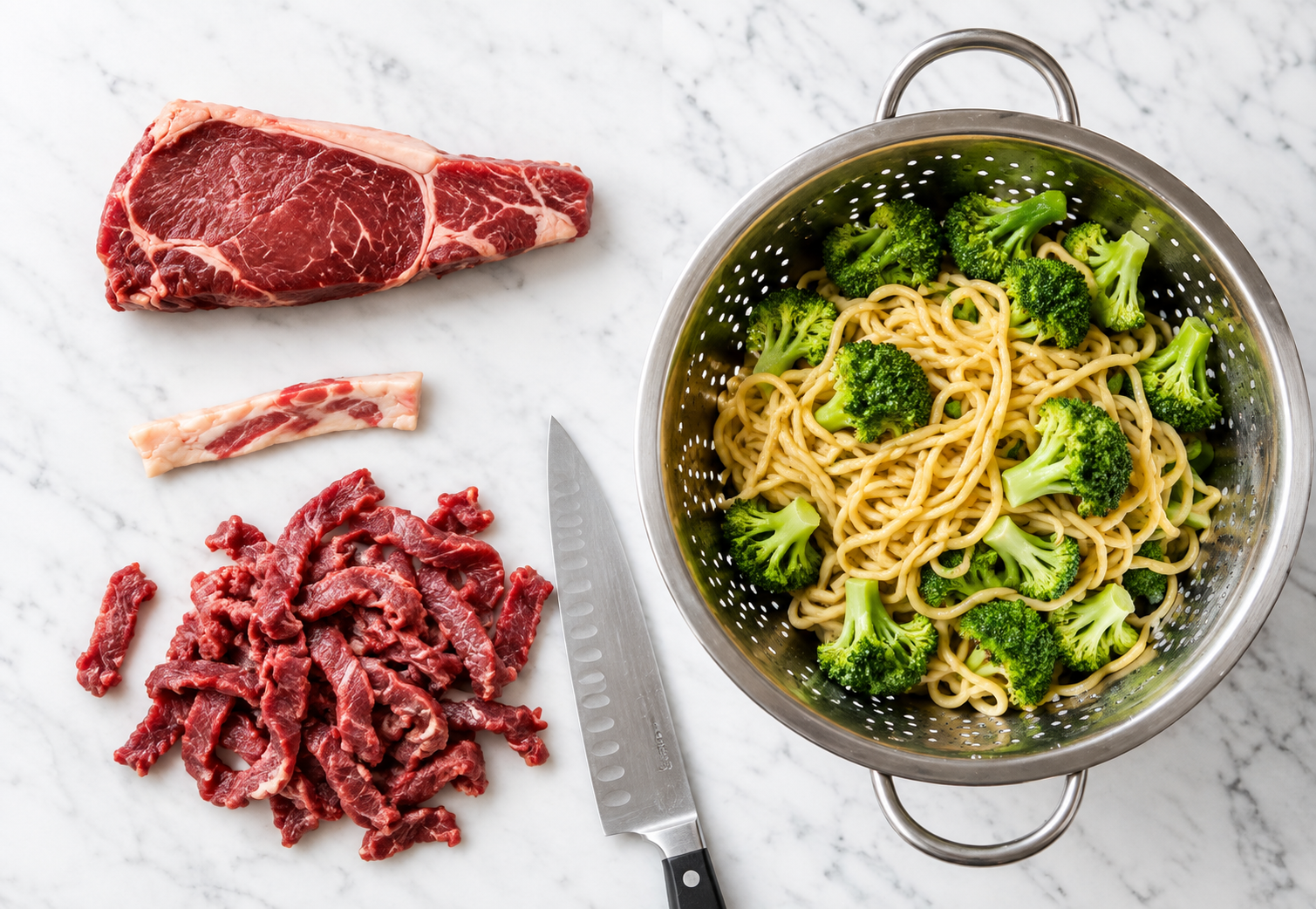
1. Cook the noodles. Boil the noodles according to the package directions, usually 3–5 minutes for fresh lo mein or ramen. Drain and set aside — don’t rinse, since a little starch on the noodles helps the sauce cling later.
2. Blanch the broccoli first, not last. While the noodles cook, bring a separate small pot of water to a boil (or use the same pot after draining noodles) and blanch the broccoli for 90 seconds, just until it turns bright green. Drain and set aside. This is the step most versions of this recipe skip, and it’s the reason the broccoli usually ends up either underdone or gray and waterlogged by the time everything else in the pan is ready a raw floret needs far longer to cook through than a browned crumble of beef does. Giving it a head start means it finishes in the sauce at exactly the same moment the beef does, instead of overcooking while you wait on the meat.
3. Brown the beef. Heat 1 tablespoon of oil in your skillet or wok over medium-high heat. Add the ground beef, breaking it up with a spatula, and cook until browned and mostly cooked through, about 5–6 minutes. Drain excess fat if there’s a lot.
4. Bloom the aromatics. Push the beef to one side of the pan (or remove it briefly if your pan is small) and add the remaining oil, garlic, and ginger. Cook for about 30 seconds until fragrant don’t walk away here, since garlic can go from golden to bitter in under a minute.
5. Build the sauce. Stir the soy sauce, oyster sauce, and brown sugar into the pan with the beef and garlic. Give the cornstarch slurry a quick re-stir (it settles fast) and pour it in. Simmer for about 1 minute, stirring, until the sauce visibly thickens and coats the back of a spoon.
6. Bring it all together. Add the blanched broccoli and cooked noodles to the pan. Toss everything together until the noodles are glossy and evenly coated — tongs make this easier than a spatula. Drizzle in the sesame oil and give it one final toss off the heat, since sesame oil loses its aroma if it cooks too long.
7. Serve. Top with sliced green onions and sesame seeds if using. Serve immediately, while the noodles are still glossy and hot.
Common Mistakes to Avoid
- Adding raw broccoli straight into the pan with everything else. It won’t cook through in time, so you end up with crunchy-raw florets next to fully cooked beef. Blanch it separately first (see Step 2).
- Skipping the cornstarch slurry. Without it, the sauce stays thin and mostly slides off the noodles instead of coating them.
- Overcrowding the pan when browning the beef. A too-full pan steams instead of sears, and you lose the browned flavor that makes the sauce taste deeper.
- Rinsing the noodles after boiling. It feels like the tidy move, but it washes away the starch that helps the sauce grip the noodles instead of pooling at the bottom of the bowl.
- Adding the sesame oil too early. It’s a finishing oil, not a cooking oil — its flavor cooks off if it hits the pan too soon.
How to Store & Reheat
Refrigerator: Store in an airtight container for up to 4 days.
Freezer: This dish freezes reasonably well for up to 2 months, though the noodles will soften slightly on thawing. Freeze in a flat, sealed container or bag for faster thawing.
Reheat: Add a splash of water or broth to loosen the sauce, then reheat in a skillet over medium heat for 3–4 minutes, stirring occasionally, or in the microwave in 30-second bursts. The splash of liquid matters reheating dry noodles straight in the microwave tends to make them clump.
Recipe Variations & Substitutions
- Gluten-free: Swap in rice noodles or gluten-free lo mein, and use tamari in place of soy sauce.
- Lower-carb: Substitute the noodles for spiralized zucchini or a bag of broccoli slaw, added straight into the sauce for the last 2 minutes of cooking.
- Ground turkey or chicken: Either works in place of beef; add an extra teaspoon of oil since poultry is leaner and can stick more.
- Spicier version: Stir in 1 teaspoon of chili garlic sauce or a pinch of red pepper flakes along with the garlic and ginger.
- Extra vegetables: Sliced bell pepper, shredded carrot, or snap peas all blanch and cook similarly to the broccoli and can be added at the same stage.
- Dairy-free: This recipe is naturally dairy-free as written no substitutions needed.
A Note on Nutrition
This recipe leans on ground beef for a solid dose of protein and iron, and the broccoli adds fiber and vitamin C to round things out. Using leaner ground beef (90/10 or above) or swapping in ground turkey will lower the overall fat content if that’s something you’re watching. As always, these are general observations rather than medical guidance — check with a nutritionist or doctor for anything specific to your own dietary needs.
Frequently Asked Questions
Can I use a different noodle?
Yes spaghetti, udon, or rice noodles all work if that’s what you have. Just cook them according to their own package instructions, since timing varies quite a bit between types.
Can I make this ahead of time?
You can cook the beef and sauce a day ahead and store them separately from the noodles, then combine and reheat together before serving. Fully assembled, it keeps best for same-day or next-day eating.
Is oyster sauce necessary?
It adds a savory depth that’s hard to fully replace, but a vegetarian stir-fry sauce or a mix of hoisin and soy sauce will get you close if you don’t have it on hand.
How do I know the ground beef is fully cooked?
It should no longer be pink and should reach an internal temperature of 160°F if you’re checking with a thermometer. Visually, it will look uniformly browned with no translucent spots.
Can I use frozen broccoli?
Yes skip the blanching step and add it straight to the sauce in Step 6, letting it simmer for about 3 minutes instead of the usual 1, since frozen broccoli needs a bit longer to heat through.
What if I don’t have a wok?
Any large, sturdy skillet works fine. A wok’s sloped sides make tossing easier, but they’re not required for this recipe.
Final Thoughts
This is one of those dinners that rewards a little bit of sequencing more than it rewards any fancy ingredient blanching the broccoli before the beef even hits the pan is the small move that keeps it from turning into the sad, gray vegetable pile that so many stir-fries end up with. Everything else here is genuinely just fast and forgiving. If you give it a try, I’d love to know do you serve this one on its own, or with something on the side?
- 1 lb ground beef 85/15 works best leaner beef can turn dry in a hot pan
- 8 oz lo mein noodles or ramen noodles discard the seasoning packet if using ramen
- 3 cups broccoli florets cut small so they cook quickly
- 4 cloves garlic minced
- 1 tablespoon fresh ginger minced (or 1 teaspoon ground ginger in a pinch)
- 3 tablespoons soy sauce low-sodium recommended, so you can control the salt level yourself
- 2 tablespoons oyster sauce
- 1 tablespoon brown sugar
- 1 tablespoon cornstarch mixed with 2 tablespoons water
- 2 tablespoons neutral oil avocado or vegetable, divided
- 1 teaspoon sesame oil
- 2 green onions sliced, for topping
- Sesame seeds optional, for topping
Cook the noodles. Boil the noodles according to the package directions, usually 3–5 minutes for fresh lo mein or ramen. Drain and set aside — don’t rinse, since a little starch on the noodles helps the sauce cling later.
Blanch the broccoli first, not last. While the noodles cook, bring a separate small pot of water to a boil (or use the same pot after draining noodles) and blanch the broccoli for 90 seconds, just until it turns bright green. Drain and set aside. This is the step most versions of this recipe skip, and it’s the reason the broccoli usually ends up either underdone or gray and waterlogged by the time everything else in the pan is ready a raw floret needs far longer to cook through than a browned crumble of beef does. Giving it a head start means it finishes in the sauce at exactly the same moment the beef does, instead of overcooking while you wait on the meat.
Brown the beef. Heat 1 tablespoon of oil in your skillet or wok over medium-high heat. Add the ground beef, breaking it up with a spatula, and cook until browned and mostly cooked through, about 5–6 minutes. Drain excess fat if there’s a lot.
Bloom the aromatics. Push the beef to one side of the pan (or remove it briefly if your pan is small) and add the remaining oil, garlic, and ginger. Cook for about 30 seconds until fragrant don’t walk away here, since garlic can go from golden to bitter in under a minute.
Build the sauce. Stir the soy sauce, oyster sauce, and brown sugar into the pan with the beef and garlic. Give the cornstarch slurry a quick re-stir (it settles fast) and pour it in. Simmer for about 1 minute, stirring, until the sauce visibly thickens and coats the back of a spoon.
Bring it all together. Add the blanched broccoli and cooked noodles to the pan. Toss everything together until the noodles are glossy and evenly coated — tongs make this easier than a spatula. Drizzle in the sesame oil and give it one final toss off the heat, since sesame oil loses its aroma if it cooks too long.
Serve. Top with sliced green onions and sesame seeds if using. Serve immediately, while the noodles are still glossy and hot.
Easy Ground Beef & Broccoli Noodles
Last modified: September 18, 2026