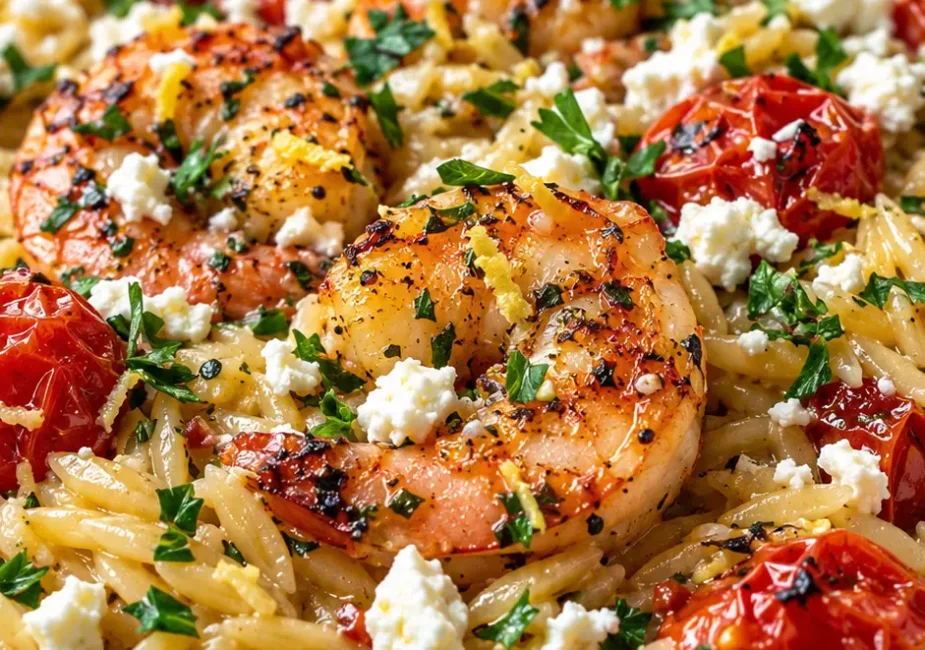
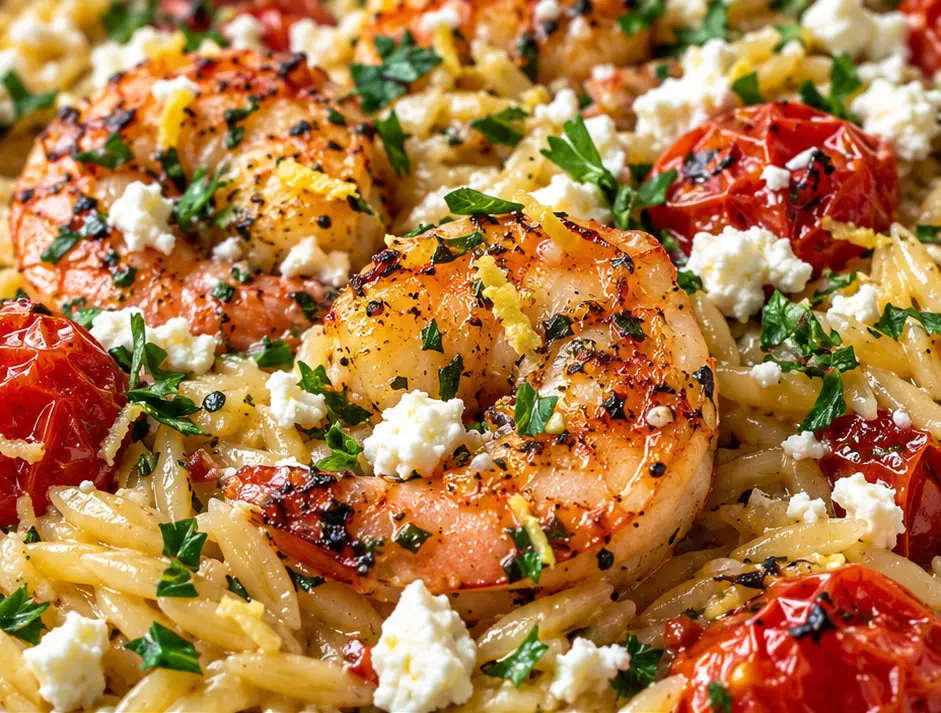
Orzo looks like rice, but it behaves like pasta, and that one detail is the reason this dish works as well as it does. It releases starch as it cooks the same way risotto or a big pot of spaghetti water does, which means the liquid around it slowly turns thick and clingy instead of staying thin and separate.
Melt a block of feta into that starchy liquid at the end and you get something that looks and eats like a cream sauce without a drop of cream anywhere near it. Shrimp cooks fast enough to fit right into the same pan. Here’s how it comes together.
Why You’ll Love It
- Creamy texture with no cream, milk, or roux the feta and the orzo’s own starch do all the work.
- One wide skillet, start to finish. Using a shallow pan instead of a deep pot is a bigger deal than it sounds like more on that in the instructions.
- Ready in about 25 minutes, including both the orzo and the shrimp.
- Bright, lemon-forward flavor that doesn’t need a long ingredient list to taste finished.
- Naturally a complete meal protein, starch, and vegetables all in the same pan.
- Reheats better than most creamy pastas, since there’s no actual dairy sauce to break in the microwave.
Recipe At a Glance
- Prep time: 10 minutes
- Cook time: 15 minutes
- Total time: 25 minutes
- Servings: 4
- Estimated nutrition per serving: ~460 calories, 28g protein, 44g carbohydrates, 18g fat. Estimates only — your feta quantity and shrimp size will shift these numbers.
Ingredients
- 1 lb large shrimp, peeled and deveined
- 1 tablespoon olive oil, plus more for the shrimp
- 3 cloves garlic, minced
- 1 pint cherry tomatoes, halved
- 1½ cups dry orzo
- 3 cups low-sodium chicken or vegetable broth
- 4 oz feta cheese, in one block (not crumbled see notes)
- Zest and juice of 1 lemon
- ½ teaspoon dried oregano
- Salt and black pepper, to taste
- 2 tablespoons fresh dill or parsley, chopped, for topping
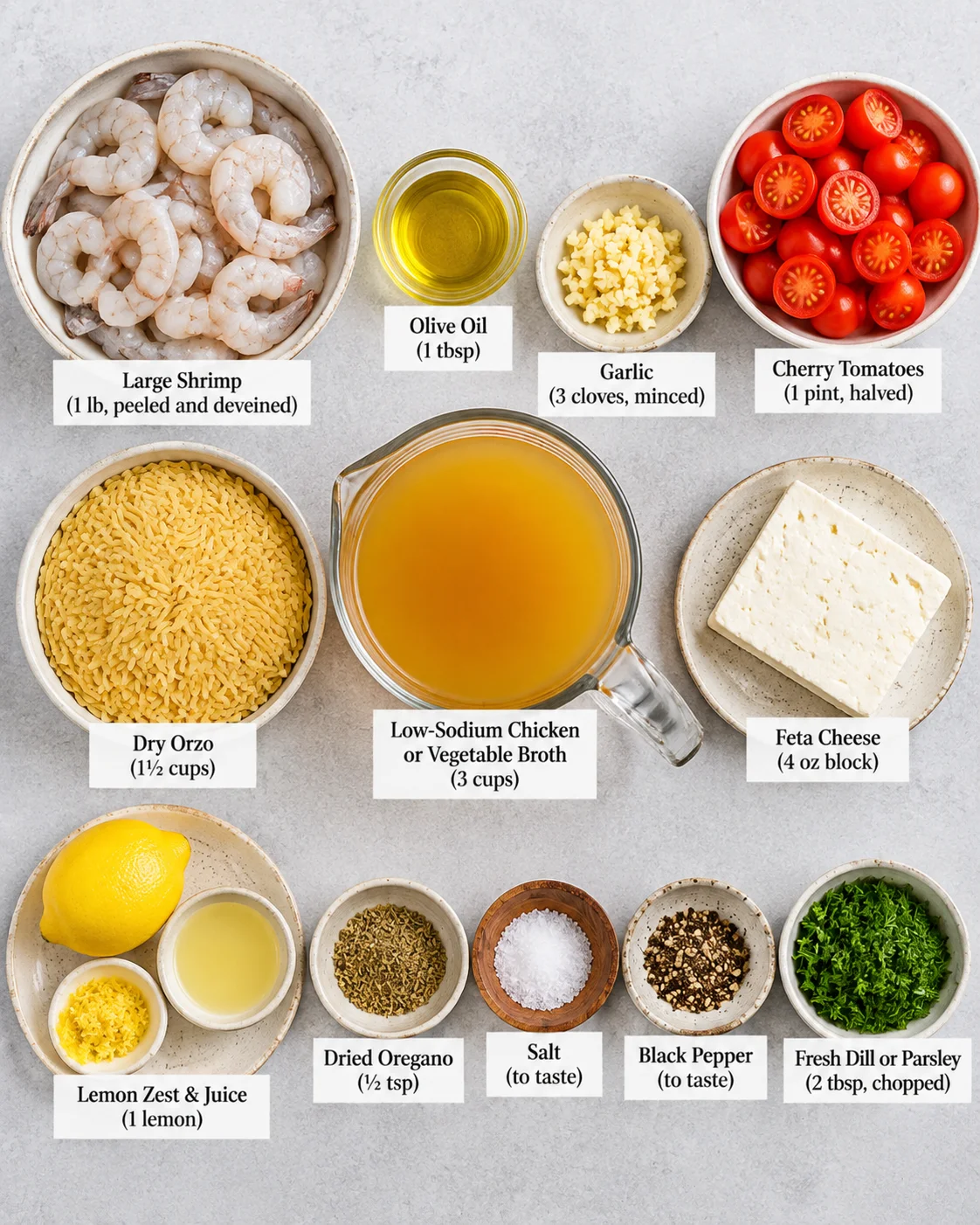
Ingredient notes: Buy feta as a solid block, not pre-crumbled. Pre-crumbled feta is coated with anti-caking starch that keeps it from melting smoothly into the orzo, so you end up with grainy bits instead of a cohesive sauce. A block also lets you nestle it directly into the pan, which matters for how the dish comes together.
Equipment Needed
- Large, wide, shallow skillet with a lid (avoid a deep pot for this one see below)
- Wooden spoon or silicone spatula
- Zester or fine grater
Step-by-Step Instructions
1. Sear the shrimp first. Heat 1 tablespoon of olive oil in your skillet over medium-high heat. Add the shrimp in a single layer and cook for about 90 seconds per side, until pink and just opaque. Remove to a plate they’ll finish cooking gently later, so slightly underdone here is fine.
2. Use a wide skillet, not a deep pot, for the orzo. In the same skillet, add the garlic and cook for 30 seconds until fragrant, then add the cherry tomatoes and cook for 2 minutes until they start to soften. Add the dry orzo and toast it in the pan for about 1 minute, stirring, until lightly golden in spots. The width of the pan matters here more than it seems like it should: a wide, shallow skillet spreads the orzo into a thin layer with most of it touching the hot surface directly, which cooks it evenly and helps it release starch into the liquid consistently. A narrow, deep pot stacks the orzo several layers thick, so the top barely touches the broth while the bottom scorches the same reason risotto is never made in a tall pot.
3. Add the broth and simmer. Pour in the broth and stir once. Bring to a simmer, then reduce the heat to medium-low, cover, and cook for 9–10 minutes, stirring once or twice, until the orzo is tender and most of the liquid has been absorbed into a thick, starchy base.
4. Melt in the feta. Nestle the block of feta into the center of the orzo and let it sit, covered, for 2–3 minutes to soften. Pro tip: once it’s soft, stir it directly into the orzo rather than trying to break it up first it melts into a smoother sauce this way than if you crumble it in cold.
5. Finish the sauce. Stir in the lemon zest, lemon juice, and oregano, along with the softened feta, until everything comes together into a creamy, cohesive sauce. Season with salt and pepper to taste feta is salty, so hold off adding much salt until this point.
6. Return the shrimp. Nestle the seared shrimp back into the orzo and let everything warm through together for 1–2 minutes over low heat.
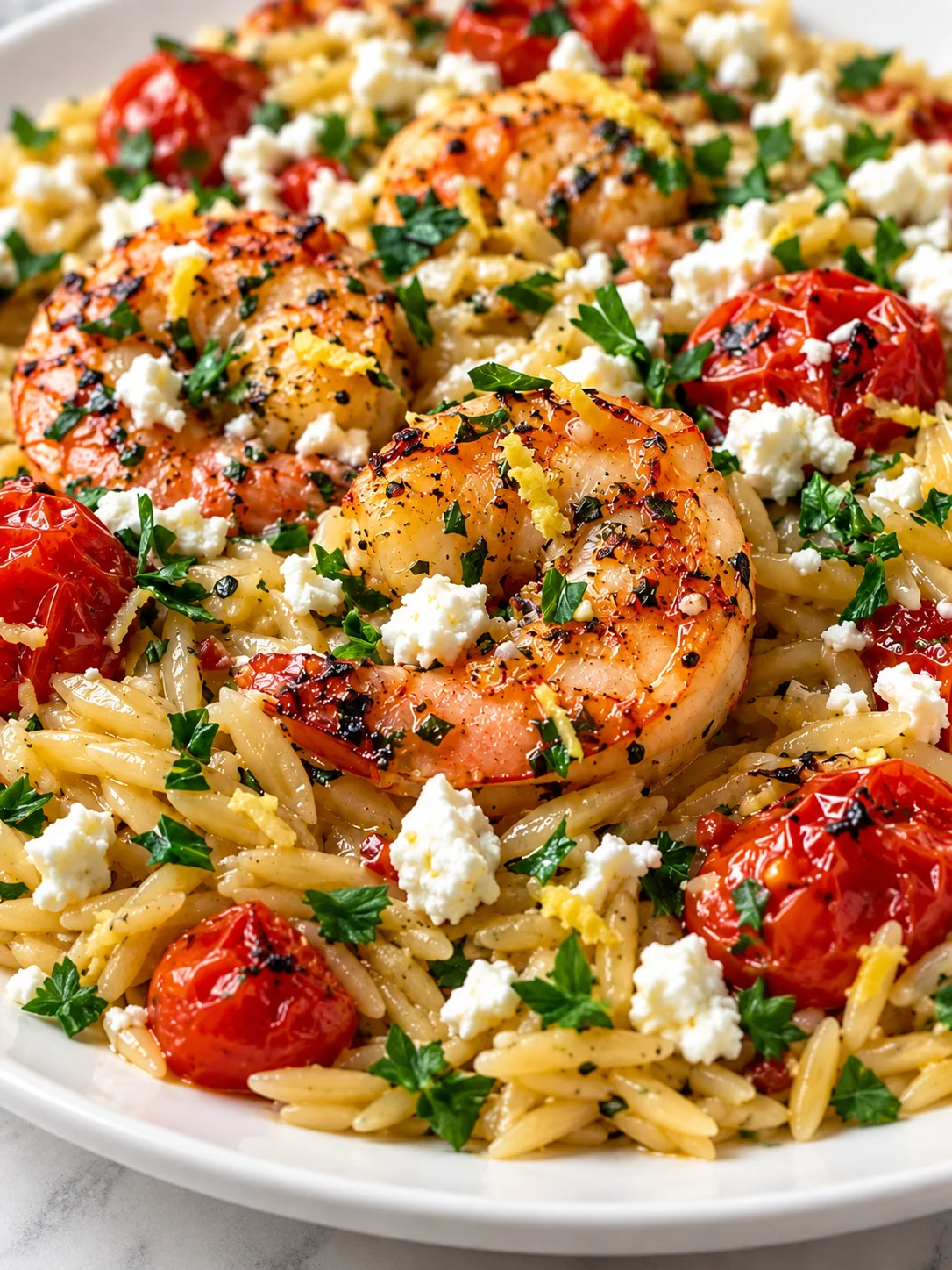
7. Serve. Top with fresh dill or parsley and serve immediately while the sauce is still glossy and warm.
Common Mistakes to Avoid
- Using a deep pot instead of a wide skillet. This is the specific reason homemade orzo sometimes turns out with a scorched bottom and undercooked top layer a wide pan spreads it out for even cooking.
- Using pre-crumbled feta. The anti-caking coating keeps it from melting into a smooth sauce, leaving grainy bits instead.
- Overcooking the shrimp in the initial sear. They finish cooking again at the end, so pulling them slightly underdone the first time prevents rubbery shrimp later.
- Adding salt before the feta. Feta brings a lot of salt on its own, and seasoning too early often leads to an oversalted dish.
- Skipping the toast step for the orzo. Toasting it briefly before adding liquid deepens the flavor and helps it hold its shape better than orzo added straight to cold liquid.
How to Store & Reheat
Refrigerator: Store in an airtight container for up to 3 days.
Freezer: This isn’t an ideal candidate for freezing the orzo’s texture softens significantly on thawing but it will hold for about a month if needed.
Reheat: Add a splash of broth or water and reheat gently in a skillet over medium-low heat for 3–4 minutes, stirring, until the sauce loosens back up. Microwaving works in 30-second bursts, though the stovetop keeps the texture more like the original.
Recipe Variations & Substitutions
- Spicier version: Add ½ teaspoon of red pepper flakes along with the garlic for a subtle kick throughout.
- Gluten-free: Use a gluten-free orzo or small pasta shape; cooking time may vary slightly, so check the package directions.
- Chicken version: Swap the shrimp for diced chicken breast or thighs, searing first the same way and cooking a bit longer to ensure it’s cooked through.
- Extra vegetables: Stir in a couple handfuls of baby spinach right after adding the feta it wilts in the residual heat.
- Dairy-free: This one’s tricky since feta is central to the sauce, but a firm dairy-free feta alternative can get you reasonably close.
- Herb swap: Basil or mint work well in place of dill if you want a different fresh, herbal note.
A Note on Nutrition
This dish leans on shrimp for lean protein, while feta contributes calcium and a good amount of the dish’s overall flavor without needing extra sauce ingredients. If you’re watching sodium, feta and broth both contribute meaningfully, so a low-sodium broth is worth prioritizing here. As always, these are general observations rather than medical advice check with a nutritionist or doctor for anything specific to your own needs.
Frequently Asked Questions
Can I use a different pasta shape instead of orzo?
Small shapes like ditalini or pastina work similarly, though cooking times and liquid ratios may need slight adjustment since they absorb liquid a little differently than orzo.
Do I really need a wide skillet?
It makes a meaningful difference in how evenly the orzo cooks, since a deep pot stacks it too thick for even heat contact. If a wide skillet isn’t available, a wide sauté pan or even a large, shallow Dutch oven will work similarly.
Can I make this ahead of time?
It’s best fresh, since the orzo continues absorbing liquid the longer it sits and can turn thicker or stickier over time. If you need to prep ahead, slightly undercook the orzo and finish it with extra broth when reheating.
Why did my sauce turn grainy instead of creamy?
This is almost always from using pre-crumbled feta, whose anti-caking coating resists melting smoothly. A block of feta melted in gradually gives a much smoother result.
Can I use frozen shrimp?
Yes thaw it completely and pat it dry before searing, since excess moisture will make it harder to get any color on the shrimp in Step 1.
What can I substitute for chicken broth?
Vegetable broth works well for a vegetarian-friendly version (aside from the shrimp), and in a pinch, water with a little extra salt will work, though the flavor will be noticeably less rich.
Final Thoughts
The wide skillet is doing more work here than it gets credit for it’s the difference between orzo that cooks evenly into a creamy, cohesive dish and orzo that scorches on the bottom before the top layer’s even close to done. Everything else about this one is genuinely just quick, bright, and simple. Are you adding any heat to yours, or keeping it mild?
- 1 lb large shrimp peeled and deveined
- 1 tablespoon olive oil plus more for the shrimp
- 3 cloves garlic minced
- 1 pint cherry tomatoes halved
- 1½ cups dry orzo
- 3 cups low-sodium chicken or vegetable broth
- 4 oz feta cheese in one block (not crumbled see notes)
- Zest and juice of 1 lemon
- ½ teaspoon dried oregano
- Salt and black pepper to taste
- 2 tablespoons fresh dill or parsley chopped, for topping
Large, wide, shallow skillet with a lid (avoid a deep pot for this one see below)
Wooden spoon or silicone spatula
Zester or fine grater
Sear the shrimp first. Heat 1 tablespoon of olive oil in your skillet over medium-high heat. Add the shrimp in a single layer and cook for about 90 seconds per side, until pink and just opaque. Remove to a plate they’ll finish cooking gently later, so slightly underdone here is fine.
Use a wide skillet, not a deep pot, for the orzo. In the same skillet, add the garlic and cook for 30 seconds until fragrant, then add the cherry tomatoes and cook for 2 minutes until they start to soften. Add the dry orzo and toast it in the pan for about 1 minute, stirring, until lightly golden in spots. The width of the pan matters here more than it seems like it should: a wide, shallow skillet spreads the orzo into a thin layer with most of it touching the hot surface directly, which cooks it evenly and helps it release starch into the liquid consistently. A narrow, deep pot stacks the orzo several layers thick, so the top barely touches the broth while the bottom scorches the same reason risotto is never made in a tall pot.
Add the broth and simmer. Pour in the broth and stir once. Bring to a simmer, then reduce the heat to medium-low, cover, and cook for 9–10 minutes, stirring once or twice, until the orzo is tender and most of the liquid has been absorbed into a thick, starchy base.
Melt in the feta. Nestle the block of feta into the center of the orzo and let it sit, covered, for 2–3 minutes to soften. Pro tip: once it’s soft, stir it directly into the orzo rather than trying to break it up first it melts into a smoother sauce this way than if you crumble it in cold.
Finish the sauce. Stir in the lemon zest, lemon juice, and oregano, along with the softened feta, until everything comes together into a creamy, cohesive sauce. Season with salt and pepper to taste feta is salty, so hold off adding much salt until this point.
Return the shrimp. Nestle the seared shrimp back into the orzo and let everything warm through together for 1–2 minutes over low heat.
Serve. Top with fresh dill or parsley and serve immediately while the sauce is still glossy and warm.
One-Pan Lemon Feta Shrimp Orzo
Last modified: September 26, 2026