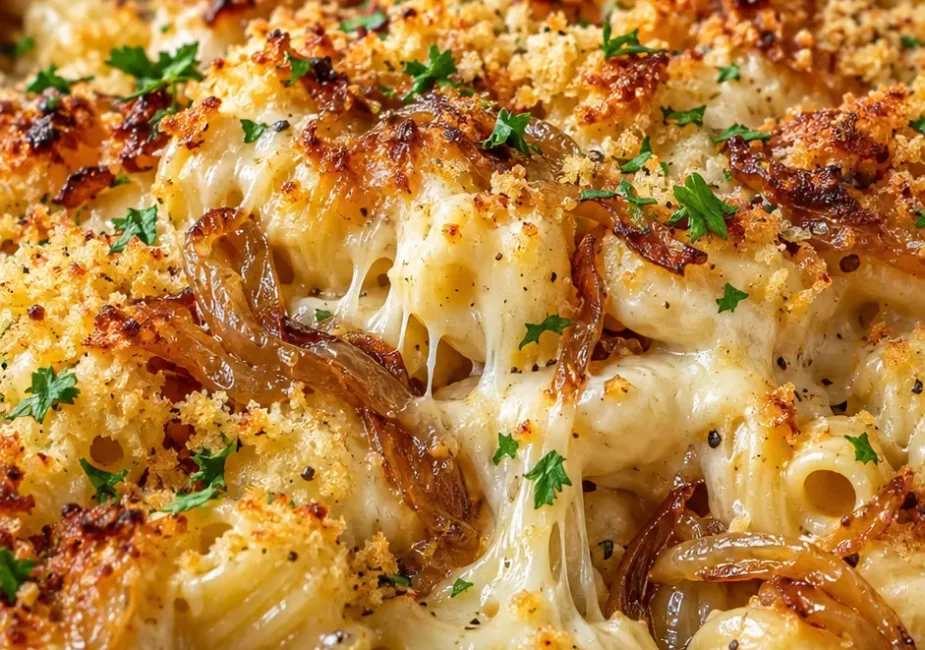
Most homemade French onion anything tastes thinner than it should, and it’s almost never the broth’s fault. It’s the onions specifically, how long someone actually let them cook before deciding they were “caramelized enough” and moving on to the next step.
Real caramelization takes patience most weeknight cooking doesn’t allow for, which is exactly why so many versions of this dish taste more like onion-flavored broth than the deep, almost sweet richness the real thing has. Skip the shortcut here and the payoff is obvious. Here’s how it comes together.
Why You’ll Love It
- All the flavor of French onion soup, baked into a pasta dish instead of served as a starter.
- Deeply caramelized onions, not just softened ones the difference in flavor is significant, and the technique for getting there is covered step by step below.
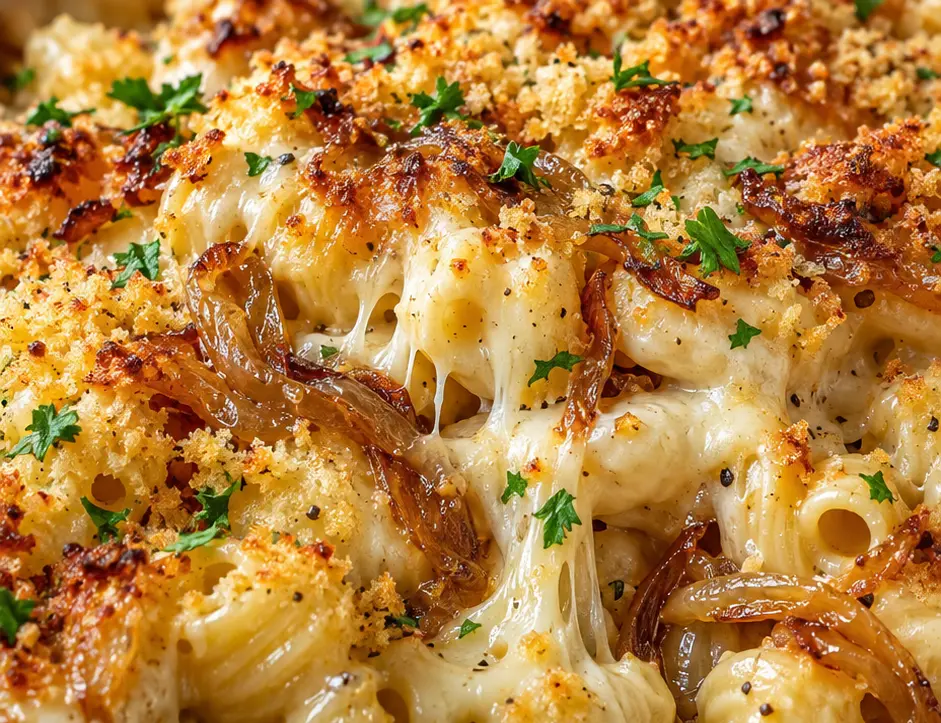
- Melted Gruyère on top, the same broiled-cheese finish that makes French onion soup so craveable.
- One dish, minimal extra cookware beyond the pot you caramelize the onions in.
- Rich, savory depth from beef broth and a splash of Worcestershire, without needing a long ingredient list.
- Genuinely impressive for a weeknight dinner, despite being mostly hands-off once the onions get going.
Recipe At a Glance
- Prep time: 15 minutes
- Cook time: 55 minutes (most of it hands-off onion caramelizing)
- Total time: 70 minutes
- Servings: 6
- Estimated nutrition per serving: ~470 calories, 20g protein, 48g carbohydrates, 20g fat. These are estimates only and will shift depending on your cheese quantity and pasta shape.
Ingredients
- 3 large yellow onions, thinly sliced
- 3 tablespoons butter
- 1 tablespoon olive oil
- ½ teaspoon salt, plus more to taste
- 2 cloves garlic, minced
- 1 tablespoon all-purpose flour
- 3 cups beef broth
- 1 tablespoon Worcestershire sauce
- 1 teaspoon fresh thyme leaves (or ½ teaspoon dried)
- 12 oz short pasta, such as rigatoni or campanelle
- 2 cups shredded Gruyère, divided
- ½ cup grated parmesan
- Black pepper, to taste
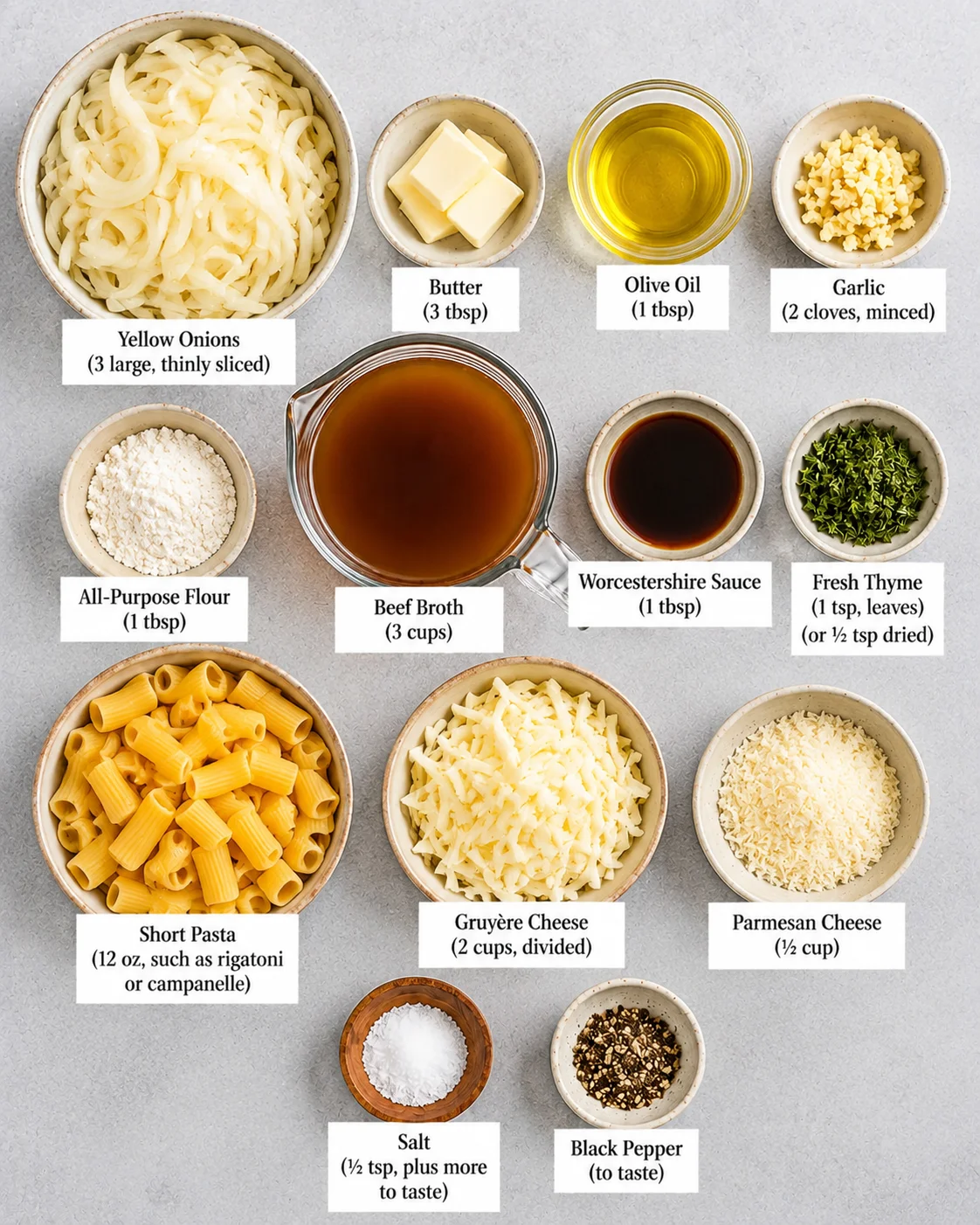
Ingredient notes: Yellow onions are the right choice here they have the right balance of sugar and moisture to caramelize properly, whereas red onions turn a strange color and sweet onions can go mushy before they develop real color. For the cheese, Gruyère melts with the same nutty, stretchy quality that makes classic French onion soup so good; provolone is a reasonable substitute if Gruyère isn’t available, though the flavor will be milder.
Equipment Needed
- Large, heavy-bottomed pot or Dutch oven
- 9×13-inch baking dish
- Wooden spoon
Step-by-Step Instructions
1. Start the onions, and don’t rush them. Melt the butter with the olive oil in a large pot over medium heat. Add the sliced onions and the ½ teaspoon salt, stirring to coat. Cook, stirring occasionally, for 35 to 40 minutes, until the onions are a deep golden-brown, jammy, and significantly reduced in volume. This is the step most versions of this dish shortcut, and it’s the reason they end up tasting thin: real caramelization is a slow breakdown of the onion’s natural sugars, and it simply can’t be rushed by turning up the heat doing so just browns the outside while the inside stays raw and sharp-tasting. If the onions start sticking or browning too fast, lower the heat and add a splash of water to loosen the pan instead of speeding through it.
2. Add the garlic and flour. Once the onions are deeply caramelized, stir in the garlic and cook for 30 seconds until fragrant. Sprinkle in the flour and stir constantly for about 1 minute, until it’s fully absorbed and no longer looks raw or powdery.
3. Build the broth. Gradually pour in the beef broth, stirring constantly to work out any lumps from the flour. Add the Worcestershire sauce and thyme, then bring to a simmer and cook for 5 minutes, until slightly thickened.
4. Cook the pasta separately. While the broth simmers, cook the pasta in salted boiling water until just shy of al dente about 2 minutes less than the package directs, since it’ll finish cooking in the oven. Drain and set aside.
5. Combine and season. Preheat the oven to 400°F. Stir the drained pasta into the onion broth mixture along with half the Gruyère. Taste and season with salt and pepper as needed. Pro tip: taste it here before it goes in the oven baking will concentrate the flavors further, so it’s easier to catch an under-seasoned batch now than after it’s baked.
6. Transfer and top. Pour the pasta mixture into a greased 9×13-inch baking dish and spread evenly. Top with the remaining Gruyère and the parmesan.
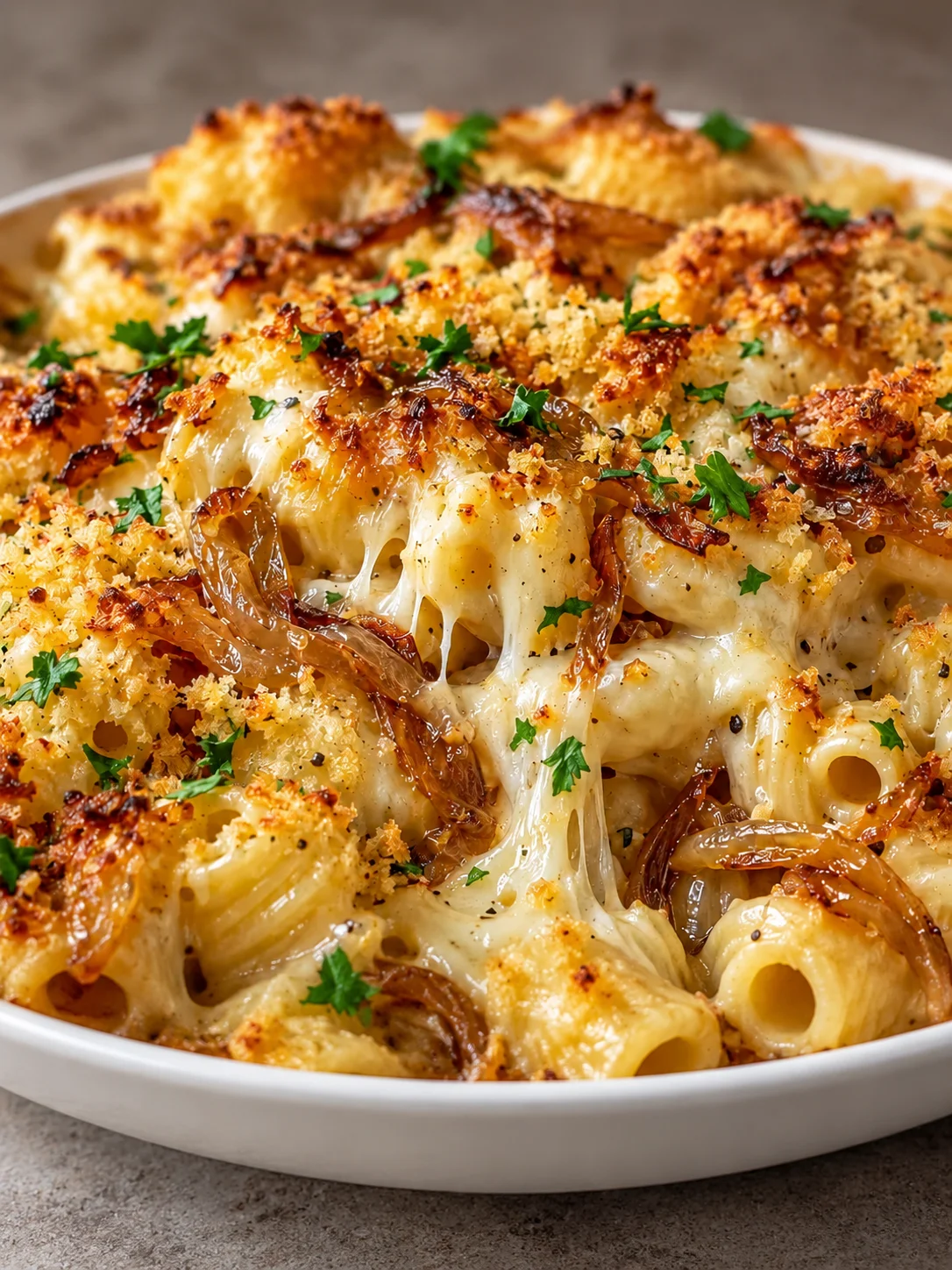
7. Bake. Bake for 15–18 minutes, until the cheese is fully melted and the edges are bubbling. For a deeply golden, slightly blistered top like a true French onion soup finish, switch to broil for the last 1–2 minutes, watching closely so it doesn’t burn.
8. Serve. Let the dish rest for 5 minutes before serving, since the sauce continues to thicken slightly as it cools.
Common Mistakes to Avoid
- Rushing the caramelization by turning up the heat. This is the exact mistake that leaves the onions browned on the outside but still sharp and undercooked in flavor patience at medium heat is what actually gets you there.
- Skipping the flour step. Without it, the sauce stays thin and won’t cling to the pasta the way a properly thickened French onion base should.
- Overcooking the pasta before baking. It continues cooking in the oven, so fully al dente pasta going in often turns mushy by the time it comes out.
- Using red or sweet onions instead of yellow. They don’t caramelize the same way and can throw off both the color and the texture of the finished sauce.
- Skipping the broil step. Without it, the cheese melts but doesn’t get that deeply golden, slightly blistered top that makes this dish feel like the soup it’s inspired by.
How to Store & Reheat
Refrigerator: Store in an airtight container for up to 4 days.
Freezer: This dish freezes reasonably well for up to 2 months, though the pasta’s texture softens slightly on thawing.
Reheat: Reheat individual portions in the microwave in 45-second bursts, or cover with foil and warm in a 350°F oven for about 15 minutes. Add a splash of broth if the sauce has thickened too much in the fridge.
Recipe Variations & Substitutions
- Vegetarian: Swap the beef broth for a rich mushroom or vegetable broth; the caramelized onions still carry most of the flavor.
- Gluten-free: Use a gluten-free flour blend for the roux and a gluten-free pasta shape.
- Add protein: Stir in shredded rotisserie chicken or cooked ground beef along with the pasta for a heartier version.
- Different cheese: Provolone or a mix of mozzarella and parmesan work if Gruyère isn’t available, though the flavor will be a bit milder.
- Extra herby: Add a bay leaf to the broth while it simmers for a slightly deeper, more classic French onion soup flavor.
- Lower-carb: Swap the pasta for a lower-carb short pasta alternative; the onion sauce holds up well on its own with less starch to carry.
A Note on Nutrition
This dish leans on the beef broth and cheese for protein and richness, with caramelized onions contributing a meaningful amount of flavor without needing extra salt or fat to compensate. Using a lower-sodium broth gives you more control over the final saltiness, since Gruyère and parmesan already bring a fair amount on their own. As always, these are general observations rather than medical advice a nutritionist or doctor is the right resource for anything specific to your own needs.
Frequently Asked Questions
How do I know when the onions are caramelized enough?
They should be a deep golden-brown, almost mahogany in spots, and noticeably reduced in volume soft, jammy, and sweet-smelling rather than just softened and translucent. If they still look pale or raw, they need more time.
Can I speed up the caramelization process?
Not without sacrificing flavor. Adding a pinch of baking soda can speed things up slightly by breaking down the onion’s structure faster, but it also risks a slightly mushy texture, so low and slow is still the more reliable route.
Can I make the onions ahead of time?
Yes caramelized onions keep well in the fridge for up to 5 days, which makes this a great dish to prep in stages if you don’t want to do everything in one sitting.
Why did my sauce turn out thin?
This is almost always from skipping or rushing the flour step in Step 2. Make sure the flour is fully cooked into the onions before adding the broth so it can properly thicken the sauce.
Can I use vegetable broth instead of beef broth?
Yes, for a vegetarian version the caramelized onions still provide a lot of the deep flavor, though beef broth does add a bit more richness overall.
What’s the best pasta shape for this recipe?
Short shapes with ridges or pockets, like rigatoni or campanelle, hold onto the sauce better than smooth shapes like penne. Avoid very thin pastas, which can turn mushy during the bake.
Final Thoughts
Those thirty-five minutes of patiently stirring onions are really the whole recipe once they’re properly caramelized, everything else comes together fast and the flavor speaks for itself. It’s worth resisting the urge to rush that part, even on a weeknight. Which cheese are you topping yours with classic Gruyère, or something else from the fridge?
- 3 large yellow onions thinly sliced
- 3 tablespoons butter
- 1 tablespoon olive oil
- ½ teaspoon salt plus more to taste
- 2 cloves garlic minced
- 1 tablespoon all-purpose flour
- 3 cups beef broth
- 1 tablespoon Worcestershire sauce
- 1 teaspoon fresh thyme leaves or ½ teaspoon dried
- 12 oz short pasta such as rigatoni or campanelle
- 2 cups shredded Gruyère divided
- ½ cup grated parmesan
- Black pepper to taste
Start the onions, and don’t rush them. Melt the butter with the olive oil in a large pot over medium heat. Add the sliced onions and the ½ teaspoon salt, stirring to coat. Cook, stirring occasionally, for 35 to 40 minutes, until the onions are a deep golden-brown, jammy, and significantly reduced in volume. This is the step most versions of this dish shortcut, and it’s the reason they end up tasting thin: real caramelization is a slow breakdown of the onion’s natural sugars, and it simply can’t be rushed by turning up the heat doing so just browns the outside while the inside stays raw and sharp-tasting. If the onions start sticking or browning too fast, lower the heat and add a splash of water to loosen the pan instead of speeding through it.
Add the garlic and flour. Once the onions are deeply caramelized, stir in the garlic and cook for 30 seconds until fragrant. Sprinkle in the flour and stir constantly for about 1 minute, until it’s fully absorbed and no longer looks raw or powdery.
Build the broth. Gradually pour in the beef broth, stirring constantly to work out any lumps from the flour. Add the Worcestershire sauce and thyme, then bring to a simmer and cook for 5 minutes, until slightly thickened.
Cook the pasta separately. While the broth simmers, cook the pasta in salted boiling water until just shy of al dente about 2 minutes less than the package directs, since it’ll finish cooking in the oven. Drain and set aside.
Combine and season. Preheat the oven to 400°F. Stir the drained pasta into the onion broth mixture along with half the Gruyère. Taste and season with salt and pepper as needed. Pro tip: taste it here before it goes in the oven baking will concentrate the flavors further, so it’s easier to catch an under-seasoned batch now than after it’s baked.
Transfer and top. Pour the pasta mixture into a greased 9×13-inch baking dish and spread evenly. Top with the remaining Gruyère and the parmesan.
Bake. Bake for 15–18 minutes, until the cheese is fully melted and the edges are bubbling. For a deeply golden, slightly blistered top like a true French onion soup finish, switch to broil for the last 1–2 minutes, watching closely so it doesn’t burn.
Serve. Let the dish rest for 5 minutes before serving, since the sauce continues to thicken slightly as it cools.
French Onion Pasta Bake Recipe
Last modified: September 29, 2026