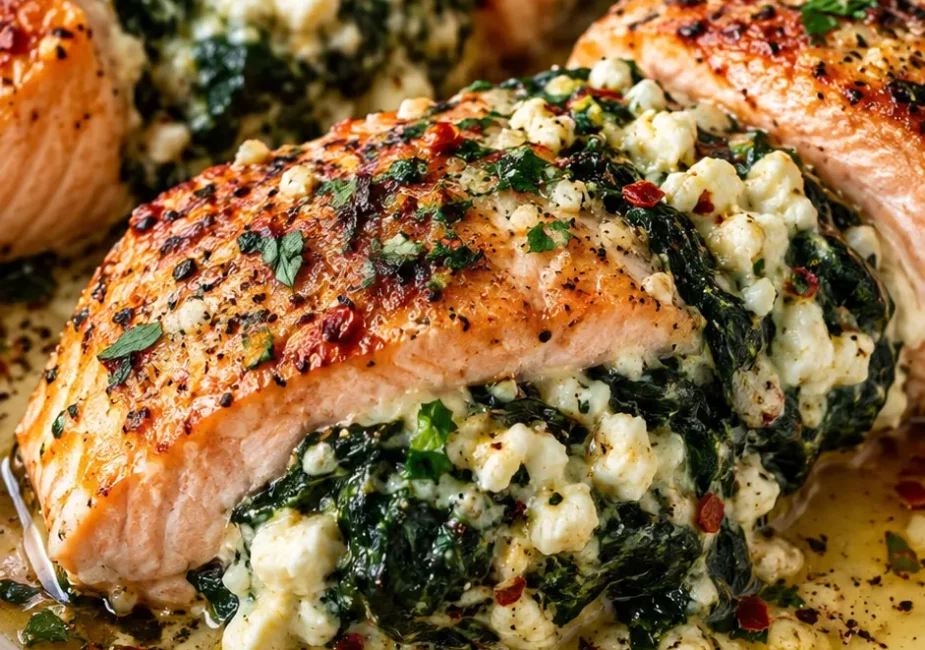
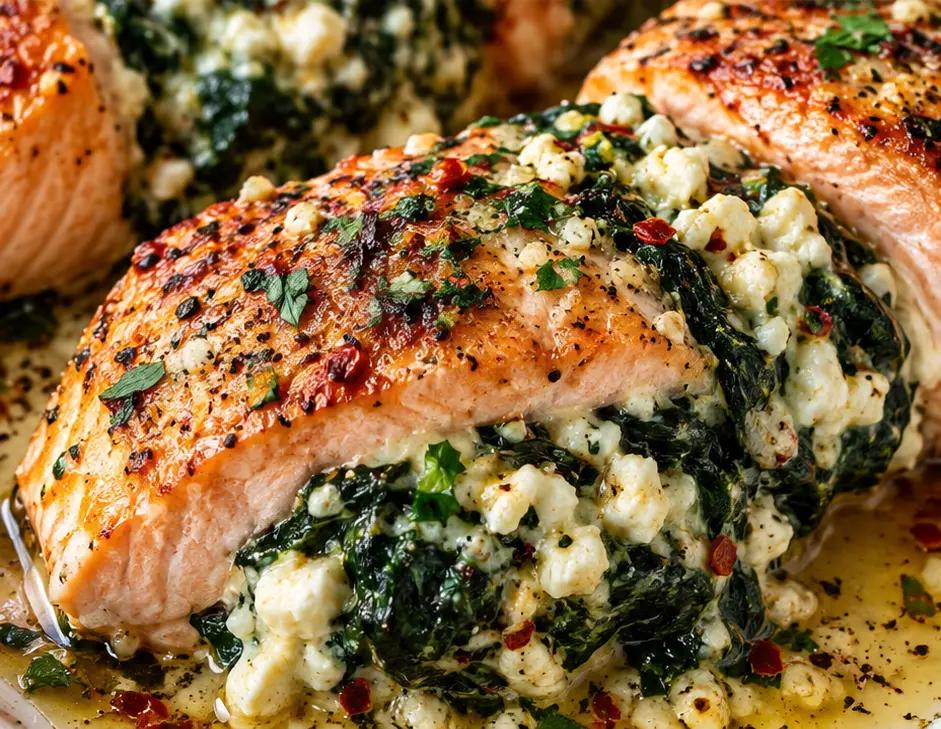
Salmon gets boring fast when it’s the same plain fillet on repeat, and that’s usually the moment people start reaching for takeout menus instead. The fix isn’t a fancier fish — it’s what you put inside it. A warm, garlicky spinach and feta filling turns an ordinary weeknight fillet into something that actually feels like a reason to sit down at the table.
This one comes together in about 30 minutes, uses one skillet and one baking dish, and doesn’t ask you to do anything remotely fussy. Here’s how it comes together.
Why You’ll Love It
- It’s genuinely fast — 15 minutes of prep and 15–18 minutes in the oven means this is realistic for a Tuesday, not just a “someday” recipe.
- The filling stays put, not soupy. Salmon pockets have a bad reputation for leaking a puddle of green water onto the pan — a quick fix (more on that below) keeps this filling thick and scoopable instead.
- One skillet, one pan. You’ll sauté the filling in a skillet, then everything finishes in the same baking dish. Minimal cleanup.
- It’s naturally low-carb and high-protein, with feta and cream cheese doing the flavor work instead of breadcrumbs or heavy sauces.
- The filling is genuinely craveable on its own — you’ll probably eat a spoonful straight from the skillet before it even makes it into the fish. No judgment.
- It reheats well, which is more than you can say for most baked fish.
Recipe Card Summary
|
|
| Prep Time |
15 minutes |
| Cook Time |
20 minutes |
| Total Time |
35 minutes |
| Servings |
4 |
| Calories (estimate) |
~420 per serving |
| Protein (estimate) |
~38g |
| Fat (estimate) |
~28g |
| Carbs (estimate) |
~5g |
Nutrition is an estimate based on standard ingredient values and will vary depending on fillet size and exact ingredients used.
Ingredients
For the salmon:
- 4 salmon fillets (about 6 oz each), skin-on or skinless
- 1 tablespoon olive oil
- Salt and black pepper, to taste
- 1 lemon, half juiced, half sliced for serving
For the spinach and feta filling:
- 1 tablespoon butter
- 2 cloves garlic, minced
- 5 oz fresh spinach (or one 10 oz box frozen, thawed and squeezed dry)
- 4 oz cream cheese, softened
- 1/2 cup crumbled feta cheese
- 1/4 teaspoon red pepper flakes (optional)
- Zest of half a lemon
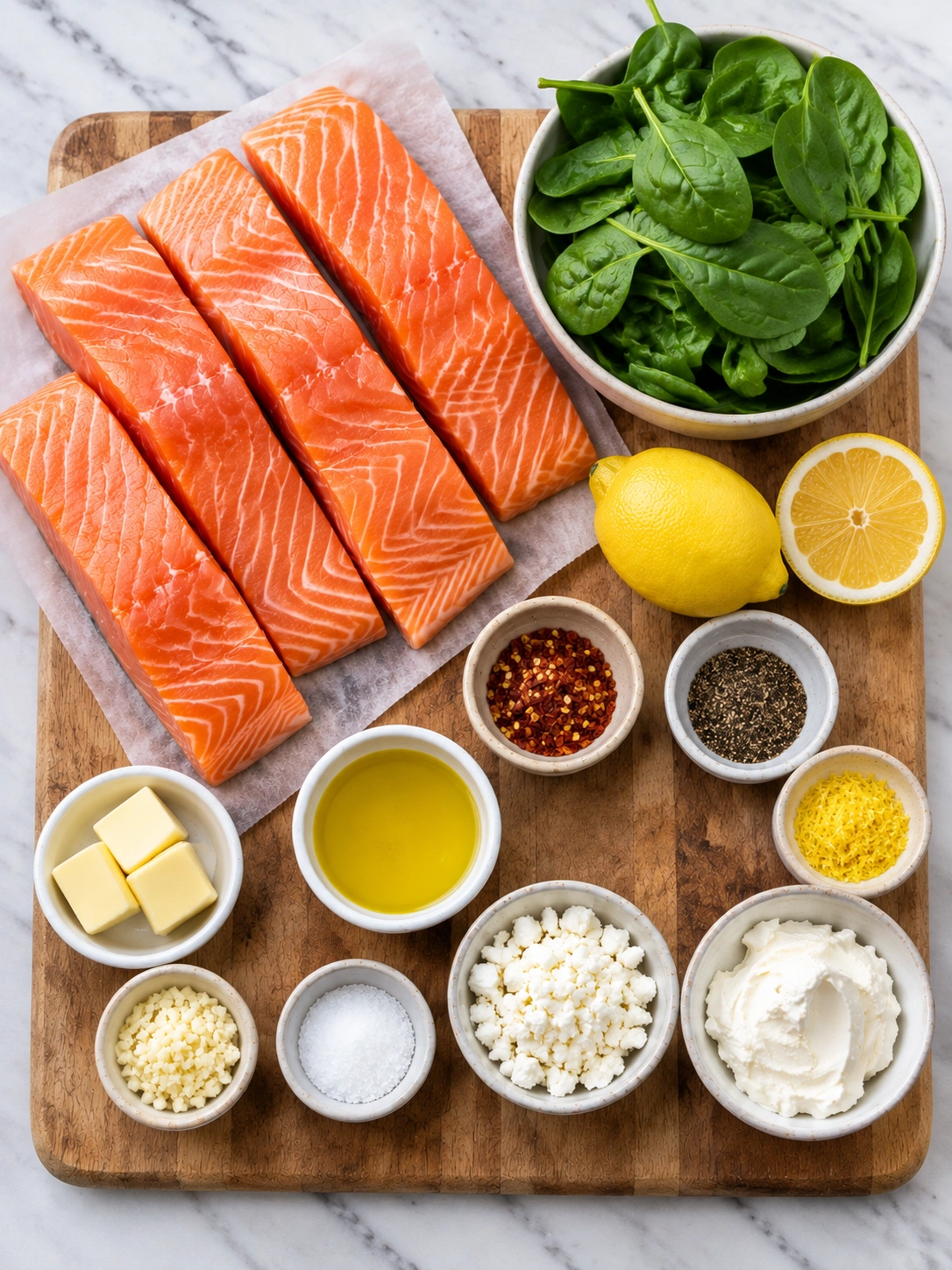
Notes on ingredients:
- Block feta that you crumble yourself melts and holds its texture noticeably better than the pre-crumbled bagged kind, which tends to turn chalky in the oven.
- If you only have frozen spinach on hand, that’s fine it actually releases less water once you follow the drying step below, since most of its moisture is already gone.
Equipment Needed
- Large oven-safe skillet or a skillet plus a baking dish
- Sharp knife for butterflying the fillets
- Mixing bowl
- Meat thermometer (optional but helpful)
Step-by-Step Instructions
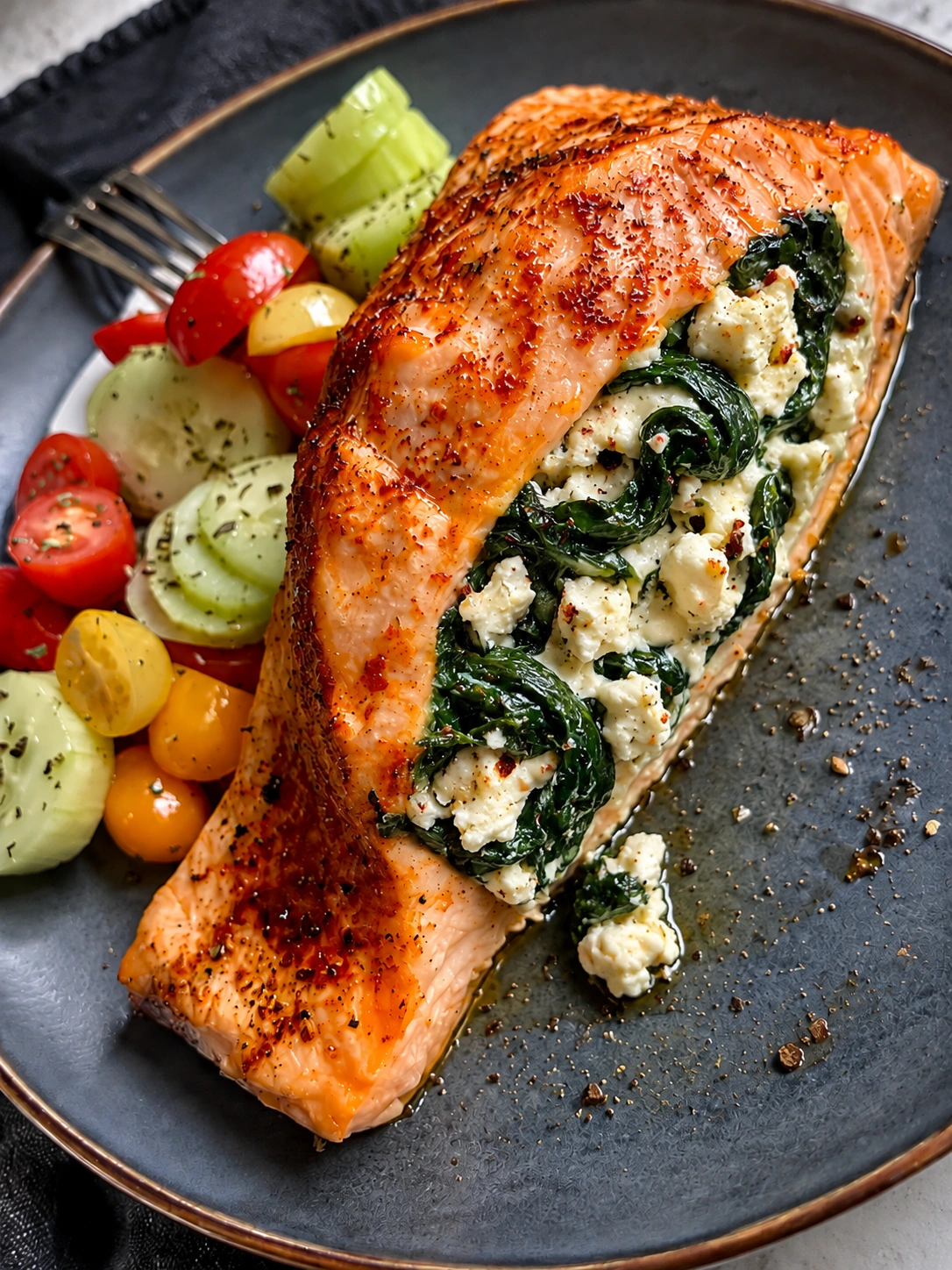
1. Preheat and prep the salmon. Preheat your oven to 400°F (200°C). Pat the salmon fillets completely dry with a paper towel, then use a sharp knife to slice a deep pocket into the side of each fillet cutting almost all the way through but leaving the back edge intact so it holds its shape. Season the outside and the inside of each pocket with salt and pepper.
2. Dry the spinach this is the step that matters most. If using fresh spinach, wilt it in a dry skillet over medium heat for about 2 minutes, then transfer it to a clean kitchen towel and wring it out hard over the sink. If using thawed frozen spinach, do the same wringing step. This feels excessive, but skipping it is the single biggest reason stuffed salmon ends up swimming in watery liquid on the pan spinach holds an enormous amount of water, and if it goes into the filling wet, that water has nowhere to go but out, thinning the cheese and pooling under the fish as it bakes.
3. Build the filling. In the same skillet, melt the butter over medium heat and add the garlic. Cook for about 30 seconds, just until fragrant garlic turns bitter fast, so don’t walk away here. Add the dried spinach back in, stir to coat, then remove from heat. Stir in the cream cheese, feta, red pepper flakes, and lemon zest until you have a thick, cohesive filling that holds together when you press a spoon into it. Pro tip: if the filling looks even slightly loose at this stage, it will only get looser in the oven pop it in the fridge for 5 minutes to firm up before stuffing.
4. Stuff and sear. Spoon the filling generously into each salmon pocket, pressing gently so it stays put. Heat the olive oil in an oven-safe skillet over medium-high heat and sear the salmon, filled-side up, for 2 minutes just to get some color on the bottom.
5. Bake. Transfer the skillet directly to the oven (or move the fillets to a baking dish) and bake for 12–15 minutes, until the salmon flakes easily with a fork and reaches an internal temperature of 130–135°F for medium, or 145°F if you prefer it fully opaque throughout. Squeeze the reserved lemon juice over the top as soon as it comes out.
6. Rest briefly, then serve. Let the salmon sit for 2–3 minutes before serving it keeps cooking slightly off the heat and the filling sets up so it stays in the pocket instead of sliding out onto the plate.
Common Mistakes to Avoid
- Skipping the spinach-drying step. This is the one that causes the classic watery-pan, runny-filling problem — wring it out like you mean it.
- Overfilling the pocket. A generous spoonful is plenty; packing it too full means filling spills out and burns onto the pan before the fish is done.
- Not patting the salmon dry first. A wet fillet won’t sear properly, which means you lose flavor and the pocket seam won’t hold as well.
- Pulling it too early or too late. Undercooked salmon in the center reads as glassy and translucent; overcooked salmon turns chalky and dry. A thermometer removes the guesswork.
- Using pre-crumbled feta straight from a shaker container. It’s coated in anti-caking starch that keeps it from melting smoothly into the filling.
How to Store & Reheat
Let leftovers cool completely, then store in an airtight container in the fridge for up to 3 days. To freeze, wrap each cooled fillet tightly in plastic wrap and freeze for up to 2 months thaw overnight in the fridge before reheating.
To reheat, place the salmon in a 300°F (150°C) oven for about 10 minutes, loosely covered with foil, until just warmed through. Microwaving works in a pinch, but it tends to dry out the fish if that’s your only option, use 50% power in short bursts.
Recipe Variations & Substitutions
- Dairy-free: Swap the cream cheese for a dairy-free cream cheese alternative and use a dairy-free feta or omit it, adding a splash of nutritional yeast for tang.
- Lower-fat version: Use reduced-fat cream cheese and go light on the olive oil sear.
- Add sun-dried tomatoes: Stir 2 tablespoons of chopped sun-dried tomatoes into the filling for a briny, slightly sweet note.
- Swap the greens: Baby kale or arugula both work in place of spinach just follow the same drying step.
- Make it spicier: Increase the red pepper flakes or add a few dashes of hot sauce to the filling.
- Different cheese: Goat cheese in place of feta gives a creamier, tangier result if that’s more your thing.
Nutritional & Health Angle
Salmon is naturally rich in protein and omega-3 fatty acids, and this preparation keeps things fairly lean by relying on cheese and aromatics for flavor rather than heavy sauces or breading. It fits comfortably into low-carb, keto, and high-protein eating patterns, though exact macros will vary depending on your specific fillet size and ingredient brands. As always, this is general nutrition information and not medical advice check with a healthcare provider for guidance specific to your needs.
Frequently Asked Questions
Can I use frozen salmon fillets?
Yes — just thaw them completely in the fridge overnight and pat them very dry before cutting the pocket, since excess moisture makes the fillet harder to sear and stuff neatly.
What can I use instead of feta?
Goat cheese is the closest substitute in tang and texture. A mild mozzarella works too, though you’ll lose some of the tangy flavor feta brings.
Can I make the filling ahead of time?
Yes, the spinach and feta filling can be made up to 2 days ahead and stored in the fridge just let it sit at room temperature for 10 minutes before stuffing so it’s easier to work with.
How do I know when the salmon is done without a thermometer?
Press gently with a fork at the thickest part it should flake easily and look opaque, with no glassy or translucent center.
Is this recipe gluten-free?
Yes, as written this recipe contains no gluten ingredients just double-check your feta and cream cheese brands, since some add-ins vary.
What should I serve with this?
A simple side salad, roasted asparagus, or cauliflower rice all keep it low-carb; if carbs aren’t a concern, crusty bread for mopping up the filling is never a bad call.
Final Thoughts
The fish itself isn’t what makes this recipe it’s a well-behaved filling that stays thick, cheesy, and actually stays inside the fish instead of pooling on the pan, and that comes down entirely to wringing every last drop of water out of that spinach before it goes anywhere near the cream cheese. Skip that step once and you’ll understand immediately why it’s non-negotiable.
It’s a genuinely easy dinner for a busy night, but it’s also nice enough to put in front of guests without any extra effort. What do you usually serve alongside your salmon?
For the salmon:
- 4 salmon fillets about 6 oz each, skin-on or skinless
- 1 tablespoon olive oil
- Salt and black pepper to taste
- 1 lemon half juiced, half sliced for serving
For the spinach and feta filling:
- 1 tablespoon butter
- 2 cloves garlic minced
- 5 oz fresh spinach or one 10 oz box frozen, thawed and squeezed dry
- 4 oz cream cheese softened
- 1/2 cup crumbled feta cheese
- 1/4 teaspoon red pepper flakes optional
- Zest of half a lemon
Large oven-safe skillet or a skillet plus a baking dish
Sharp knife for butterflying the fillets
Mixing bowl
Meat thermometer (optional but helpful)
Preheat and prep the salmon. Preheat your oven to 400°F (200°C). Pat the salmon fillets completely dry with a paper towel, then use a sharp knife to slice a deep pocket into the side of each fillet cutting almost all the way through but leaving the back edge intact so it holds its shape. Season the outside and the inside of each pocket with salt and pepper.
Dry the spinach this is the step that matters most. If using fresh spinach, wilt it in a dry skillet over medium heat for about 2 minutes, then transfer it to a clean kitchen towel and wring it out hard over the sink. If using thawed frozen spinach, do the same wringing step. This feels excessive, but skipping it is the single biggest reason stuffed salmon ends up swimming in watery liquid on the pan spinach holds an enormous amount of water, and if it goes into the filling wet, that water has nowhere to go but out, thinning the cheese and pooling under the fish as it bakes.
Build the filling. In the same skillet, melt the butter over medium heat and add the garlic. Cook for about 30 seconds, just until fragrant garlic turns bitter fast, so don’t walk away here. Add the dried spinach back in, stir to coat, then remove from heat. Stir in the cream cheese, feta, red pepper flakes, and lemon zest until you have a thick, cohesive filling that holds together when you press a spoon into it. Pro tip: if the filling looks even slightly loose at this stage, it will only get looser in the oven pop it in the fridge for 5 minutes to firm up before stuffing.
Stuff and sear. Spoon the filling generously into each salmon pocket, pressing gently so it stays put. Heat the olive oil in an oven-safe skillet over medium-high heat and sear the salmon, filled-side up, for 2 minutes just to get some color on the bottom.
Bake. Transfer the skillet directly to the oven (or move the fillets to a baking dish) and bake for 12–15 minutes, until the salmon flakes easily with a fork and reaches an internal temperature of 130–135°F for medium, or 145°F if you prefer it fully opaque throughout. Squeeze the reserved lemon juice over the top as soon as it comes out.
Rest briefly, then serve. Let the salmon sit for 2–3 minutes before serving it keeps cooking slightly off the heat and the filling sets up so it stays in the pocket instead of sliding out onto the plate.
Baked Stuffed Salmon with Spinach & Feta
Last modified: September 18, 2026