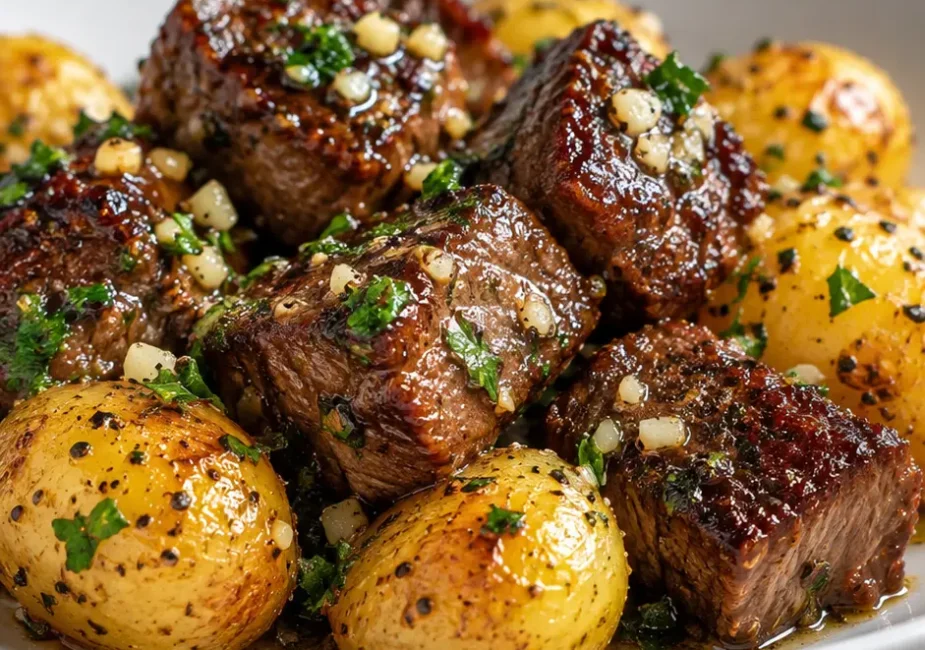
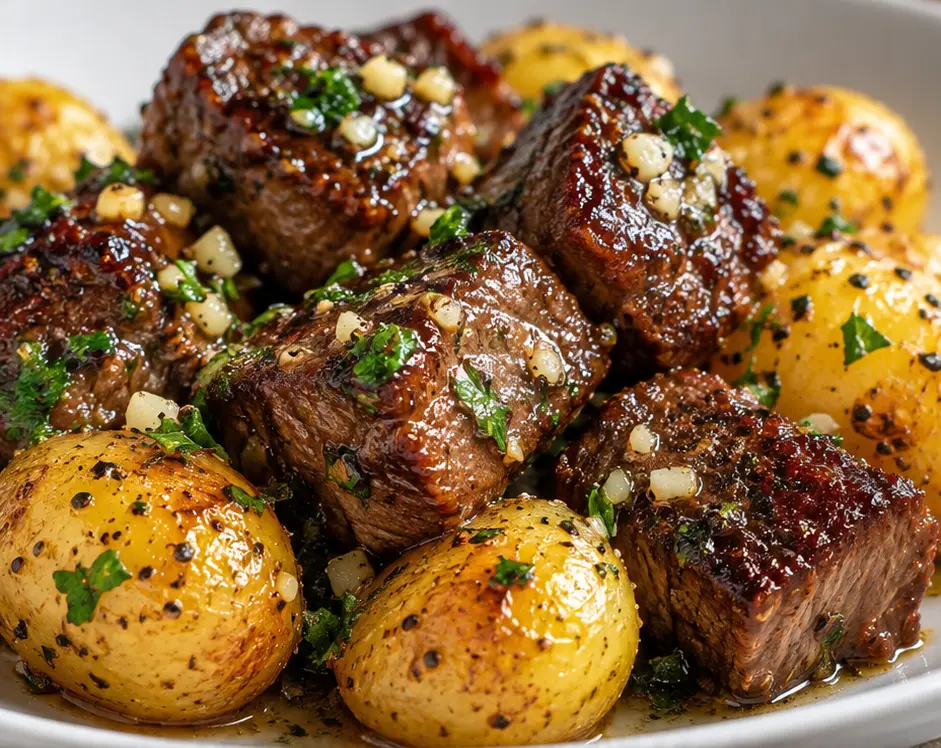
Some nights you don’t want a recipe with twelve steps and four dishes to wash you want something that tastes like it took effort but really just took one hot skillet and a little patience. That’s this dish. Cubes of steak get a deep, dark crust, the potatoes turn crisp and golden in the same buttery fat, and garlic ties the whole thing together without ever tasting sharp or burnt.
The real trick isn’t the butter, though that helps. It’s what you do to the steak before it ever touches the pan, and that one habit is the difference between steak bites that steam and steak bites that actually sear. Here’s how it comes together.
Why You’ll Love This Garlic Butter Steak Bites Recipe
- One skillet, one cleanup. Potatoes and steak cook in the same pan, so you’re not juggling a sheet pan, a saucepan, and a skillet for one dinner.
- Restaurant-style crust, home-kitchen effort. Drying and salting the steak ahead of time (more on that below) gives you the kind of deep brown sear you’d expect from a steakhouse, not a boiled-gray cube.
- Ready faster than delivery. Start to finish, you’re eating in under 30 minutes genuinely faster than most takeout arrives.
- Naturally low-carb and gluten-free, with no substitutions needed, so it fits into a lot of different eating styles without feeling like a “diet” dinner.
- Garlic butter does double duty. It flavors the steak and gets spooned over the potatoes, so nothing on the plate tastes like an afterthought.
- Budget-friendly cut of steak. This recipe is built around sirloin, which sears beautifully without steakhouse pricing.
Recipe At a Glance
- Prep time: 15 minutes (includes resting the steak)
- Cook time: 15 minutes
- Total time: 30 minutes
- Servings: 4
- Estimated calories: ~420 per serving
- Estimated macros: ~32g protein, ~18g carbs, ~26g fat (estimates only — actual values will vary based on cut of steak and exact ingredients used)
Ingredients
- 1 ½ lbs sirloin steak, cut into 1-inch cubes
- 1 lb baby potatoes (yellow or red), halved
- 4 tablespoons unsalted butter, divided
- 1 tablespoon olive oil
- 5 cloves garlic, minced
- 1 teaspoon kosher salt, plus more for the potatoes
- ½ teaspoon freshly cracked black pepper
- 1 teaspoon fresh rosemary or thyme, chopped (or ½ teaspoon dried)
- 2 tablespoons chopped fresh parsley, for serving
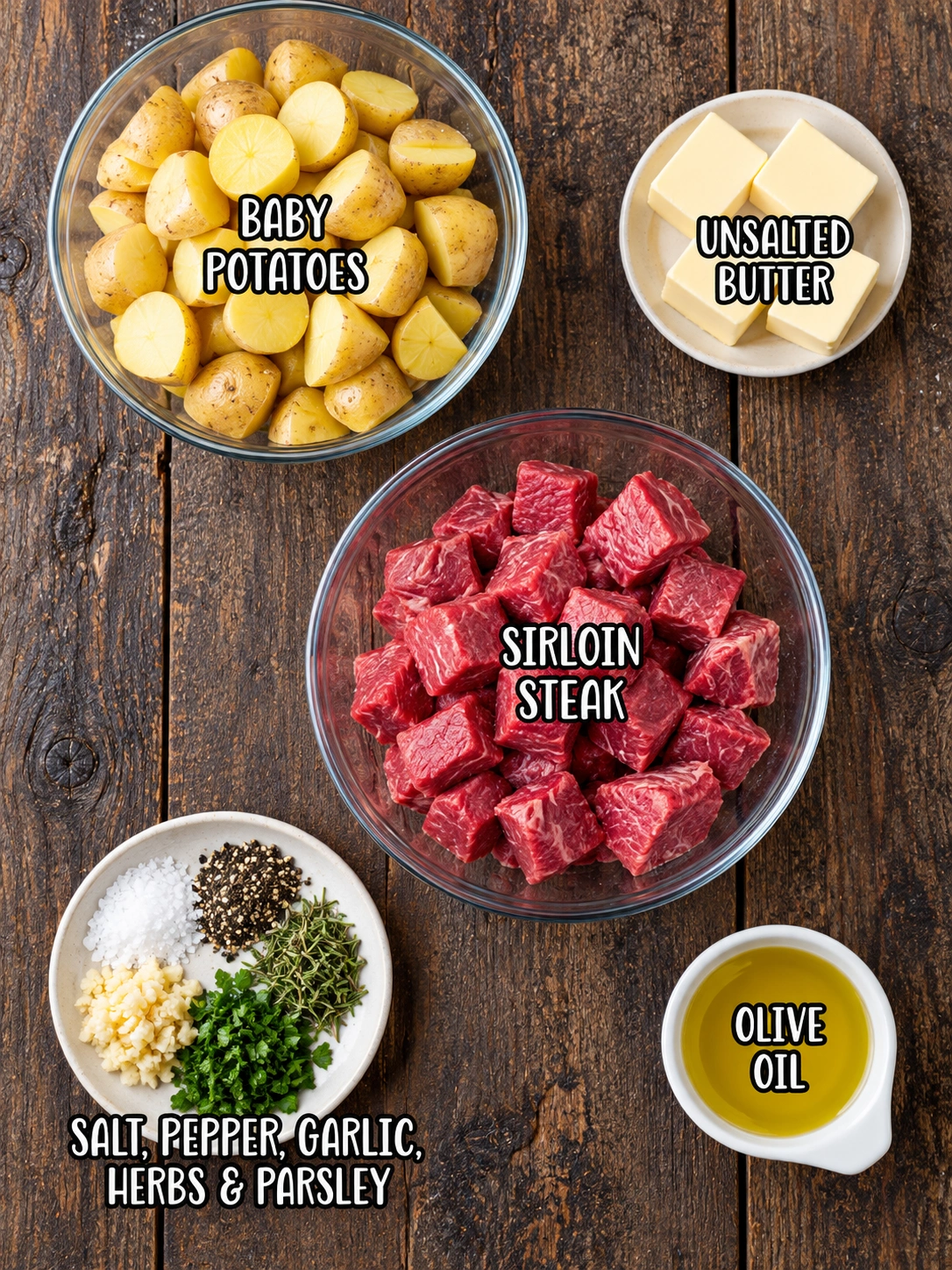
Ingredient notes: Sirloin is the sweet spot here it’s tender enough for a quick sear but won’t cost what ribeye does. If you only have a tougher cut like round steak on hand, cut it slightly thinner so it stays tender in a fast cook. For the potatoes, baby potatoes are ideal because their skins crisp up nicely and you skip peeling entirely just give them a good scrub.
Equipment Needed
- Large cast-iron or heavy stainless steel skillet
- Sharp knife and cutting board
- Paper towels (for drying the steak this step matters more than it sounds)
- Tongs
Step-by-Step Instructions
1. Dry and salt the steak don’t skip this. Pat the steak cubes completely dry with paper towels, then season them with the salt and let them sit uncovered on a plate for 10 minutes. This step is the one thing that separates steakhouse-style bites from gray, steamed ones: any surface moisture left on the meat turns to steam the second it hits a hot pan, and steam prevents browning. Ten minutes of air-drying and salting pulls that moisture to the surface and lets it evaporate, so the outside of the meat sears instead of simmers.
2. Par-cook the potatoes. While the steak rests, add the potatoes to a pot of salted water, bring to a boil, and cook for 6–7 minutes, just until a fork slides in with a little resistance. Drain well and let them steam-dry in the colander for a minute this helps them crisp instead of turning soggy in the skillet.
3. Sear the potatoes. Heat the olive oil and 1 tablespoon of butter in your skillet over medium-high heat until shimmering. Add the potatoes cut-side down in a single layer and let them cook undisturbed for 4–5 minutes, until deeply golden. Pro tip: resist the urge to stir them early moving them too soon is the main reason home-cooked potatoes end up pale instead of crisp. Remove the potatoes to a plate and tent loosely with foil.
4. Sear the steak in batches. Add 1 tablespoon of butter to the same skillet and let it get hot again. Add the steak cubes in a single layer, working in two batches if needed so you’re not crowding the pan. Sear for 2–3 minutes per side, until a deep brown crust forms and the internal temperature hits about 130–135°F for medium-rare. Crowding the pan here is the second most common way this dish goes wrong too many cubes at once drops the pan’s temperature and you’re back to steaming instead of searing.
5. Build the garlic butter. Lower the heat to medium, return all the steak to the pan, and add the remaining 2 tablespoons of butter along with the garlic and herbs. Stir constantly for about 45 seconds, just until the garlic turns fragrant and golden not brown, which turns bitter fast.
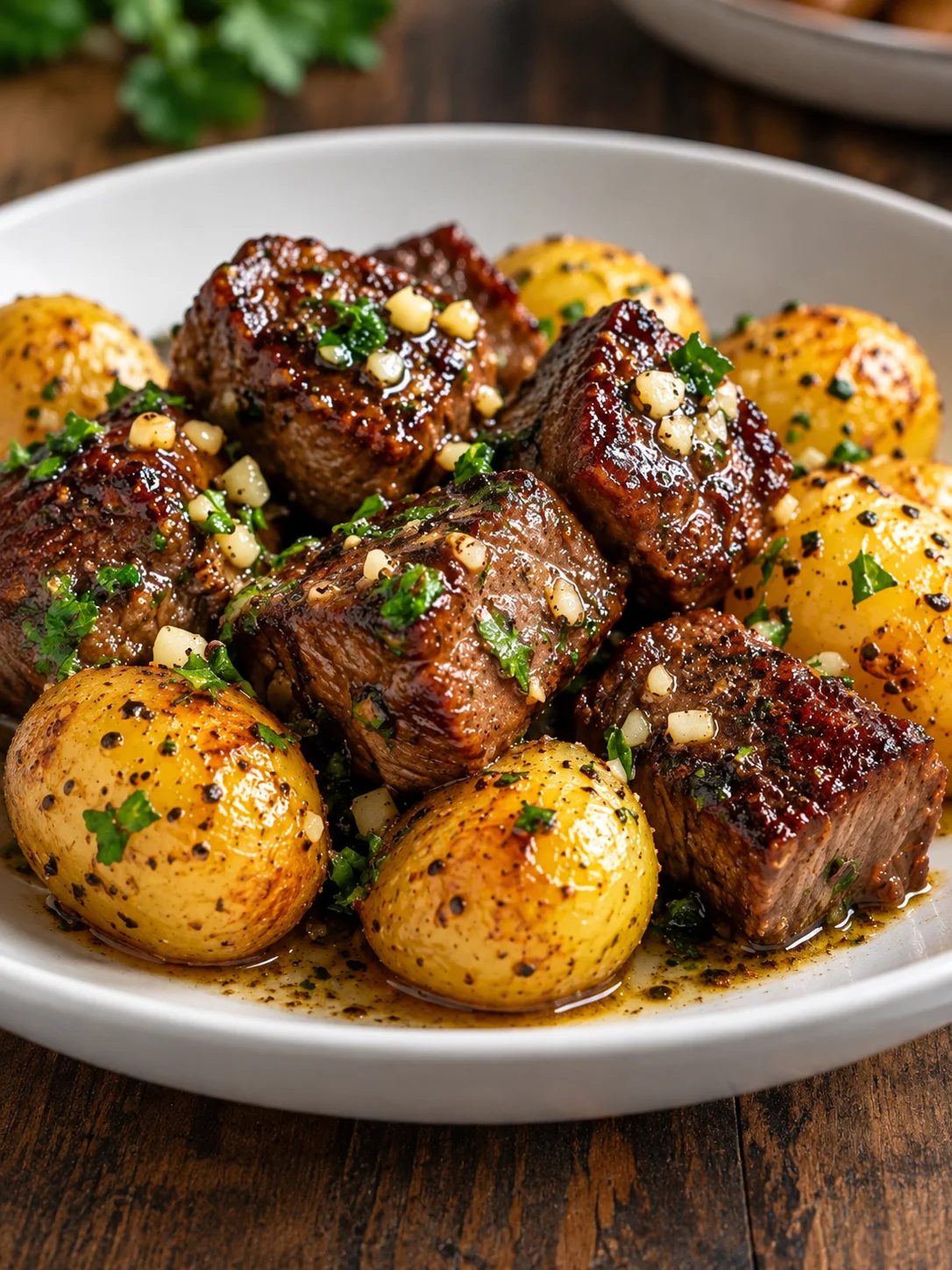
6. Bring it together. Return the potatoes to the skillet, toss everything gently in the garlic butter for another minute so the potatoes soak up flavor, then taste and adjust salt and pepper. Finish with fresh parsley and serve straight from the skillet.
Common Mistakes to Avoid
- Skipping the dry-and-salt step. This is the single biggest reason steak bites turn out gray instead of crusty wet steak steams, it doesn’t sear.
- Crowding the pan. Too much steak at once drops the pan’s temperature fast. Sear in batches, even if it feels slower.
- Boiling the potatoes all the way through. Fully cooked potatoes fall apart when you try to crisp them. Stop at “fork-tender with resistance.”
- Cooking the garlic too early or too long. Garlic added at the start of the sear or left in the pan too long turns bitter. It goes in near the end, for less than a minute.
- Overcooking past medium-rare. Steak bites cook fast because they’re small checking temperature (rather than eyeballing color) keeps them from going from perfect to tough in under a minute.
How to Store & Reheat
Let leftovers cool completely, then store in an airtight container in the fridge for up to 3 days. This dish freezes reasonably well for up to 2 months, though the potatoes will soften slightly on thawing. To reheat, skip the microwave if you can it makes the steak tough. Instead, reheat in a skillet over medium heat for 3–4 minutes, or in an oven/air fryer at 350°F for about 8 minutes, just until warmed through.
Recipe Variations & Substitutions
- Dairy-free: Swap the butter for a neutral oil or a plant-based butter alternative you’ll lose a little richness but keep the garlic flavor.
- Lower-carb: Replace the potatoes with cubed radishes or cauliflower florets, both of which crisp up nicely in the same skillet.
- Spicier version: Add ½ teaspoon red pepper flakes along with the garlic for a subtle back-of-the-throat heat.
- Different protein: This same method works well with cubed chicken thighs just extend the sear time slightly since chicken needs to cook through.
- Herb swap: Fresh thyme, oregano, or even a little smoked paprika can stand in for rosemary if that’s what you have on hand.
- Steak sauce lovers: A splash of Worcestershire sauce added with the garlic butter deepens the flavor without changing the technique.
Frequently Asked Questions
Can I use a different cut of steak?
Yes ribeye or New York strip both work beautifully and are even more forgiving than sirloin if you’re worried about toughness. Just avoid very lean cuts like eye of round, which can turn chewy in a fast sear.
Do I have to par-boil the potatoes first?
It’s strongly recommended. Raw potato cubes take far longer to cook through than the steak does, so par-boiling ensures both finish at the same time without overcooking the steak while you wait on the potatoes.
Can I make this ahead of time?
You can prep the potatoes (boiled) and cut the steak up to a day ahead and store them separately in the fridge. The actual searing is best done fresh, since that’s where the texture comes from.
What if I don’t have a cast-iron skillet?
Any heavy-bottomed stainless steel skillet will work. Avoid nonstick if you can — it doesn’t get quite as hot, which makes it harder to develop a deep sear on the steak.
How do I know when the steak is done without a thermometer?
Press a cube gently with tongs medium-rare will feel springy with slight resistance, similar to pressing the base of your thumb when your hand is relaxed. A meat thermometer is more reliable, though, especially the first few times you make this.
Can I make this dairy-free or gluten-free?
It’s naturally gluten-free as written. For dairy-free, swap the butter for a plant-based alternative or a neutral oil see the variations section above for details.
Final Thoughts
At the end of the day, this recipe comes down to one small habit that makes a big difference: dry the steak, salt it, and give it those 10 minutes before it ever touches the pan. Everything else the garlic, the butter, the crisp potatoes is just building on top of a crust that was set up to succeed from the start. It’s a small thing, but it’s the kind of small thing that turns a decent dinner into one you’ll actually want to make again.
- 1 ½ lbs sirloin steak cut into 1-inch cubes
- 1 lb baby potatoes yellow or red, halved
- 4 tablespoons unsalted butter divided
- 1 tablespoon olive oil
- 5 cloves garlic minced
- 1 teaspoon kosher salt plus more for the potatoes
- ½ teaspoon freshly cracked black pepper
- 1 teaspoon fresh rosemary or thyme chopped (or ½ teaspoon dried)
- 2 tablespoons chopped fresh parsley for serving
Large cast-iron or heavy stainless steel skillet
Sharp knife and cutting board
Paper towels (for drying the steak this step matters more than it sounds)
Tongs
Dry and salt the steak don’t skip this. Pat the steak cubes completely dry with paper towels, then season them with the salt and let them sit uncovered on a plate for 10 minutes. This step is the one thing that separates steakhouse-style bites from gray, steamed ones: any surface moisture left on the meat turns to steam the second it hits a hot pan, and steam prevents browning. Ten minutes of air-drying and salting pulls that moisture to the surface and lets it evaporate, so the outside of the meat sears instead of simmers.
Par-cook the potatoes. While the steak rests, add the potatoes to a pot of salted water, bring to a boil, and cook for 6–7 minutes, just until a fork slides in with a little resistance. Drain well and let them steam-dry in the colander for a minute this helps them crisp instead of turning soggy in the skillet.
Sear the potatoes. Heat the olive oil and 1 tablespoon of butter in your skillet over medium-high heat until shimmering. Add the potatoes cut-side down in a single layer and let them cook undisturbed for 4–5 minutes, until deeply golden. Pro tip: resist the urge to stir them early moving them too soon is the main reason home-cooked potatoes end up pale instead of crisp. Remove the potatoes to a plate and tent loosely with foil.
Sear the steak in batches. Add 1 tablespoon of butter to the same skillet and let it get hot again. Add the steak cubes in a single layer, working in two batches if needed so you’re not crowding the pan. Sear for 2–3 minutes per side, until a deep brown crust forms and the internal temperature hits about 130–135°F for medium-rare. Crowding the pan here is the second most common way this dish goes wrong too many cubes at once drops the pan’s temperature and you’re back to steaming instead of searing.
Build the garlic butter. Lower the heat to medium, return all the steak to the pan, and add the remaining 2 tablespoons of butter along with the garlic and herbs. Stir constantly for about 45 seconds, just until the garlic turns fragrant and golden not brown, which turns bitter fast.
Bring it together. Return the potatoes to the skillet, toss everything gently in the garlic butter for another minute so the potatoes soak up flavor, then taste and adjust salt and pepper. Finish with fresh parsley and serve straight from the skillet.
Garlic Butter Steak Bites & Potatoes
Last modified: September 24, 2026