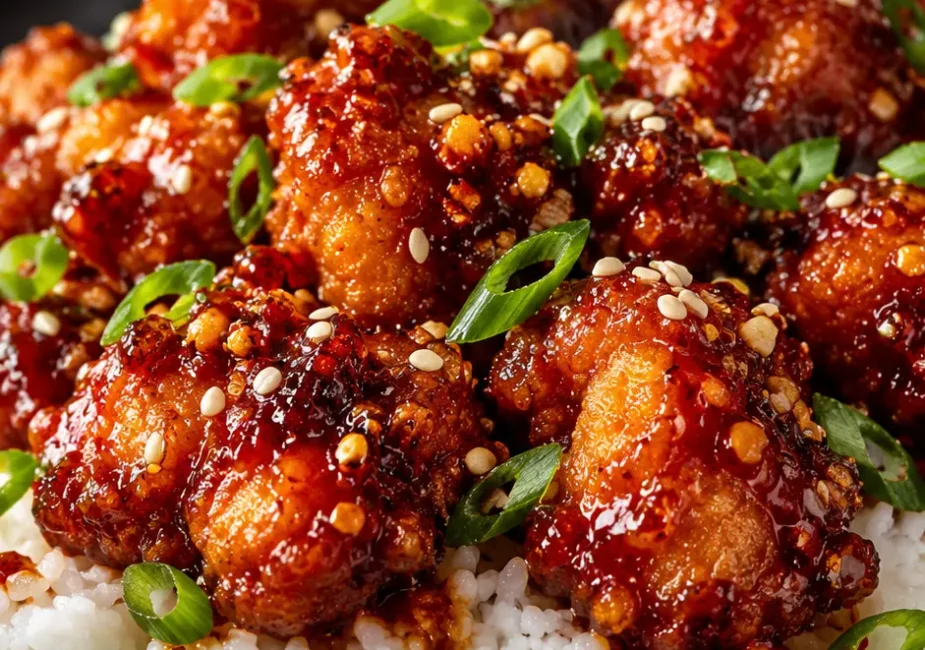
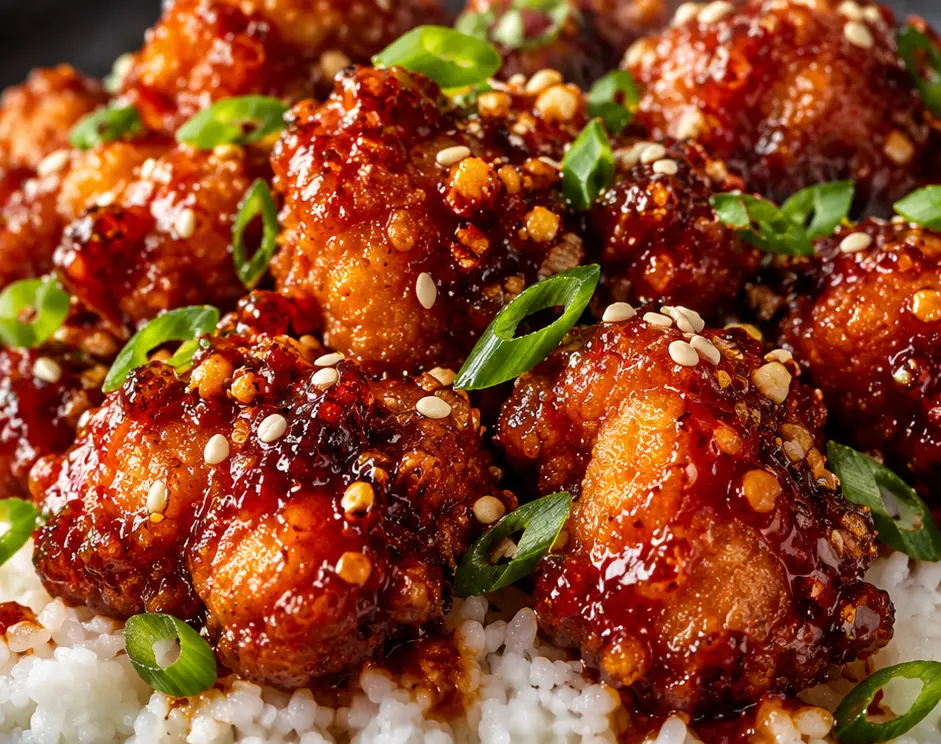
Take the “dragon” off the menu name and this Indo-Chinese bistro staple is really a crust recipe wearing sauce. The chicken should arrive golden-crisp from the pan; the sauce should land as a shiny coat that clings, not a puddle that drowns. Get those two jobs backwards and you’ve traded takeout for spicy chicken soup.
This easy dragon chicken recipe compresses the whole restaurant performance into one skillet no deep fryer, no heroic shopping list. Dark soy, chili-garlic fire, a slick sweet glaze, and a crust that stays loud for minutes after it hits the plate. The sauce reduces first; the chicken joins last. That ordering is the recipe.
Why This Recipe Works
- The sauce reduces before the chicken ever enters. The glaze simmers alone into a thick, glossy coat, so the fried chicken gets a fast 30-second toss instead of a steam bath. A thin boiling sauce is how crispy becomes cardboard reduced first keeps the crunch alive.
- A cornstarch-forward coating. The half-flour, half-cornstarch blend builds that shatter-crisp shell. Cornstarch is the crunch workhorse behind every good Asian fry, and it’s doing the same job here.
- The coating gets a rest. Letting the battered pieces sit 10 minutes before frying lets the batter hydrate and grip the chicken. Rush it and half the jacket abandons ship in the oil.
- Pan-fried, not deep-fried. You get the restaurant crunch without the fryer, the gallon of oil, or the deep-cleaning that follows.
- A proper sweet-hot-sour triangle. Ketchup plus chili-garlic plus honey plus vinegar that’s the balance that makes it taste like the bistro, and both dials are adjustable to your household’s risk tolerance.
- Faster than delivery, and it arrives hot. Takeout logic has no answer for that.
Recipe Card Summary
- Prep time: 20 minutes
- Cook time: 15 minutes
- Total time: ~35 minutes
- Servings: 4
- Estimated nutrition per serving (of 4): 460 calories | 32 g protein | 22 g fat | 38 g carbs estimates, not medical advice.
Ingredients
For the chicken and coating:
- 1½ lb boneless skinless chicken thighs, cut into 1-inch pieces
- 1 large egg, beaten
- ¼ cup cornstarch
- ¼ cup all-purpose flour
- 1 tsp garlic powder
- ½ tsp salt
- ½ tsp black pepper
For the sauce:
- 3 tbsp chili-garlic sauce (sambal oelek or similar)
- 2 tbsp low-sodium soy sauce
- 2 tbsp ketchup
- 1 tbsp honey
- 1 tbsp rice vinegar
- ½ cup low-sodium chicken broth
- 1 tsp sesame oil, added at the very end
For the stir-fry:
- 3 tbsp neutral oil, divided (2 tbsp for frying, 1 tbsp for aromatics)
- 4 garlic cloves, minced
- 1 tbsp fresh ginger, grated
- 1 red bell pepper, sliced into thin strips
- 4 scallions, whites and pale greens separated from the dark greens
- 1 tbsp sesame seeds
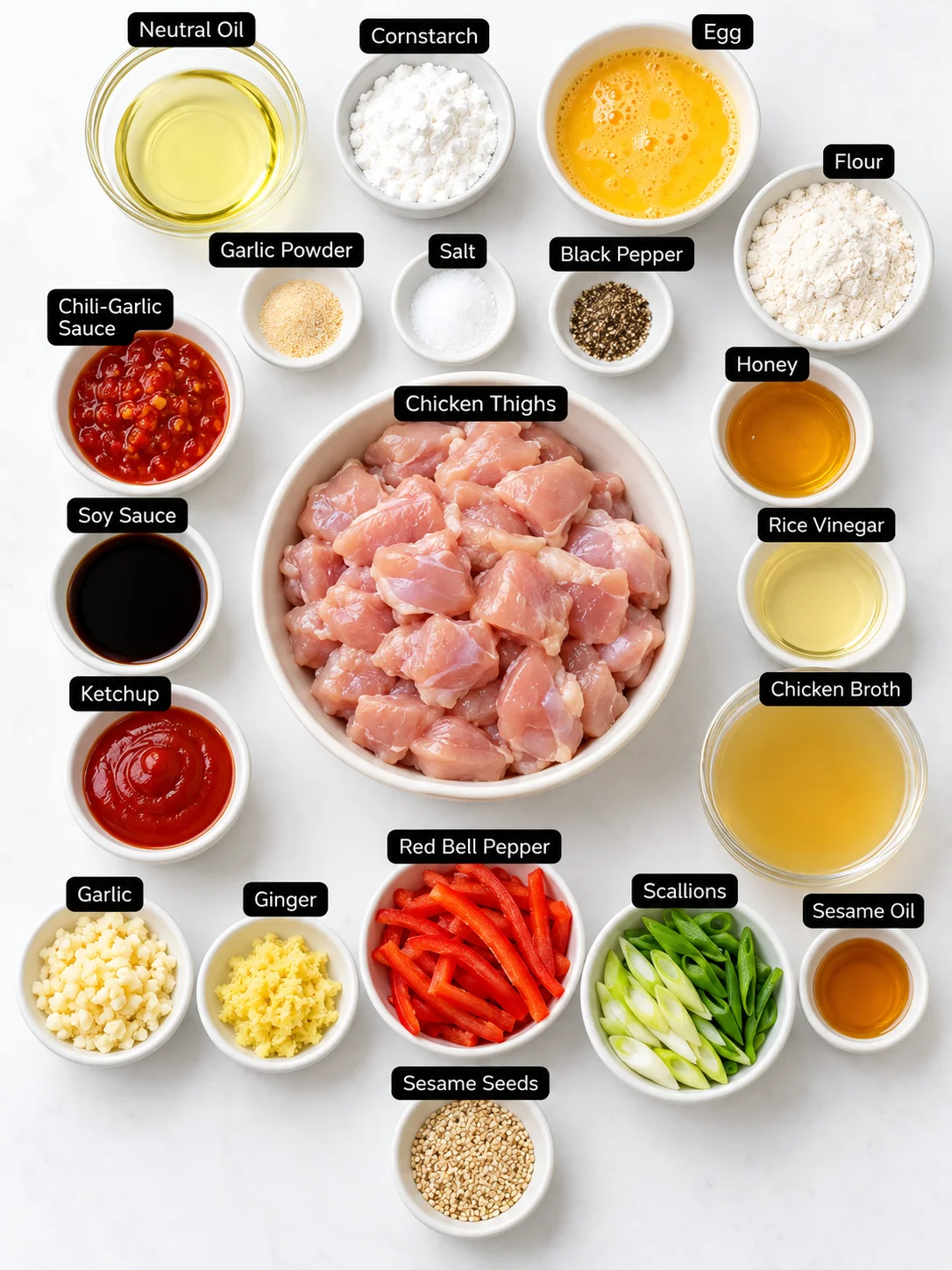
Notes: Chicken thighs are the right call here they stay juicy while the crust darkens. Breasts work if you go leaner, but cut them at a true 1 inch and pull them earlier so they don’t dry out. For the heat, sriracha can stand in for chili-garlic sauce, but it’s sweeter taste the sauce before you commit to the full honey amount.
Equipment Needed
A 12-inch skillet (non-stick or well-seasoned cast iron) · whisk · a zip-top bag or shallow dish for the coating · tongs · slotted spoon · paper towels · instant-read thermometer.
Step-By-Step: Easy Dragon Chicken Recipe
Cut and season the chicken: Cut the thighs into uniform 1-inch pieces. Nobody wants to bite into a 2-inch chunk and find a pearly center. Toss with the garlic powder, salt, and pepper so the seasoning rides under the crust, not just on it.
Coat the chicken: Whisk the egg in a bowl and add the chicken, turning to coat every piece. Mix the cornstarch and flour in a zip-top bag, drop in the chicken, seal, and shake until each chunk wears an even, powdery jacket. No lumpy spots those fry into chalky bits.
Rest the coated pieces: Let the bag sit untouched for 10 minutes. This was the fix after my first attempt shed half its coating into the oil: the batter hydrates and grips during the rest, so it stays glued to the chicken instead of floating free. Use the time to whisk the sauce.
Whisk the sauce: In a small bowl, combine the chili-garlic sauce, soy sauce, ketchup, honey, rice vinegar, and chicken broth. Give it a taste it will seem aggressive and loose right now. That’s normal and intended; the reduction is about to fix both of those things.
Pan-fry in two batches: Heat 2 tbsp of oil in your skillet over medium-high until it shimmers and a test piece crackles on contact. Fry the chicken in a single layer, 3–4 minutes per side, until the crust is deep golden and craggy and the thickest piece reads 165°F. Drain on paper towels. Keep the batches honest overlapping pieces steam each other pale, and that’s how you lose the crunch before the sauce ever arrives. Pro tip: the crust should crackle when you shake the pan; if it sounds wet, the oil wasn’t hot enough.
Bloom the aromatics: Pour off the frying oil, wipe the pan, and heat the remaining 1 tbsp over medium. Add the garlic, ginger, bell pepper, and the sliced white parts of the scallions. Stir for 30–45 seconds, until the kitchen smells like a restaurant kitchen and the garlic has lost its raw bite. Medium heat roar is how garlic turns bitter.
Reduce the sauce to a glaze: Turn the heat to medium-high and pour in the sauce. Simmer, stirring, for 2–3 minutes until it thickens from soup to syrup glossy, coating a spoon, leaving a trail when you drag a spatula through it. This is the moment everything was building toward. Chicken tossed into a still-thin sauce steams inside its own jacket; the crust turns to wet cardboard while you wait for the liquid to cling. A properly reduced glaze clings thin and sets in seconds, wrapping each piece without cooking the crunch away. Give the sauce its two minutes.
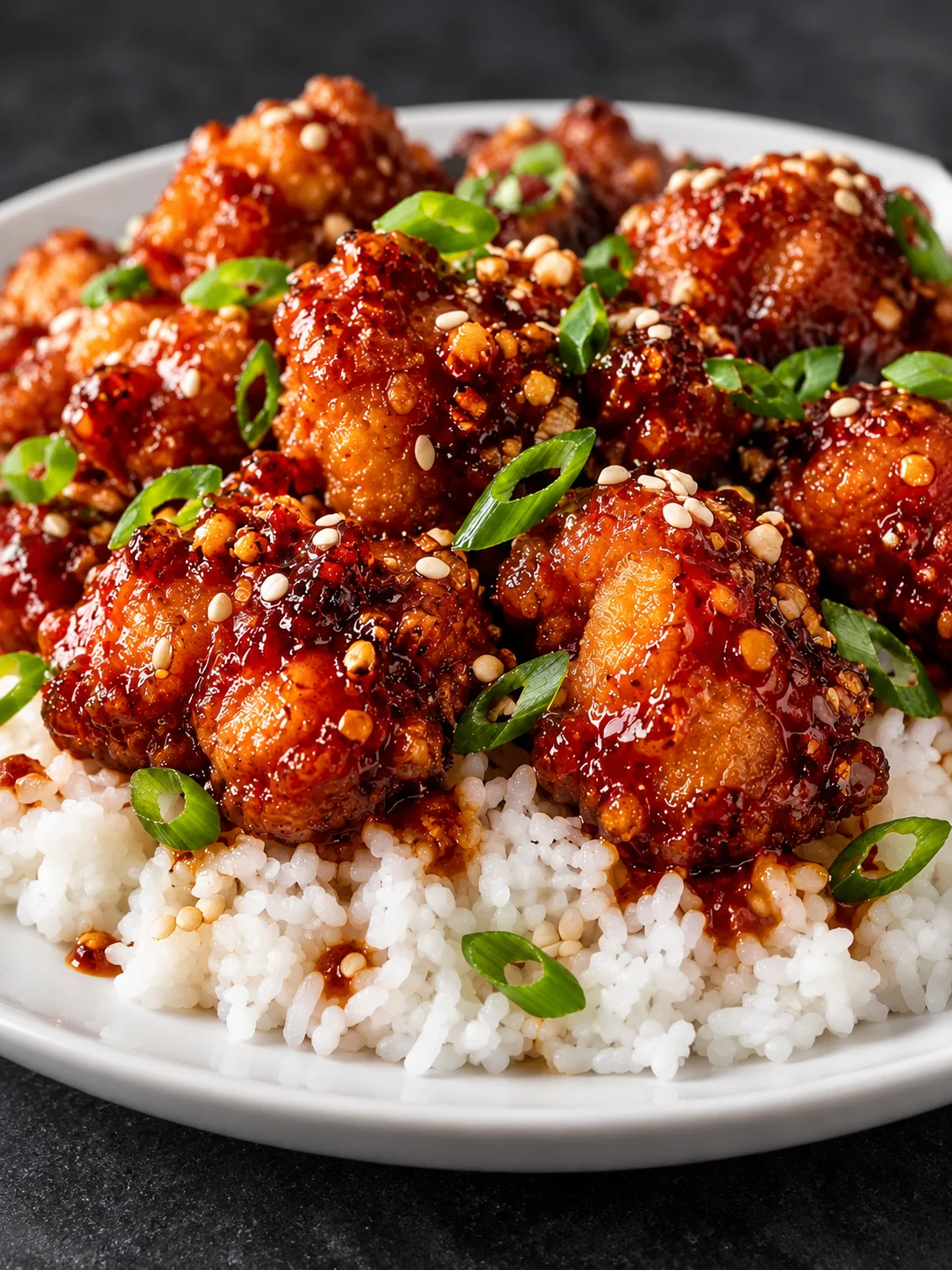
Toss and finish: Add the fried chicken and toss for 30 seconds, no more, until every piece wears a shine. Kill the heat, stir in the sesame oil, and shower over the dark scallion greens and sesame seeds. The glaze should look painted on, not poured over. Serve immediately crispness is a limited-time offer.
Common Mistakes to Avoid
- Adding the chicken before the sauce is reduced. This is the whole failure mode in one sentence: a thin sauce is a steam bath, and steam is the enemy of crust. Glaze first, chicken second, 30-second toss.
- Crowding the skillet. Pieces that touch steam each other’s coating into pale, soft patches. Cook in two batches and give every chunk its own square inch.
- Skipping the coating rest. A fresh egg-and-flour jacket slides off the chicken and dissolves into the oil. Ten minutes of patience keeps the coat where you put it.
- Burning the garlic and ginger. Thirty seconds in a screaming pan turns both bitter, and no sauce can hide that. Medium heat, fragrant in under a minute.
- Simmering the sauced chicken. This is a toss, not a braise. The second the chicken goes in the glaze, you have half a minute any longer and crispy graduates to leathery.
How to Store & Reheat
Cooked dragon chicken keeps in the fridge for up to 3 days, with a confession attached: the crust softens however you store it, and no trick fully brings it back. The honest reheat is a dry skillet over medium-high for 3–4 minutes, stirring, to re-crisp the edges or an air fryer at 350°F for 3–4 minutes. Microwave works only if you’ve accepted the sog. Freezing is the plan I’d skip: the coating and glaze turn mealy on thaw, and this recipe is a fast-enough cook that you don’t need the shortcut. The sauce alone keeps for about a week in the fridge.
Recipe Variations & Substitutions
- Gluten-free: swap the flour for rice flour, use tamari instead of soy, and check your chili-garlic sauce and ketchup labels most are fine, some sneak in wheat.
- Kid-friendly (tame dragon): dial the chili-garlic back to 2 tbsp and bump the ketchup by a spoon. The honey does the softening the kids need.
- Full-roar dragon: a finely minced bird’s eye chili in with the aromatics, or a spoon of chili crisp stirred through the finished glaze.
- Chicken breast: leaner and lighter, but cut at 1 inch and pull around 160°F so carryover finishes the job without drying.
- Vegetarian: firm tofu or paneer crisps up beautifully in the same coating, fried gently and tossed in the same glaze.
- Air fryer route: 400°F in a single layer for 10–12 minutes, shaking at the 6-minute mark, then glazed as written.
- Veggie-loaded: broccoli florets and onion wedges go into the pan right after the aromatics; the sauce reduction then coats them all.
Nutritional/Health Angle
Here’s the honest version: at about 460 calories and 32 grams of protein, this is a crispy-takeout-style dish with genuine protein muscle, not a diet-day plan. The coating and glaze carry real carbs roughly 38 grams a serving and the oil does its share of the fat. That’s not a flaw in the recipe; it’s the nature of the category. What’s worth saying: it’s naturally nut-free, the gluten-free swap exists, and you control the sugar and sodium, which no delivery app can claim. Treat it like the bistro night it is, and it pays you back in texture and heat.
FAQ
Can I use chicken breast instead of thighs?
Yes, with two adjustments: cut the breast into honest 1-inch pieces, and pull them from the pan around 160°F so residual heat finishes them breasts turn chalky fast in a hot skim of oil. Thighs are simply more forgiving and stay juicier behind the crust.
Is dragon chicken very spicy?
It’s sweet-hot, which means the fire arrives with a handshake. At the full 3 tbsp of chili-garlic sauce it hums at a mild-to-medium setting, and the honey and ketchup pull the heat into balance. Drop to 2 tbsp for spice-shy eaters; the glaze stays interesting.
Do I need a wok?
No. A 12-inch skillet does everything here the dish gives up nothing to restaurant equipment. Wok lovers can use one if they own it, but the pan you already own is the pan this recipe was written for.
Can I make the sauce ahead of time?
Yes, up to 3 days in the fridge in a sealed jar. Whisk it briefly before using the honey sinks and reduce it per the recipe when you’re ready. The glaze step is fast enough that you lose almost nothing by mixing it on the spot.
Is this recipe gluten-free?
Not as written, but one clean set of swaps gets you there: rice flour in place of wheat flour, tamari for the soy, and a label check on the chili-garlic sauce and ketchup. Cornstarch needs no explanation that one’s already safe.
What do I serve with it?
Steamed jasmine rice is the default and the correct answer, because the glaze wants something to soak into. Garlic butter noodles are the runner-up, and plated on its own with cocktails it works as a party appetizer too. However you serve it, the table needs nothing else — this dish carries the whole show.
Final Thoughts
Where most takeout-style chicken fails, this recipe just refuses. The coating rest does its quiet work, the two-batch fry builds the shell, and the sauce — reduced patiently before anything gets tossed does the wrapping. That two-minute glaze reduction is the biggest lever in the whole skillet; miss it and you’ll wonder why your sauce fights your chicken. Hit it, and dragon chicken becomes the fastest celebration on your stove. So tell me: where do you sit on the dragon scale tame, mid-flame, or full roar? I want your heat dial in the comments.
For the chicken and coating:
- 1½ lb boneless skinless chicken thighs cut into 1-inch pieces
- 1 large egg beaten
- ¼ cup cornstarch
- ¼ cup all-purpose flour
- 1 tsp garlic powder
- ½ tsp salt
- ½ tsp black pepper
For the sauce:
- 3 tbsp chili-garlic sauce sambal oelek or similar
- 2 tbsp low-sodium soy sauce
- 2 tbsp ketchup
- 1 tbsp honey
- 1 tbsp rice vinegar
- ½ cup low-sodium chicken broth
- 1 tsp sesame oil added at the very end
For the stir-fry:
- 3 tbsp neutral oil divided (2 tbsp for frying, 1 tbsp for aromatics)
- 4 garlic cloves minced
- 1 tbsp fresh ginger grated
- 1 red bell pepper sliced into thin strips
- 4 scallions whites and pale greens separated from the dark greens
- 1 tbsp sesame seeds
Cut and season the chicken: Cut the thighs into uniform 1-inch pieces. Nobody wants to bite into a 2-inch chunk and find a pearly center. Toss with the garlic powder, salt, and pepper so the seasoning rides under the crust, not just on it.
Coat the chicken: Whisk the egg in a bowl and add the chicken, turning to coat every piece. Mix the cornstarch and flour in a zip-top bag, drop in the chicken, seal, and shake until each chunk wears an even, powdery jacket. No lumpy spots those fry into chalky bits.
Rest the coated pieces: Let the bag sit untouched for 10 minutes. This was the fix after my first attempt shed half its coating into the oil: the batter hydrates and grips during the rest, so it stays glued to the chicken instead of floating free. Use the time to whisk the sauce.
Whisk the sauce: In a small bowl, combine the chili-garlic sauce, soy sauce, ketchup, honey, rice vinegar, and chicken broth. Give it a taste it will seem aggressive and loose right now. That’s normal and intended; the reduction is about to fix both of those things.
Pan-fry in two batches: Heat 2 tbsp of oil in your skillet over medium-high until it shimmers and a test piece crackles on contact. Fry the chicken in a single layer, 3–4 minutes per side, until the crust is deep golden and craggy and the thickest piece reads 165°F. Drain on paper towels. Keep the batches honest overlapping pieces steam each other pale, and that’s how you lose the crunch before the sauce ever arrives. Pro tip: the crust should crackle when you shake the pan; if it sounds wet, the oil wasn’t hot enough.
Bloom the aromatics: Pour off the frying oil, wipe the pan, and heat the remaining 1 tbsp over medium. Add the garlic, ginger, bell pepper, and the sliced white parts of the scallions. Stir for 30–45 seconds, until the kitchen smells like a restaurant kitchen and the garlic has lost its raw bite. Medium heat roar is how garlic turns bitter.
Reduce the sauce to a glaze: Turn the heat to medium-high and pour in the sauce. Simmer, stirring, for 2–3 minutes until it thickens from soup to syrup glossy, coating a spoon, leaving a trail when you drag a spatula through it. This is the moment everything was building toward. Chicken tossed into a still-thin sauce steams inside its own jacket; the crust turns to wet cardboard while you wait for the liquid to cling. A properly reduced glaze clings thin and sets in seconds, wrapping each piece without cooking the crunch away. Give the sauce its two minutes.
Toss and finish: Add the fried chicken and toss for 30 seconds, no more, until every piece wears a shine. Kill the heat, stir in the sesame oil, and shower over the dark scallion greens and sesame seeds. The glaze should look painted on, not poured over. Serve immediately crispness is a limited-time offer.
Easy Dragon Chicken Recipe
Last modified: September 24, 2026