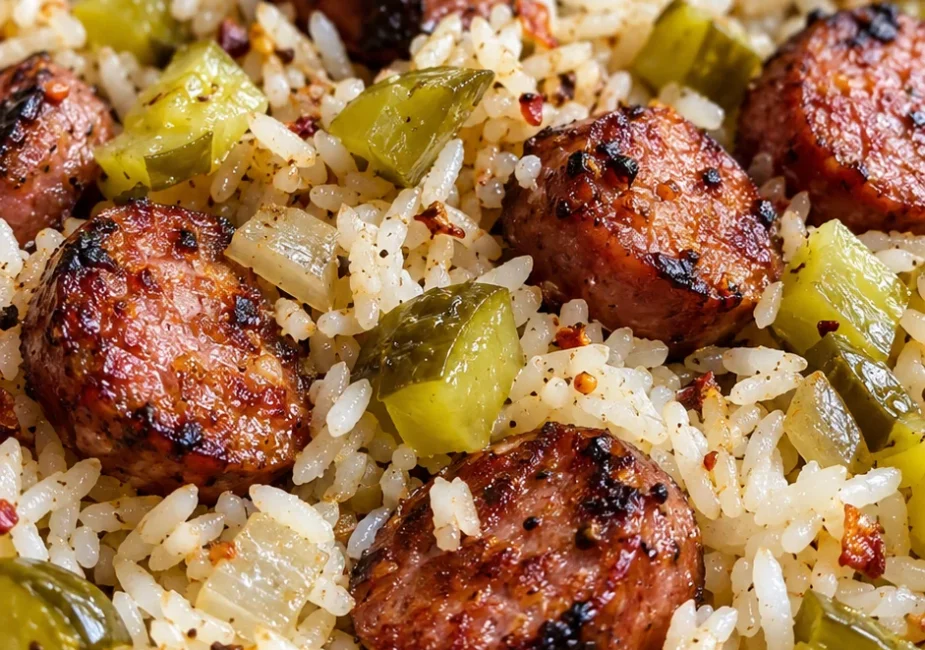
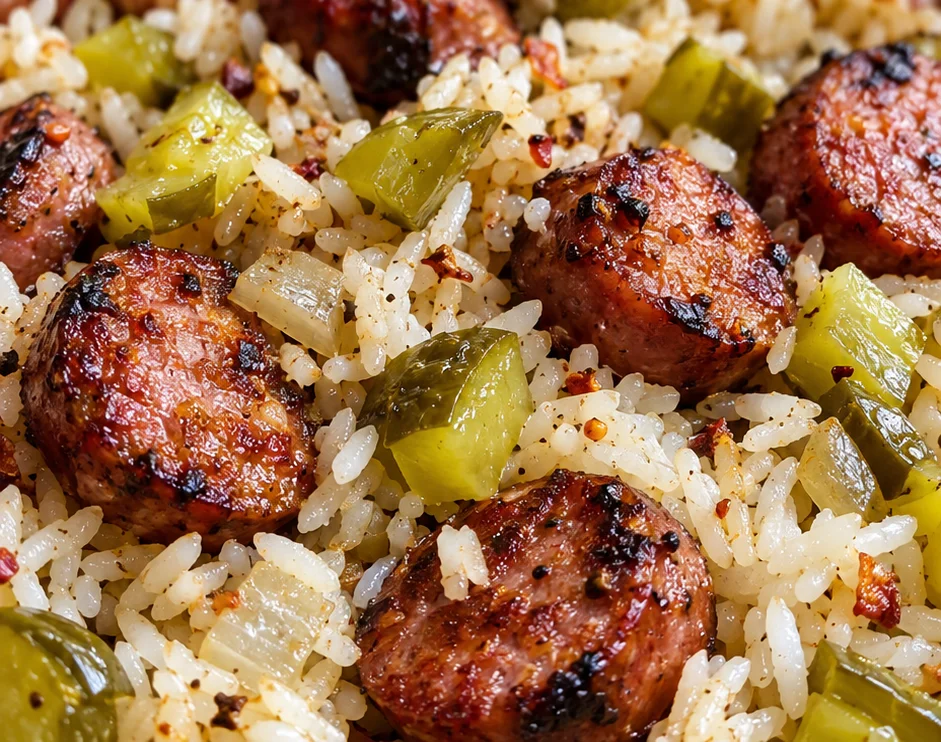
There’s a style of cooking dinner that happens when the pantry is doing all the work. You’re standing in front of an open cupboard holding nothing in particular, and the answer is a bag of rice, a can of tomatoes, and whatever meat is on the bottom shelf. No plan, no list, nothing to chop but an onion.
Jailhouse rice lives in exactly that spot, and it’s outlasted every recipe that needed a separate trip to the store. The reason works is that a can of diced tomatoes is doing about a third of the cooking, and most versions throw that away by adding the full box amount of water anyway. Here’s how it builds.
Why This One-Pan Jailhouse Rice Works
- It’s about a dollar a plate. Two cups of rice, a can of tomatoes, and a pound of meat feeds six people for less than the price of two drive-through meals.
- One pot, start to finish. Brown the meat, cook the vegetables in the fat, add the rice, cover it. There’s no second pan and no water to boil separately.
- The liquid ratio is the whole recipe. Most one-pan rice fails because of water, not heat. Getting it to one inch above the rice is a ten-second check that solves it every time.
- Browning does the flavor work. That browned meat and the fond under it is what separates this from a pot of wet rice with tomato flavor. There’s no seasoning in here that isn’t in the box.
- It’s better the next day. If you’ve got four minutes to spend, make a double and eat half tomorrow.
- It accepts almost any vegetable. Peppers, corn, black beans, whatever’s soft and going soft in the crisper drawer.
Recipe Card Summary
- Prep time: 10 minutes
- Cook time: 35 minutes
- Total time: 45 minutes
- Servings: 6
- Estimated per serving: ~520 calories, 21 g protein, 52 g carbs, 21 g fat an estimate only, and the fat number swings hard depending on what you brown. Lean ground turkey takes it from 21 g down to about 10.
Ingredients
- 1 lb (450 g) ground beef, or breakfast sausage, or kielbasa, sliced
- 1 tbsp olive oil, plus more if your meat is lean
- 1 small yellow onion, diced
- 1 green bell pepper, diced
- 2 cloves garlic, minced
- 2 tsp chili powder
- 1 tsp ground cumin
- 1/2 tsp kosher salt, plus more for the meat
- 2 cups (400 g) long-grain white rice, rinsed
- 1 (14.5-oz / 410 g) can diced tomatoes
- 1 1/2 cups (355 ml) water, plus more as needed
- 1/2 cup (55 g) shredded sharp cheddar
- Optional: black beans, corn, sliced jalapeños, hot sauce, scallions, sour cream
Notes on the ingredients:
Rinse the rice until the water runs clear, about 30 seconds. That washes off the surface starch that would otherwise turn the liquid to paste as it cooks.
Use a plain can of diced tomatoes, not diced tomatoes with basil and garlic in them. It sounds like an unnecessary preference until you taste the finished pot.
Equipment
- Dutch oven, 5.5 to 6 quart, with a tight-fitting lid
- Wooden spoon
- Slotted spoon, for draining the meat
- Fine mesh strainer for rinsing rice
- Sharp knife and cutting board
- Measuring cups you’ll want to judge liquid by depth, not by the box
Instructions
Brown the meat properly.
Break the meat up with your hands as it goes into the pot, then leave it alone for a few minutes before you touch it. You want flat, dark brown patches sitting against the bottom of the pan, not gray mince that you stirred around every thirty seconds. If the meat is lean, add the tablespoon of oil first and give it a minute before the meat goes in. Once it’s browned, transfer it to a plate with a slotted spoon. Don’t drain it you’re leaving behind the fat, and that’s the next step.
Cook the vegetables in the rendered fat.
Lower the heat to medium. Add the onion and bell pepper to the fat in the pot and cook 5 to 6 minutes, until they’re soft and starting to color at the edges. Add the garlic for the last 30 seconds. Don’t wash out the pan first. That browned sediment on the bottom is going to dissolve into the liquid in about fifteen minutes and it’s the single most flavorful thing in the recipe.
Bloom the spices, then toast the rice.
Add the chili powder and cumin to the pan and stir for 30 to 45 seconds, until they’re darker and the smell hits the back of your nose. Spices need fat and heat to release; dumping them in with the liquid is how you end up with a pot that tastes seasoned in a flat, dusty way. Now add the rinsed, drained rice and stir for about a minute, coating every grain in the fat. You’ll hear it change. Toasting the grains does two things: it firms the outside so it won’t break down later, and it cuts the starch on the surface that would otherwise cloud the liquid.
Add the tomatoes, water, and salt then check the depth.
Tip in the whole can of diced tomatoes with its juice, add 1 1/2 cups of water and the salt, and stir once to combine. Now look at it. The liquid should come up about one inch above the surface of the rice. That’s the real measurement, which is why I’m telling you to check rather than trust the can. Here’s the arithmetic.
The can is about 1 1/2 cups. Plus your 1 1/2 cups of water is roughly three cups of liquid for two cups of dry rice noticeably less than the four cups the rice box would tell you to use. And that’s on purpose, because your total liquid is coming from three sources at once: the water, the tomatoes, and the fat and drippings the sausage just gave up. Add the full box amount on top of that and the water has nowhere to go.
It collects in the bottom of the pot and turns to paste while the edges catch and dry. So check. Wide Dutch oven, 1 1/2 cups of water should land you right at an inch. Narrow stockpot, add a third more, because the same volume makes a shallower pool.
Simmer uncovered until the liquid disappears, then lid and rest.
Bring to a boil, then drop to the lowest simmer your pot will hold. Cook uncovered for 15 to 18 minutes, and don’t stir it. Not once. Every stir agitates surface starch into what’s left of the liquid and thickens exactly what you want to keep as steam. You’re watching for the liquid to disappear completely.
No free liquid moving in the pot, the grains look wet and glossy rather than dry and chalky, and when you lift the lid you see a visible wisp of steam. That’s your signal to cover. Lid on, heat off, 10 minutes. Don’t peek. Each lift lets out the steam that’s conditioning the top layer of the rice, and the condensation runs back down onto it.
Finish and serve.
Remove the lid, fluff with a fork, and taste before adding salt. Then pile the cheddar on top while it’s still hot enough to melt and cover the whole thing. Sour cream or scallions go on after. If you put them on before the lid, you get a sad, warm layer on top of a properly melted one.
Common Mistakes to Avoid
- Trusting the box’s water amount instead of the depth. This is the one that matters most. One inch of liquid over the rice. More than that gives you a sticky, soupy bottom and dry edges; less and you get crunchy grains in the middle.
- Covering the pot from the start. Trapped steam condenses and runs straight back down onto the grains. That’s the wet, gummy texture people blame on the pot instead.
- Stirring after the liquid goes in. One stir to combine, then hands off for 18 minutes. It feels like neglect. It’s the reason the grains stay separate.
- Crowding the meat into the pan. Brown meat doesn’t happen in a crowded pan it grey-warms and steams in its own liquid. Two batches, or accept gray mince.
- Peeking under the lid during the rest. The ten minutes off the heat is doing real work, and a lifted lid drops the temperature and dumps condensation back onto the surface.
How to Store & Reheat
Fridge: 4 days, covered. It genuinely improves overnight the liquid finishes absorbing, and the flavor settles.
Freezer: up to 3 months, pressed flat in a freezer bag so it stacks. Thaw in the fridge overnight, not on the counter and not in the microwave. Cold rice reheats unevenly in a microwave, and you want it steaming all the way through, not lukewarm in the middle.
Reheating: the covered skillet beats the microwave here. Splash in 2 tablespoons of water, cover, and warm it over medium for about 5 minutes. The steam is what softens the grains back up. In the microwave, use 60 to 90 seconds on high with a damp paper towel over the bowl.
On reheating: if you shredded cheese onto it before the first leftover, add fresh cheese after reheating rather than trying to re-melt the old layer.
Recipe Variations & Substitutions
- Leaner meat: Ground turkey and turkey sausage work, but add a tablespoon more oil in step one or it’ll dry out. The fat you brown in is doing real work here and there’s not much of it to spare.
- Black bean and corn version: Add a drained can of black beans and a cup of frozen corn with the tomatoes. It’ll be more of a main-course salad than a side. Worth trying, just know it’s a good chunk more carbs and fiber.
- Chipotle: Swap 1 teaspoon of the chili powder for 1 teaspoon chipotle powder and throw in a sliced jalapeño with the bell pepper. Top with sour cream instead of plain cheddar. This is the version that converts people who don’t think they like this dish.
- Lower carb: Leave out the rice entirely, double the meat and peppers, and add a pound of cauliflower rice in its place. It goes in about the same moment and it wants less liquid than a cup check the depth again halfway through, because it drinks fast.
- Dairy-free: Skip the cheese, add avocado and a squeeze of lime at the end instead. Works best with the chipotle version.
- Bulk it: Double everything except the liquid, and remember the ratio rather than the numbers still one inch of liquid over the rice. This is one of the few recipes that scales cleanly with no math.
A Few Words About the Numbers
This is one of those recipes where you get genuinely decent nutrition out of cheap ingredients, and it’s worth being specific about where it’s coming from.
About 21 grams of protein per serving is respectable for a 500-calorie dinner, and it’s all from the meat and the cheese. The 52 grams of carbohydrate is essentially the rice there’s nothing hidden there. The fat number is the one to look at honestly: most of that 21 grams comes from the ground beef, and it’s the single biggest lever you have. Lean sausage and a tablespoon less cheese takes this from 21 grams of fat to about 10 without changing anything else.
The canned tomatoes bring sodium, which is the one place a label check is worth doing if that matters to you — no-salt-added tomatoes cook identically. Beyond that, there’s not much to disclaim. It’s rice, meat, tomatoes, and seasoning, and it fills you up at about a dollar a plate.
FAQ
What’s the story behind the name?
Jailhouse rice traces back to prison and camp cooking, where the version that got shared around was rice, canned tomatoes, whatever meat was available, and heavy seasoning because there wasn’t a lot of choice about any of it. The name isn’t a marketing angle it’s why the seasoning in this recipe is bolder than most rice dishes and the ingredient list stays so short.
Do I have to use ground beef?
No. Breakfast sausage is the classic version and kielbasa sliced thin is excellent. Ground turkey works, with the oil adjustment noted above. Ground chicken or even chopped chicken thighs all take the same path.
Can I use brown rice?
Yes, and the one-inch rule actually helps you here, because brown rice is fussier about ratios than white. Add 30 to 45 minutes to the simmer time and expect to check the liquid twice rather than once. Wash it well.
Can I make it ahead?
It’s better made ahead. Most of the work is on the front end and the pot is genuinely more flavorful the next day. Cool it within a couple of hours, refrigerate covered, and reheat with a splash of water.
Can I use instant or converted rice?
Not instant. It disintegrates in a dish that simmers for 18 minutes and you’ll end up with rice pudding. Converted rice is fine and behaves much like the regular long-grain, just with slightly less starch to rinse away.
How do I know it’s actually done?
Three signals together: the liquid has completely disappeared, the grains look glossy and wet rather than chalky, and it’s been the full 10 minutes covered off the heat. If you want a number instead, the rice will be around 165°F at the center.
Final Thoughts
One inch of liquid over the rice. That’s the entire difference between a pot of rice with tomato flavor and a pot of mush, and it’s the only measurement in this recipe you have to make yourself.
Make it with the ground beef first, and if you’re going to go with leaner meat on the next batch, add the oil. Then tell me how you feel about the chili powder two teaspoons is what I use, and I’m curious whether that’s over the top for most people or about right.
- 1 lb 450 g ground beef, or breakfast sausage, or kielbasa, sliced
- 1 tbsp olive oil plus more if your meat is lean
- 1 small yellow onion diced
- 1 green bell pepper diced
- 2 cloves garlic minced
- 2 tsp chili powder
- 1 tsp ground cumin
- 1/2 tsp kosher salt plus more for the meat
- 2 cups 400 g long-grain white rice, rinsed
- 1 14.5-oz / 410 g can diced tomatoes
- 1 1/2 cups 355 ml water, plus more as needed
- 1/2 cup 55 g shredded sharp cheddar
- Optional: black beans corn, sliced jalapeños, hot sauce, scallions, sour cream
Dutch oven, 5.5 to 6 quart, with a tight-fitting lid
Wooden spoon
Slotted spoon, for draining the meat
Fine mesh strainer for rinsing rice
Sharp knife and cutting board
Measuring cups you'll want to judge liquid by depth, not by the box
Break the meat up with your hands as it goes into the pot, then leave it alone for a few minutes before you touch it. You want flat, dark brown patches sitting against the bottom of the pan, not gray mince that you stirred around every thirty seconds. If the meat is lean, add the tablespoon of oil first and give it a minute before the meat goes in. Once it's browned, transfer it to a plate with a slotted spoon. Don't drain it you're leaving behind the fat, and that's the next step.
Lower the heat to medium. Add the onion and bell pepper to the fat in the pot and cook 5 to 6 minutes, until they're soft and starting to color at the edges. Add the garlic for the last 30 seconds. Don't wash out the pan first. That browned sediment on the bottom is going to dissolve into the liquid in about fifteen minutes and it's the single most flavorful thing in the recipe.
Add the chili powder and cumin to the pan and stir for 30 to 45 seconds, until they're darker and the smell hits the back of your nose. Spices need fat and heat to release; dumping them in with the liquid is how you end up with a pot that tastes seasoned in a flat, dusty way. Now add the rinsed, drained rice and stir for about a minute, coating every grain in the fat. You'll hear it change. Toasting the grains does two things: it firms the outside so it won't break down later, and it cuts the starch on the surface that would otherwise cloud the liquid.
Tip in the whole can of diced tomatoes with its juice, add 1 1/2 cups of water and the salt, and stir once to combine. Now look at it. The liquid should come up about one inch above the surface of the rice. That's the real measurement, which is why I'm telling you to check rather than trust the can. Here's the arithmetic. The can is about 1 1/2 cups. Plus your 1 1/2 cups of water is roughly three cups of liquid for two cups of dry rice noticeably less than the four cups the rice box would tell you to use. And that's on purpose, because your total liquid is coming from three sources at once: the water, the tomatoes, and the fat and drippings the sausage just gave up. Add the full box amount on top of that and the water has nowhere to go.
It collects in the bottom of the pot and turns to paste while the edges catch and dry. So check. Wide Dutch oven, 1 1/2 cups of water should land you right at an inch. Narrow stockpot, add a third more, because the same volume makes a shallower pool.
Bring to a boil, then drop to the lowest simmer your pot will hold. Cook uncovered for 15 to 18 minutes, and don't stir it. Not once. Every stir agitates surface starch into what's left of the liquid and thickens exactly what you want to keep as steam. You're watching for the liquid to disappear completely. No free liquid moving in the pot, the grains look wet and glossy rather than dry and chalky, and when you lift the lid you see a visible wisp of steam. That's your signal to cover. Lid on, heat off, 10 minutes. Don't peek. Each lift lets out the steam that's conditioning the top layer of the rice, and the condensation runs back down onto it.
Remove the lid, fluff with a fork, and taste before adding salt. Then pile the cheddar on top while it's still hot enough to melt and cover the whole thing. Sour cream or scallions go on after. If you put them on before the lid, you get a sad, warm layer on top of a properly melted one.
One-Pan Jailhouse Rice
Last modified: September 30, 2026