
Tropical Shrimp, Mango & Avocado Rice Bowl (With Charred Corn and Coconut Milk)
 • September 30, 2026
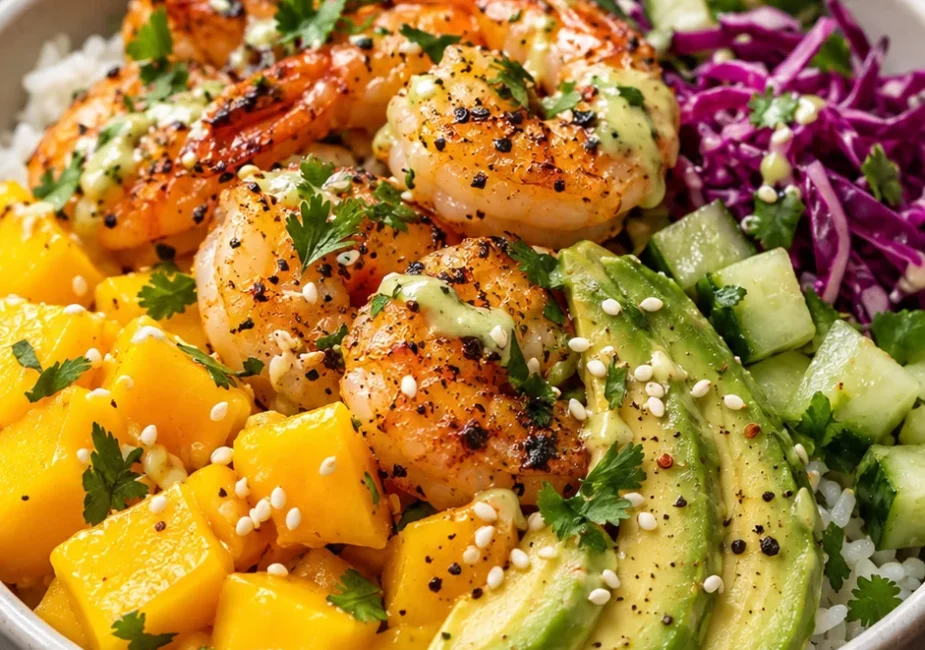
Sweet mango gives off a smell that’s hard to describe and impossible to hide. It comes in the door ahead of you. Put one next to a hot skillet and a cut lime and it’s suddenly not winter any more, which is a lot to ask of a weeknight dinner — but a shrimp and mango rice bowl delivers it in the time it takes rice to steam.
This is the one I make when the weather turns and I’ve had my fill of the same six dinners. Twenty-five minutes, one skillet and one small pot. The trick is in when the lime juice goes in, and it’s not when you’d think. Here’s the whole thing.
[Insert “Jump to Recipe” button here via recipe plugin]
Why This Tropical Shrimp Rice Bowl Works
- It has actual contrast in every bite. Sweet mango, salty shrimp, creamy avocado, and corn with a char on it. That’s four distinct textures in one bowl, which is more than most weeknight rice bowls manage.
- The char on the corn is worth the extra five minutes. Boiled corn is fine. Corn that has been blackened in a dry skillet tastes like a grill, and it’s the thing that stops this from tasting like a poke bowl.
- The lime goes in at the end, not at the beginning. That’s the one change that keeps the fruit crisp instead of leaking juice into the rice. Cut fruit and acid have a bad relationship when you leave them alone together.
- Coconut rice is more forgiving than plain rice. The fat in the coconut milk slows things down, so it’s a little harder to ruin than a pot of white rice on the stove.
- Nothing in it needs more than one bowl. Two pans, a board, a knife, and you’re done.
- It’s naturally gluten-free and dairy-free as written, so it works without a separate version for anyone at the table.
Recipe Card Summary
- Prep time: 15 minutes
- Cook time: 20 minutes
- Total time: 25 minutes (the rice and the shrimp overlap)
- Servings: 4
- Estimated per serving: ~600 calories, 28 g protein, 74 g carbs (about 6 g fiber), 23 g fat — an estimate only. The fat figure is almost entirely coconut milk, avocado, and the dressing oil, and the substitutions section has two easy ways to bring it down.
Ingredients
For the coconut rice:
- 1 1/4 cups (250 g) long-grain white or jasmine rice, rinsed
- 1 cup (240 ml) full-fat coconut milk, well shaken
- 1 cup (240 ml) water
- 1/2 tsp kosher salt
For the shrimp:
- 1 lb (450 g) large shrimp, 21/25 count, peeled and deveined
- 1/2 tsp smoked paprika
- 1/2 tsp garlic powder
- 2 tbsp olive oil, divided
- Pinch of salt
For the dressing:
- 1 1/2 tbsp (22 ml) neutral oil — grapeseed, avocado, or canola
- 1 tsp honey
- 1/2 tsp fine salt
- Pinch of red chili flakes
- 3 tbsp (45 ml) fresh lime juice, divided — 2 tablespoons now, the rest later
For the bowl:
- 1 medium mango, ripe but firm
- 1 large ripe avocado
- 1 cup (150 g) corn kernels, from 2 ears or frozen
- 1/2 small red onion, sliced paper-thin
- 2 cups shredded red cabbage
- 1/4 cup chopped fresh cilantro
- 1 serrano or jalapeño, thinly sliced, optional
- Tortilla chips and lime wedges, for the table
Notes on the ingredients:
Buy a ripe but firm mango — Kent, Tommy Atkins, or Ataulfo all work. If it dents under your thumb anywhere other than the stem end, it’ll turn to juice in the bowl. A frozen mango, thawed, is honestly more reliable than a bad fresh one.
Use full-fat coconut milk and shake the can hard. The water on top of a neglected can is not the same ingredient.
Equipment
- 3-quart saucepan with a tight-fitting lid
- 12-inch skillet, stainless or cast iron
- Small bowl and a fork or small whisk
- Tongs
- Good sharp knife and a cutting board
- Paper towels
Instructions
Get the coconut rice going first.
Rinse the rice until the water runs clear, about 30 seconds, and drain it well. Put it in the saucepan with the coconut milk, water, and salt. Stir once, bring to a boil, then cover and drop to the lowest heat your burner will hold.
Cook 18 to 20 minutes, until the liquid is gone and the grains are tender with a slight chew. Turn the heat off, keep the lid on, and leave it 10 minutes. It’ll finish while you’re doing everything else.
Coconut milk is fatty, which makes this more forgiving than plain rice — the liquid absorbs more slowly, so you have a wider window than usual before it turns to mush.
Char the corn in a dry skillet.
Set the skillet over medium-high, no oil at all, and dump the corn in. Let it sit undisturbed for 2 to 3 minutes until you see dark brown patches and hear it start to pop. Toss, leave it another 2 minutes, then take it out.
That’s it. That’s the whole technique. Dry heat does what oil doesn’t — it actually browns, because there’s no layer of fat insulating the kernels from the pan.
Whisk the dressing base, and hold the lime back.
Whisk 1 1/2 tablespoons of neutral oil, the honey, the fine salt, and a pinch of chili flakes together in a small bowl. Add 2 tablespoons of the lime juice. Not all three tablespoons — keep the last one back.
This is the detail that makes this bowl, so it’s worth saying plainly why. Acid sitting on cut fruit keeps pulling water out of it. Mango starts giving up juice within about ten minutes of being cubed and dressed. Avocado goes first at the edges: the outside of the cubes softens and pales while the middle is still holding its shape. And all of that water ends up at the bottom of the bowl, where it soaks into the rice and turns the bottom layer to porridge.
The oil, honey, and salt go together now because those three actually need a minute or two to emulsify into something that clings to things instead of sliding off. Every drop of fresh lime juice gets added at the table, seconds before you eat.
Same dressing. Ten seconds of extra discipline. Fruit that still has its edges.
Quick-pickle the onion.
Slice the red onion as thin as you can manage — a mandoline is overkill, a sharp knife and a steady hand work. Toss it with 2 tablespoons of warm water and a pinch of salt, and leave it on the board.
Ten minutes softens the raw bite and takes the sharpest edge off. It doesn’t need vinegar. The lime in the dressing finishes the job.
Sear the shrimp, hands off.
Wipe the skillet out and put it back on medium-high. Add 1 tablespoon of oil and let it shimmer, then add the shrimp in one layer with the paprika, garlic powder, and a pinch of salt scattered over the top.
Now don’t touch them for 90 seconds. This is the part people can’t resist and it’s exactly what costs you the crust — every early flip tears the surface that’s trying to set. After 90 seconds the underside will have a distinct opaque white edge that has started to curl underneath itself. Flip and give them another 60 to 90 seconds, until they’re opaque all the way through.
Total pan time is going to be somewhere around three minutes. Pull them at 145°F, or just before they look completely done — they’ll finish on the plate.
If they don’t fit in one layer, cook in two batches. No argument.
Cut the fruit last, and dress it with nothing.
Slice the mango away from the stone and cut it into chunks roughly the size of the shrimp. Scoop the avocado into thick slices, then cube it.
Toss the mango and avocado together without any dressing at all. No lime, no oil, no salt. They’re going into the bowl within the next minute and the dressing goes on there with everything else.
Build the bowl, and add the lime now.
Fluff the rice. Put it in the bowls, then the cabbage, then the shrimp, then the corn. Pile the mango and avocado on top, scatter the pickled onion and cilantro, add the serrano if you’re using it.
Now pour over the dressing and add the last tablespoon of lime juice.
Toss once — gently, from the bottom, so the rice lifts and the dressing distributes. Serve immediately with chips and lime wedges.
This bowl is built in about ninety seconds and it should be eaten in about the same window. It’s not a make-ahead dish dressed in advance. If you have to hold it, hold it undressed.
Common Mistakes to Avoid
- Putting all the lime juice into the dressing bowl. This is the big one. The mango goes soft and wet, the avocado’s edges turn pale and mushy, and the bottom of the bowl turns to rice porridge. Mix the dressing base early, keep the lime for last.
- Choosing an overripe mango. The smell is wonderful and the texture isn’t. You want a mango that gives slightly at the stem end and nowhere else. Firm is recoverable; soft is not.
- Flipping the shrimp early. Ninety seconds, untouched, per side. Every one of those early turns is a place where the surface tears and you lose the browning.
- Crowding the shrimp. One layer, or two batches. A pan full of shrimp drops its temperature and boils them in their own liquid, which is a different dish entirely.
- Building the bowl early. Even dressed correctly, the rice starts absorbing from the bottom within minutes. If you need to prep ahead, prep the components and assemble at the table.
How to Store & Reheat
The rule for this one is simple: store it as parts, never as a bowl.
Fridge: cooked shrimp up to 3 days, rice up to 4, both in separate airtight containers. Dressing in a jar keeps 5 days — it separates, so give it a shake. Shredded cabbage holds 4 days.
The cut fruit is a separate problem. Avocado will brown and mango will go soft within a day, so neither belongs in the container. Wrap the leftover halves tightly, press plastic against the cut face, and use them within 24 hours — ideally scrambled into an egg or blended into a smoothie.
Freezer: shrimp spread on a plate, frozen, then bagged, 2 to 3 months. Rice freezes flat for about 3 months. Do not freeze the assembled bowl. Mango and avocado go to mush and there’s no bringing them back.
Reheating: the rice wants a splash of water and a lid, either 5 minutes on low in the saucepan or 60 to 90 seconds in the microwave. The shrimp usually don’t need reheating at all — letting them come to room temperature off the heat keeps them tender and saves you the risk.
If you must, 30 to 40 seconds per side in a hot skillet and no more.
Recipe Variations & Substitutions
- Lower carb: Leave out the rice and double the shrimp to 1 1/2 lb. Add 1 pound of cauliflower rice in its place, but add it with only 1/2 cup of water — it drinks fast and you don’t want a watery bowl. This comes in around 22 grams of carbs.
- Swap the mango: Pineapple, papaya, or even cubed melon all work. Papaya is the closest in sweetness and it holds its texture even better.
- Make it hot: Add the serrano and put a chipotle-lime drizzle over the top instead of the honey-lime dressing. Two chipotle powders and a squeeze of lime is about right.
- Prep for lunch: Make everything the night before and keep it in separate containers. The only assembly decision at lunch is whether you’re having the dressing on the side or over the top, and I’d say over the top, immediately.
- Not shrimp: Scallops go in for about 2 minutes per side in the same hot pan. Salmon fillets need about 4 minutes skin-side down, and the char on the corn doubles in value next to them.
- Cut the fat: Use half coconut milk plus half water for the rice, and drop the dressing oil to 1 tablespoon. Between the two, that takes roughly 5 grams of fat off a serving without changing the flavor much.
An Honest Read on the Numbers
This is a bowl built around a lean protein, and shrimp is about as lean as it gets — nearly all the 28 grams of protein per serving comes from a pound of shrimp with very little fat attached. It also brings selenium and choline, which are two nutrients that don’t show up in most weeknight dinners.
The 74 grams of carbohydrate is real and it’s honest: mostly rice, plus the mango and the corn, plus a bit of cabbage. That’s a carbohydrate-forward bowl and it doesn’t pretend otherwise.
The 23 grams of fat is where you’d trim if you wanted to, and it’s almost entirely coconut milk, avocado, and the two tablespoons of oil in the dressing. That’s not a criticism — those three things are what make it taste like a tropical bowl instead of a salad with shrimp in it. But if fat is the number you’re managing, the two changes in the variations section above get you most of the way there with no real loss.
FAQ
Can I skip the mango entirely?
Yes. Pineapple is the most common substitute and it’s slightly sharper, which works fine with the honey-lime dressing. Papaya is the closest match in sweetness. You’d lose a little of the sweetness balance, so add a touch more honey to compensate.
How do I pick a mango that isn’t overripe?
Hold it in your palm and press gently with your thumb near the stem end. A little give is right. Firm flesh with no give means you should let it sit on the counter for a day or two. Any soft spots or wrinkles elsewhere mean it’s already past the point for this bowl.
Can I use frozen mango?
Yes, and I’d actually recommend it if you have a choice. Thaw it in the fridge overnight and it comes out in consistent chunks with none of the softness that makes a bruised fresh mango bleed into the bowl. Frozen mango is picked and frozen at peak, which is exactly what this needs.
Can I make this ahead?
Everything except the fruit and the dressing, yes. Cook the shrimp, cook the rice, char the corn, and keep them separate in the fridge. At lunch you’re looking at five minutes of assembly, and the bowls will look like you made them fresh, which they’ll still taste like.
Is this keto or low carb?
Not as written — 74 grams of carbohydrate per bowl, most of it rice. Drop the rice and add cauliflower rice plus more shrimp and avocado, and you’ll land somewhere around 22 grams. Different bowl, but still good.
Do I have to char the corn?
No, but you should if you have five minutes. It’s the difference between a bowl that’s pleasant and one where you notice the corn first. If you’re out of patience, well-drained canned corn with a squeeze of lime will still work — you’re just trading char for salt.
Final Thoughts
The dressing is built in two stages, and the lime waits until the table. Everything else is straightforward — hot skillet, ninety seconds untouched, coconut rice left alone for ten minutes.
Make it in the last good week of something. Then let me know what you do with the corn, because I go back and forth on whether the char is worth the extra pan time or whether I should just admit I’m making it for the last two bites.
Mango & Avocado Rice Bowl Tropical Shrimp
Last modified: September 30, 2026