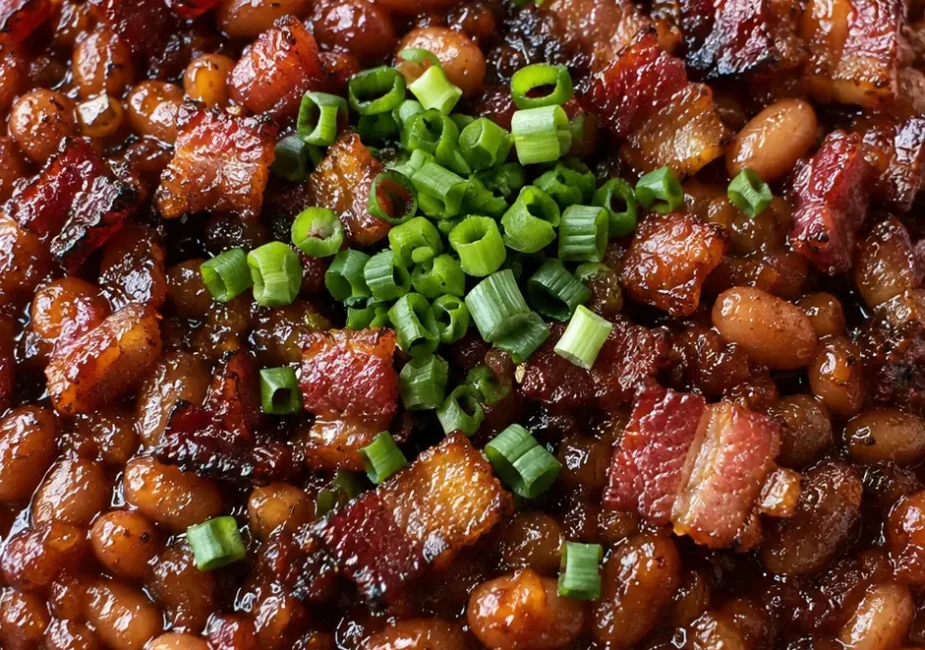
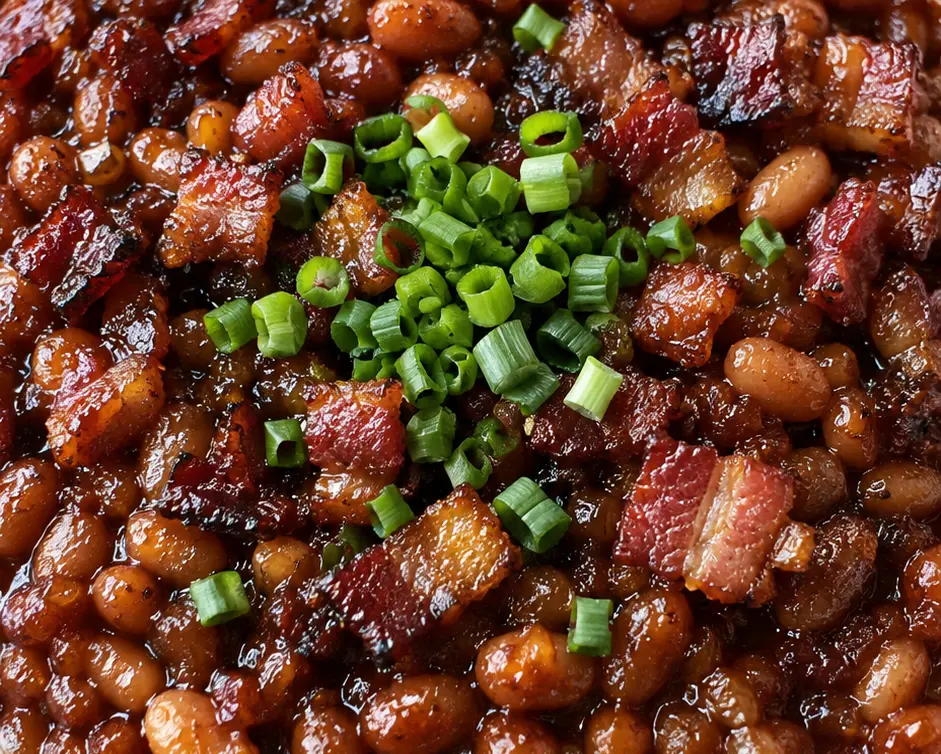
Most people assume the beans are what make or break a pot of baked beans. They’re not. You can use the exact same can of navy beans as everyone else on the block and still end up with something that tastes flat, one-note, and a little too sweet or something people ask you to bring every single time. The difference isn’t the beans. It’s everything you do to them before and after the oven.
That gap is smaller than you’d think, and most of it comes down to one step people skip because it seems optional. It isn’t. Here’s how it comes together.
Why You’ll Love It
- Deep, smoky flavor without an all-day cook. Building the sauce in rendered bacon fat instead of starting from scratch gets you restaurant-style depth in under an hour.
- Balanced, not just sweet. A splash of apple cider vinegar stirred in after baking keeps this from tasting like dessert, which is the most common complaint about baked beans made from a can.
- Genuinely great for a crowd. This scales up easily and holds well in a slow cooker if you need to keep it warm for a potluck or barbecue.
- Uses ingredients you probably already have. Ketchup, brown sugar, and mustard do most of the heavy lifting no specialty ingredients required.
- Make-ahead friendly. The flavor actually improves overnight, so this is one of the rare sides that’s better made a day early.
Recipe At a Glance
- Prep time: 15 minutes
- Cook time: 45 minutes
- Total time: about 1 hour
- Servings: 6
- Estimated calories: ~290 per serving
- Estimated macros per serving: ~11g protein, ~34g carbs, ~12g fat
Nutrition is an estimate based on standard ingredient values and will vary depending on brands and exact portions used.
Ingredients
- 6 slices thick-cut bacon, chopped
- 1 small yellow onion, diced
- 2 (15 oz) cans navy beans or great northern beans, drained and rinsed
- ¾ cup ketchup
- ⅓ cup brown sugar
- 2 tbsp molasses
- 1 tbsp yellow mustard
- 1 tbsp Worcestershire sauce
- ½ tsp black pepper
- ¼ tsp salt (adjust to taste, since bacon adds its own)
- 1½ tbsp apple cider vinegar, added at the end (not during baking)
Notes:
- Bacon quality matters more than usual here. Thick-cut bacon renders more fat, and that fat is what carries the smoky flavor through the whole dish thin-cut bacon works, but you’ll get a noticeably lighter flavor.
- Molasses vs. brown sugar only: Molasses adds a slight bitterness that balances the sweetness, which is the flavor most “just add brown sugar” versions of this recipe are missing.
Equipment Needed
- Large oven-safe skillet or Dutch oven (or a skillet plus a baking dish)
- Wooden spoon
- Oven
Step-by-Step Instructions
- Preheat the oven to 350°F (175°C).
- Render the bacon: In an oven-safe skillet over medium heat, cook the chopped bacon until crispy, about 6–8 minutes. Use a slotted spoon to transfer the bacon to a plate, but leave the rendered fat in the skillet that fat is the base of the whole sauce.
- Sauté the onion: Add the diced onion directly to the bacon fat and cook for 3–4 minutes, until softened and translucent.
- Build the sauce: Stir in the ketchup, brown sugar, molasses, mustard, Worcestershire sauce, pepper, and salt. Simmer for 2 minutes, stirring, until everything is combined into a glossy sauce.
- Add the beans and bacon back in: Fold in the drained beans and most of the cooked bacon (save a small handful for topping later), stirring until every bean is coated in sauce.
- Bake uncovered: Transfer the skillet to the oven and bake, uncovered, for 40–45 minutes, until the sauce has thickened and reduced slightly and the top edges are just starting to darken. Baking uncovered matters here a covered dish traps steam and keeps the sauce thin, while uncovered baking lets excess liquid evaporate so the sauce actually clings to the beans instead of pooling around them.
- Stir in the vinegar off the heat, after baking not before. This is the step that changes everything. If you add the vinegar before baking, the acid mellows out completely over 45 minutes in the oven, and you lose it. Stirred in right at the end, it cuts through the sweetness and bacon fat with a bright edge that makes the whole dish taste balanced instead of one-note sweet. Pro tip: taste before and after adding the vinegar the difference is bigger than the tiny amount would suggest.
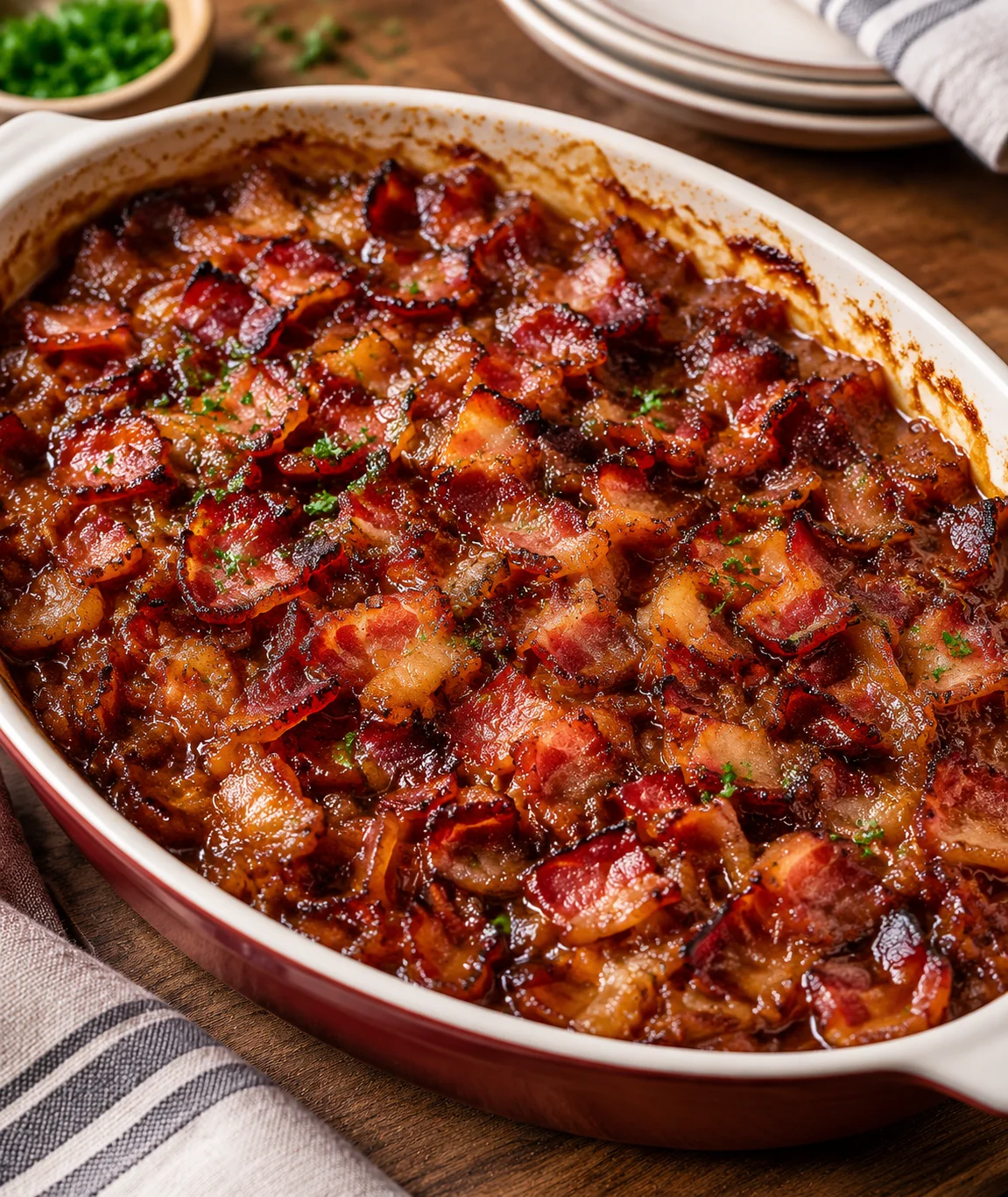
- Top and serve: Sprinkle the reserved bacon over the top and serve warm, straight from the skillet.
Common Mistakes to Avoid
- Adding the vinegar too early. Stirring it in before baking lets the acid cook off, leaving the beans one-note sweet instead of balanced always add it at the very end.
- Baking covered. This traps steam and keeps the sauce watery instead of letting it reduce and thicken properly.
- Draining the bacon fat. Pouring it out and starting the sauce in plain oil skips the smoky depth that makes this taste homemade instead of doctored-up canned beans.
- Over-salting before tasting. Bacon already brings a lot of salt to the dish taste before adding the extra ¼ teaspoon, and skip it entirely if your bacon is on the saltier side.
- Serving immediately after baking. The sauce is noticeably thin straight out of the oven and thickens as it sits for 5–10 minutes give it a few minutes before serving.
How to Store & Reheat
- Fridge: Store in an airtight container for up to 4 days. The flavor genuinely improves on day two as the beans keep absorbing the sauce.
- Freezer: Freezes well for up to 3 months in a freezer-safe container; thaw overnight in the fridge before reheating.
- Reheating: Warm on the stovetop over medium-low heat, stirring occasionally, for about 8–10 minutes, adding a splash of water if the sauce has thickened too much. Microwaving in 1-minute intervals works too, just stir between rounds.
Recipe Variations & Substitutions
- From dried beans: Use 1½ cups dried navy beans, soaked overnight and simmered until tender (about 1 hour), instead of canned. You’ll need to adjust the sauce slightly since dried beans absorb more liquid.
- Vegetarian: Skip the bacon and sauté the onion in 2 tablespoons of butter or oil, then add ½ teaspoon smoked paprika to bring back some of the smokiness.
- Spicier: Add ½ teaspoon cayenne or a diced jalapeño along with the onion.
- Slow cooker version: Cook the bacon and build the sauce on the stovetop as directed, then transfer everything to a slow cooker on low for 3–4 hours instead of baking stir in the vinegar at the very end either way.
- Gluten-free: Double-check your Worcestershire sauce brand, since some contain gluten-based additives; most major brands now offer a gluten-free version.
- Extra smoky: Swap half the bacon for a smoked bacon variety, or add a small pinch of smoked paprika to the sauce.
A Note on Nutrition
Beans bring a solid amount of fiber and plant-based protein to this dish, and the bacon adds additional protein along with most of the fat. This isn’t a low-sugar side by nature the brown sugar and molasses are doing real work for flavor but it’s meant to be a shareable side dish, not an everyday staple, and it fits fine into a varied plate that way. As always, this isn’t medical advice, just an honest look at what’s in the dish.
Frequently Asked Questions
Can I use dried beans instead of canned?
Yes soak 1½ cups of dried navy beans overnight, then simmer until just tender before using them in place of the canned beans. You may need to add a splash of water to the sauce, since dried beans soak up more liquid than canned.
Can I make this ahead of time for a party?
Absolutely, and it’s actually one of the better make-ahead sides the flavor deepens overnight. Make it up to 2 days ahead, store covered in the fridge, and reheat gently on the stovetop before serving.
Is there a vegetarian version?
Yes skip the bacon, sauté the onion in butter or oil instead, and stir in ½ teaspoon of smoked paprika to bring back some of the smoky flavor bacon would normally add.
Why do my baked beans turn out watery?
This usually means the dish was baked covered, which traps steam and keeps the sauce from reducing. Bake uncovered, and let the dish rest for 5–10 minutes after it comes out of the oven the sauce thickens noticeably as it sits.
Can I make this in a slow cooker instead of the oven?
Yes cook the bacon and build the sauce on the stovetop first, then transfer everything to a slow cooker on low for 3 to 4 hours. Stir in the vinegar at the end regardless of which method you use.
What can I use instead of molasses?
In a pinch, you can leave it out and add an extra tablespoon of brown sugar, though you’ll lose some of the slight bitterness that keeps the dish from tasting purely sweet. Dark corn syrup is a closer substitute if you have it.
Final Thoughts
The beans, the bacon, the sauce none of that is really the secret here. It’s that small splash of vinegar added after the oven does its job, not before, that turns a decent pot of baked beans into the one people ask you to bring again. It’s a small step, and it’s worth not skipping.
What’s your go-to mix-in for baked beans extra bacon, a diced jalapeño, or something else entirely?
- 6 slices thick-cut bacon chopped
- 1 small yellow onion diced
- 2 15 oz cans navy beans or great northern beans, drained and rinsed
- ¾ cup ketchup
- ⅓ cup brown sugar
- 2 tbsp molasses
- 1 tbsp yellow mustard
- 1 tbsp Worcestershire sauce
- ½ tsp black pepper
- ¼ tsp salt adjust to taste, since bacon adds its own
- 1½ tbsp apple cider vinegar added at the end (not during baking)
Preheat the oven to 350°F (175°C).
Render the bacon: In an oven-safe skillet over medium heat, cook the chopped bacon until crispy, about 6–8 minutes. Use a slotted spoon to transfer the bacon to a plate, but leave the rendered fat in the skillet that fat is the base of the whole sauce.
Sauté the onion: Add the diced onion directly to the bacon fat and cook for 3–4 minutes, until softened and translucent.
Build the sauce: Stir in the ketchup, brown sugar, molasses, mustard, Worcestershire sauce, pepper, and salt. Simmer for 2 minutes, stirring, until everything is combined into a glossy sauce.
Add the beans and bacon back in: Fold in the drained beans and most of the cooked bacon (save a small handful for topping later), stirring until every bean is coated in sauce.
Bake uncovered: Transfer the skillet to the oven and bake, uncovered, for 40–45 minutes, until the sauce has thickened and reduced slightly and the top edges are just starting to darken. Baking uncovered matters here a covered dish traps steam and keeps the sauce thin, while uncovered baking lets excess liquid evaporate so the sauce actually clings to the beans instead of pooling around them.
Stir in the vinegar off the heat, after baking not before. This is the step that changes everything. If you add the vinegar before baking, the acid mellows out completely over 45 minutes in the oven, and you lose it. Stirred in right at the end, it cuts through the sweetness and bacon fat with a bright edge that makes the whole dish taste balanced instead of one-note sweet. Pro tip: taste before and after adding the vinegar the difference is bigger than the tiny amount would suggest.
Top and serve: Sprinkle the reserved bacon over the top and serve warm, straight from the skillet.
Baked Beans with Bacon
Last modified: September 19, 2026