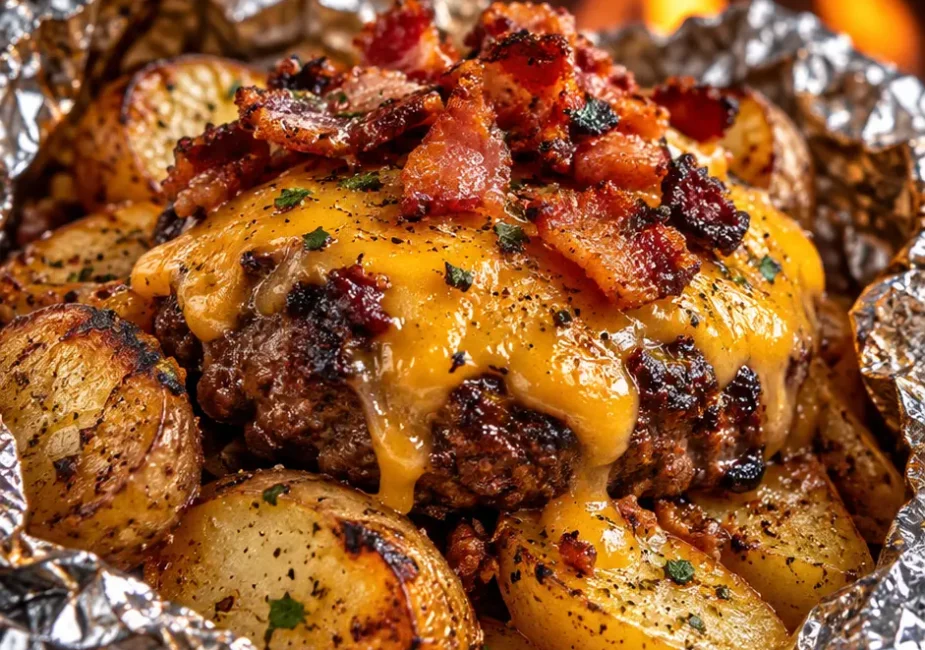
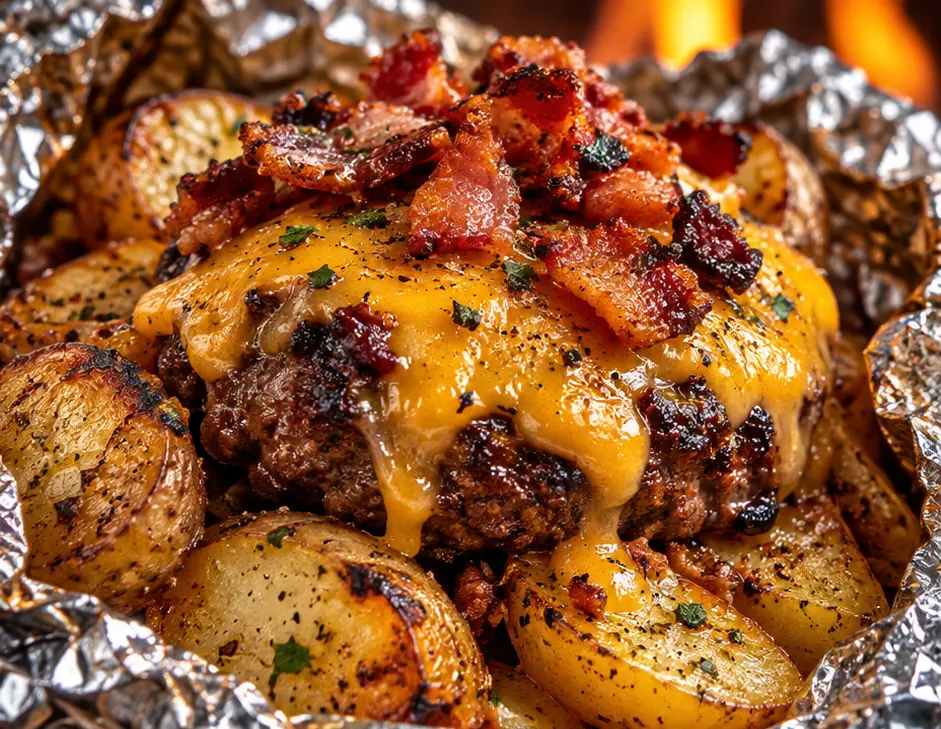
The hobo dinner foil packet is the rare camping classic that got worse when it moved indoors. Sealed shut tight, every pouch becomes a tiny pressure chamber the food steams in its own juices, the burger turns gray, and the potatoes come out with all the charm of a boiled one. Tender? Sure. Interesting? Not really. It’s the version most people learned, and it’s the version this recipe quietly abandons.
The fix is almost embarrassingly simple: open the packet for the last few minutes of cooking. Steam escapes, the potato edges brown and crisp, and the beef looks roasted instead of steamed. Suddenly the same pouch dinner goes from “fine at a campsite” to a weeknight meal worth bragging about one you can customize for every single person at the table. Here’s how to build them right.
Why You’ll Love It
- Everything cooks evenly potatoes tender, vegetables still with a little bite, nothing scorched on the bottom. That comes down to the heat level, which the instructions walk through step by step.
- One packet, almost zero cleanup. No pots, no pans, just foil straight in the trash when you’re done.
- Works on the grill, over a campfire, or in a regular oven the technique doesn’t change no matter where you’re cooking.
- Fully customizable. Swap the protein or vegetables without touching the core method.
- Great for feeding a crowd without needing extra burners or oven space each packet is self-contained.
- Kid-friendly and mess-free, which makes it an easy sell for a backyard cookout or a campsite dinner.
Recipe At a Glance
- Prep time: 15 minutes
- Cook time: 30 minutes
- Total time: 45 minutes
- Servings: 4 packets
- Estimated nutrition per packet (with 85/15 ground beef): ~480 calories, 24g protein, 32g carbohydrates, 22g fat. These are estimates only and will vary depending on your protein and vegetable choices.
Ingredients
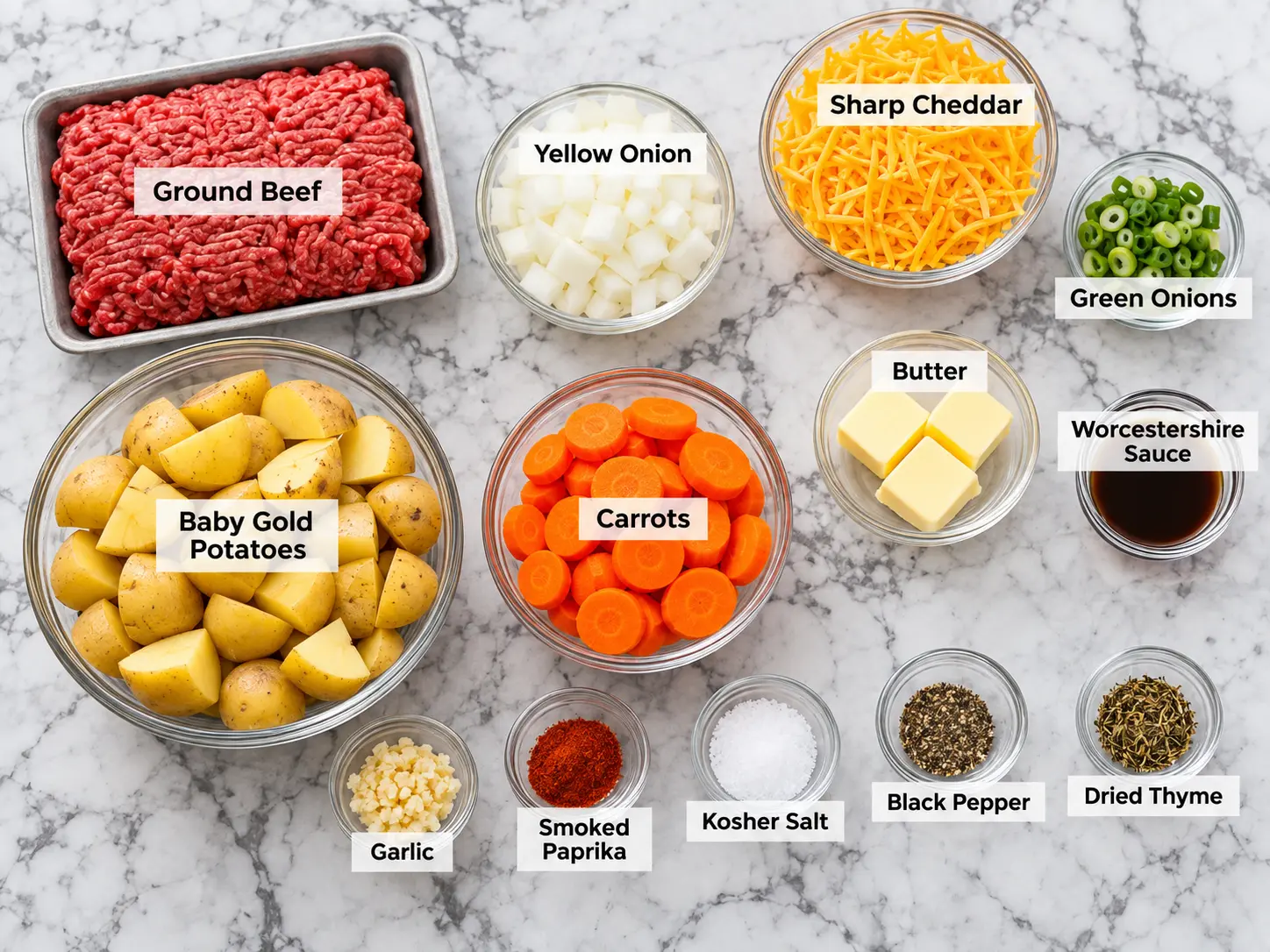
- 1 lb ground beef (80/20 preferred)
- 1 1/2 lb baby gold potatoes, quartered (or 3 medium russets, diced into 1/2-inch pieces)
- 3 medium carrots, peeled and sliced into 1/4-inch coins (about 1 1/2 cups)
- 1 cup diced yellow onion (about 1 medium)
- 3 tbsp butter, cut into 4 pats
- 2 tbsp Worcestershire sauce
- 2 cloves garlic, minced
- 1 tsp smoked paprika
- 1 tsp kosher salt, divided
- 1/2 tsp black pepper
- 1/2 tsp dried thyme
- Heavy-duty aluminum foil (four 18-inch sheets)
- Optional: 1 cup shredded sharp cheddar and sliced green onions, for finish
- Heavy-duty foil is not the place to save forty cents. The seams on regular foil tear under folding pressure, and a leaky packet means dinner drips onto the oven floor and overcooks wherever the foil is torn. If regular foil is all you have, use two sheets per packet.
- Half the flavor rides on the Worcestershire. It’s what keeps the packet from tasting like plain steamed beef. Most brands are gluten-free these days, but check the bottle if that matters to you; a good steak sauce stands in fine.
Equipment
- Heavy-duty aluminum foil (18-inch wide roll)
- Rimmed baking sheet
- Large mixing bowl
- Chef’s knife and cutting board
- Measuring spoons
Step-by-Step Instructions
Preheat and prep the vegetables: Heat the oven to 400°F. Quarter the baby potatoes or dice them to a uniform 1/2 inch, slice the carrots into thin coins, and dice the onion. This step matters more than it looks: in a sealed packet, steam does all the cooking, and steam is slow. Big ragged chunks mean raw centers.
Season the beef: In a mixing bowl, combine the ground beef with the Worcestershire, garlic, smoked paprika, black pepper, and 1/2 teaspoon of the salt. Mix gently until just combined overworking ground beef makes it dense. Shape into 4 loose patties about 3/4 inch thick.
Build each packet: Lay out a sheet of heavy-duty foil. In the center, pile a quarter of the potatoes, carrots, and onion. Sprinkle with a pinch of the remaining salt and a few pinches of thyme. Set a beef patty on top, then lay a pat of butter over the beef as it melts, it baste the vegetables below.
Do not add liquid. Really. There’s no water, broth, or “moisture insurance” in this recipe. The beef and vegetables release plenty of liquid on their own during cooking, and anything you pour in just ends up pooling at the bottom of the packet. If the assembly looks dry before it hits the oven, that’s the butter’s job.
Seal it snug and tight: Bring the two long sides of the foil together over the food and fold them over twice in tight rolls. Crimp both ends closed, folding the foil over itself. Keep the packet snug around the food rather than inflated like a balloon a tight packet keeps steam circulating right where the food is, instead of pooling in a dome above it. Pro tip: run your thumb along the folds once to check for gaps; a leak turns your kitchen into a smoke-detector concert.
Bake covered: Arrange the packets on a rimmed baking sheet and bake for 25–28 minutes. The sheet does two jobs: it catches any wayward drips, and it conducts even heat across the packet bottoms so the potatoes don’t scorch against the rack.
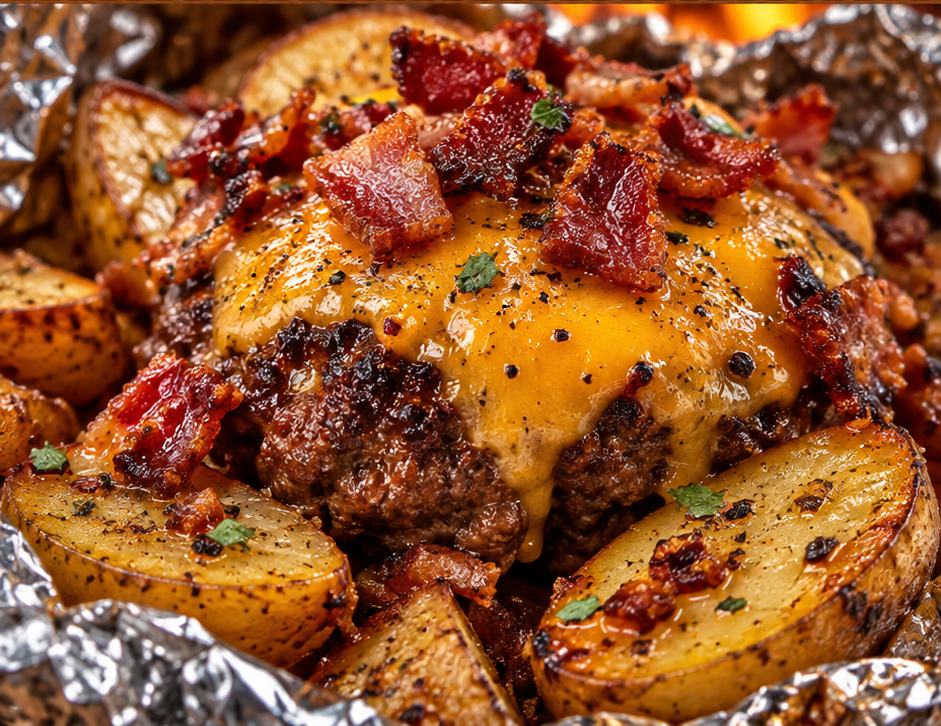
Open the packets and brown the tops the move that makes this recipe: Carefully fold back the top flap of each packet, keeping your face clear of the steam, which is genuinely volcanic. Sprinkle with cheese now if you’re using it. Return the open packets to the oven for 6–8 more minutes, until the potato edges begin to brown and caramelize and the beef looks roasted rather than gray.
Here’s the reasoning: a sealed packet can only steam, and steam has never browned anything in the history of cooking. Opening the flap does two things at once it lets moisture escape so the final dish isn’t soup, and it lets direct oven heat reach the surface so the top finishes with actual color and flavor. Steamed everything is exactly the watery, pale problem that gave foil dinners their bad name, and this short uncovered stretch is the cure.
Rest, then serve: Let the packets sit for 2–3 minutes before opening them all the way. Slide the contents onto a plate or eat straight from the foil with a fork no plates required, camp rules apply. Taste and add salt if it needs it, then scatter green onions over the top.
Common Mistakes to Avoid
- Sealing the packet shut for the entire bake. End-to-end sealing means steamed, gray, pale food in a puddle of its own liquid. Fold the flap back for the last 6–8 minutes and let the top brown.
- Adding water or broth “for moisture.” The beef and veg already supply plenty; extra liquid guarantees a boiled texture and a watery end-of-cooking pool. Butter is the only moisture insurance you need.
- Chunking the potatoes too big. Steam can’t penetrate a 1-inch potato cube in 30 minutes. Keep every potato piece close to 1/2 inch and uniform.
- Using flimsy regular foil. It splits at the folds, drips on the oven, and your dinner scorches wherever the seam opened. Heavy-duty, or double-layer.
- Ripping the packet open right out of the oven. That first blast of steam is seriously hot — it’s the one part of this recipe that can actually hurt you. Let the packet rest a couple of minutes, then unfold away from your face.
How to Store & Reheat
Leftover packets keep in the fridge, sealed in the foil or transferred to a container, for about 3 days. To reheat, return a packet to a 350°F oven for 12–15 minutes (open the flap partway so the top doesn’t steam into mush), or microwave in 1-minute bursts with a damp paper towel over the top.
Freezing works best before cooking: assemble the raw packets, press them flat, and freeze on a baking sheet until solid, then bag them up for up to 2 months. Bake straight from frozen at 400°F, adding about 10 minutes to the covered time.
Recipe Variations & Substitutions
- Swap the protein: Ground turkey or chicken cooks the same way, just a touch leaner — add half a tablespoon of oil per packet if you go very lean so the potatoes don’t cook dry.
- Go sausage: Sliced smoked sausage links are a classic hobo-dinner move and need zero mixing; just arrange the coins over the vegetables.
- Vegetarian version: Chickpeas or a meatless crumble stand in for the beef, with an extra knob of butter and a few more minutes uncovered.
- Add more vegetables: Corn kernels, green beans, or bell pepper strips fold right into the packet. Zucchini goes in in the last 10 minutes so it doesn’t dissolve.
- Turn up the heat: Tuck sliced jalapeños into the packet or drizzle hot sauce over the finished dinner. A pinch of cayenne in the beef works too.
- Lower the carbs: Swap the potatoes for cauliflower florets or broccoli — you’ll land around 15g of carbs per packet and still get the same brown-edged finish.
- Make them ahead: Assemble the packets up to 24 hours early, seal them well, and refrigerate. Add 5 minutes to the covered bake time.
Nutrition Notes
Straight talk: this is a hearty, satisfying dinner built on ground beef, potatoes, and butter — it leans on the protein from the beef (about 28g per packet) and honest carbohydrates from the potatoes rather than pretending to be light fare. The carrots add fiber and color, and the whole thing is naturally gluten-free outside of the Worcestershire-bottle check. Serving sizes are the estimate above; go easy if you’re the kind of person who can eat their weight in crispy potato edges.
FAQ
Can I make these on a grill or over a campfire?
Yes, and they’re genuinely great at both. On a grill, cook packets over medium heat (not direct flame) for about the same time, flipping once halfway. Over coals, nestle the packets into hot coals and flip after 15 minutes the open-flap browning step works in every method.
Can I use ground turkey or chicken instead of beef?
Absolutely. Keep the Worcestershire and seasonings the same, and consider a little oil per packet since lean poultry doesn’t baste as generously. The cook time barely changes.
Why are my potatoes still crunchy in the middle?
They were cut too big or too unevenly. In a sealed packet, steam does the cooking and steam takes its time keep the potato pieces close to 1/2 inch and uniform, and check one packet at the 25-minute mark if you’re nervous.
Can I assemble the packets ahead of time?
Yes, up to 24 hours ahead in the fridge. Assemble completely, seal the foil tightly, and add about 5 minutes to the covered bake. Don’t salt the potatoes until just before baking if you’re going the overnight route — salt pulls moisture out of cut potatoes.
Can I freeze the packets?
You can, and raw frozen packets are the better version of the idea. Freeze them flat before cooking, then bake from frozen for about 35–40 minutes covered, plus the open-flap finish. Cooked leftovers freeze too, but the potatoes soften noticeably.
What if I only have regular foil?
Use two sheets per packet and fold the seams extra carefully. Regular foil tears at the folds more easily, and a torn seam means drips, scorching, and a smoky oven. Heavy-duty is worth keeping on hand if you make these often.
Final Thoughts
The whole secret fits in one sentence: keep the packet sealed until the food is cooked, then break the seal and let it brown. That final uncovered stretch is what turns a steamed, pale pouch into a dinner with golden edges and roasted flavor and it’s the difference between making foil packets strictly for camping and making them on an average Tuesday. Start with the classic beef-and-potatoes build, then make the next round your own.
- 1 lb ground beef 80/20 preferred
- 1 1/2 lb baby gold potatoes quartered (or 3 medium russets, diced into 1/2-inch pieces)
- 3 medium carrots peeled and sliced into 1/4-inch coins (about 1 1/2 cups)
- 1 cup diced yellow onion about 1 medium
- 3 tbsp butter cut into 4 pats
- 2 tbsp Worcestershire sauce
- 2 cloves garlic minced
- 1 tsp smoked paprika
- 1 tsp kosher salt divided
- 1/2 tsp black pepper
- 1/2 tsp dried thyme
- Heavy-duty aluminum foil four 18-inch sheets
- Optional: 1 cup shredded sharp cheddar and sliced green onions for finish
Preheat and prep the vegetables: Heat the oven to 400°F. Quarter the baby potatoes or dice them to a uniform 1/2 inch, slice the carrots into thin coins, and dice the onion. This step matters more than it looks: in a sealed packet, steam does all the cooking, and steam is slow. Big ragged chunks mean raw centers.
Season the beef: In a mixing bowl, combine the ground beef with the Worcestershire, garlic, smoked paprika, black pepper, and 1/2 teaspoon of the salt. Mix gently until just combined overworking ground beef makes it dense. Shape into 4 loose patties about 3/4 inch thick.
Build each packet: Lay out a sheet of heavy-duty foil. In the center, pile a quarter of the potatoes, carrots, and onion. Sprinkle with a pinch of the remaining salt and a few pinches of thyme. Set a beef patty on top, then lay a pat of butter over the beef as it melts, it baste the vegetables below.
Do not add liquid. Really. There’s no water, broth, or “moisture insurance” in this recipe. The beef and vegetables release plenty of liquid on their own during cooking, and anything you pour in just ends up pooling at the bottom of the packet. If the assembly looks dry before it hits the oven, that’s the butter’s job.
Seal it snug and tight: Bring the two long sides of the foil together over the food and fold them over twice in tight rolls. Crimp both ends closed, folding the foil over itself. Keep the packet snug around the food rather than inflated like a balloon a tight packet keeps steam circulating right where the food is, instead of pooling in a dome above it. Pro tip: run your thumb along the folds once to check for gaps; a leak turns your kitchen into a smoke-detector concert.
Bake covered: Arrange the packets on a rimmed baking sheet and bake for 25–28 minutes. The sheet does two jobs: it catches any wayward drips, and it conducts even heat across the packet bottoms so the potatoes don’t scorch against the rack.
Open the packets and brown the tops the move that makes this recipe: Carefully fold back the top flap of each packet, keeping your face clear of the steam, which is genuinely volcanic. Sprinkle with cheese now if you’re using it. Return the open packets to the oven for 6–8 more minutes, until the potato edges begin to brown and caramelize and the beef looks roasted rather than gray.
Here’s the reasoning: a sealed packet can only steam, and steam has never browned anything in the history of cooking. Opening the flap does two things at once it lets moisture escape so the final dish isn’t soup, and it lets direct oven heat reach the surface so the top finishes with actual color and flavor. Steamed everything is exactly the watery, pale problem that gave foil dinners their bad name, and this short uncovered stretch is the cure.
Rest, then serve: Let the packets sit for 2–3 minutes before opening them all the way. Slide the contents onto a plate or eat straight from the foil with a fork no plates required, camp rules apply. Taste and add salt if it needs it, then scatter green onions over the top.
Easy Hobo Dinner Foil Packets
Last modified: September 23, 2026