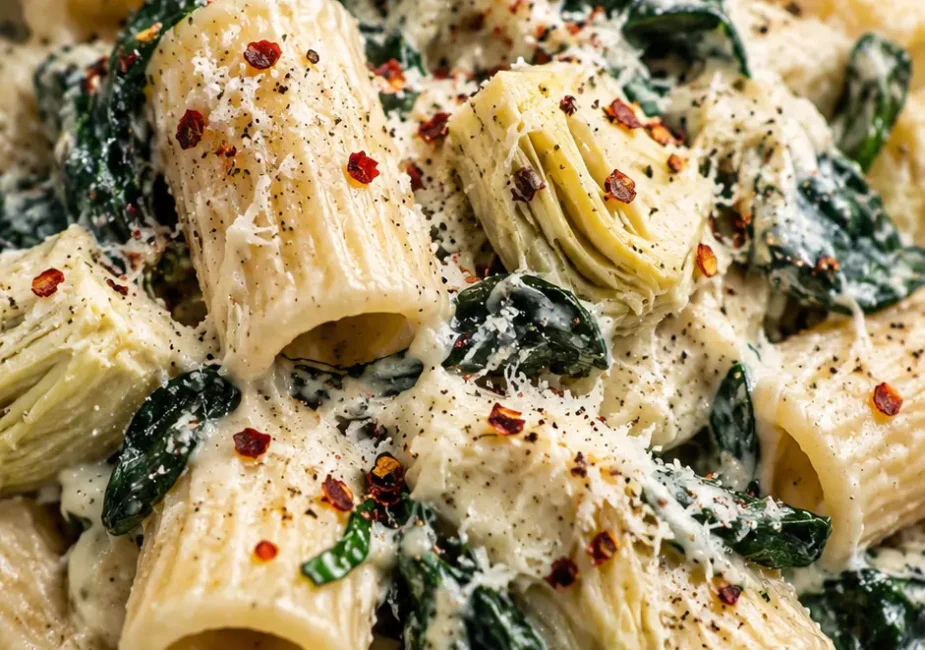
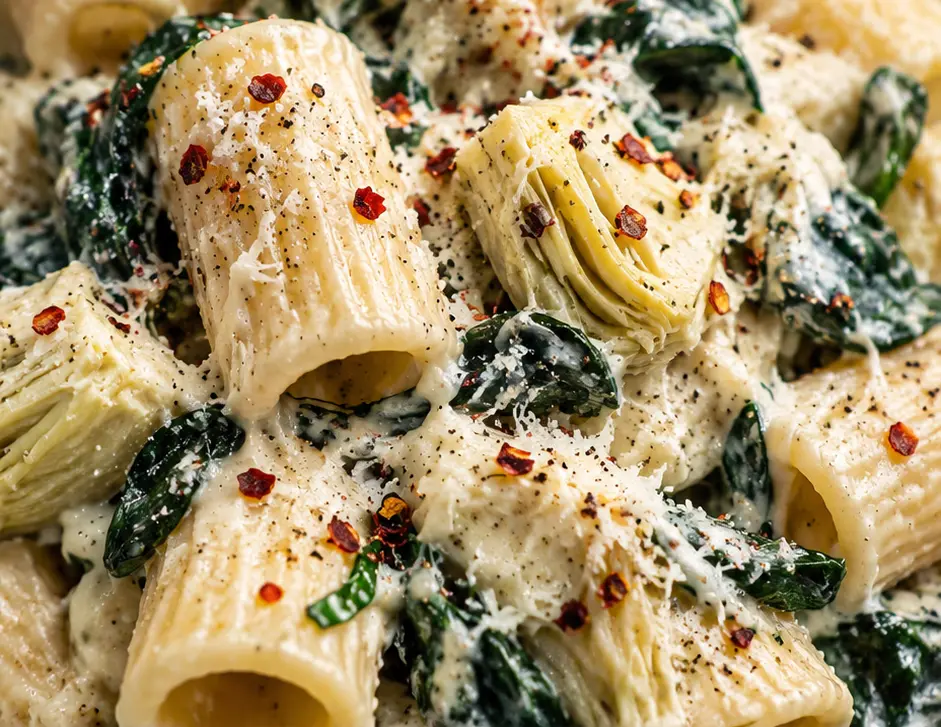
Spinach artichoke dip is the one appetizer nobody pretends to save room for. You eat it standing up, straight off the little plate, before dinner’s even served. So it’s a little strange that it took this long for someone to just… make it dinner.
That’s the whole idea here: the same tangy, garlicky, cheese-heavy dip you’d scoop with a chip, tossed hot with pasta instead of baked into a dish. It comes together in one skillet, it’s ready faster than the baked version, and it doesn’t ask you to turn the oven on in July. Here’s how it comes together.
Why You’ll Love It
- It’s the dip, minus the wait. No 25-minute bake time — the sauce goes creamy on the stovetop in about as long as it takes the pasta to cook.
- One skillet, minimal cleanup. The sauce comes together in the same pan you’ll toss the pasta in, so you’re not juggling three pots for a weeknight dinner.
- The spinach actually tastes like spinach. Squeezing it properly dry (more on that below) keeps it from turning the sauce watery and grey — a problem almost every dip-turned-pasta recipe runs into.
- Built-in tang. Artichoke hearts bring a little acidity that cuts through all that cream cheese and parmesan, so the dish never tips into “heavy for the sake of heavy.”
- Pantry-adjacent. Outside of the spinach and artichokes, this leans on ingredients most people already have — cream cheese, garlic, parmesan, a splash of broth.
- Easy to stretch. Add shredded rotisserie chicken or white beans and it goes from side-worthy to a full meal without changing the method at all.
Recipe At a Glance
- Prep time: 15 minutes
- Cook time: 20 minutes
- Total time: 35 minutes
- Servings: 4 (about 1.5 cups per serving)
- Estimated calories: ~610 per serving (estimate only, based on standard-fat dairy and 12 oz pasta split four ways)
- Estimated macros: ~22g protein, ~58g carbs, ~32g fat per serving
Ingredients
- 12 oz short pasta (rigatoni, penne, or shells all work well)
- 2 tbsp olive oil
- 1 tbsp unsalted butter
- 4 garlic cloves, minced
- 10 oz frozen chopped spinach, thawed and squeezed very dry
- 14 oz canned artichoke hearts, drained and roughly chopped
- 8 oz cream cheese, softened at room temperature
- 1 cup heavy cream
- 1 cup chicken broth (or vegetable broth for a vegetarian version)
- 1 cup parmesan, freshly grated
- 1 cup shredded mozzarella
- ½ tsp red pepper flakes (optional, but recommended)
- Salt and black pepper, to taste
- Reserved pasta water (about ½ cup)
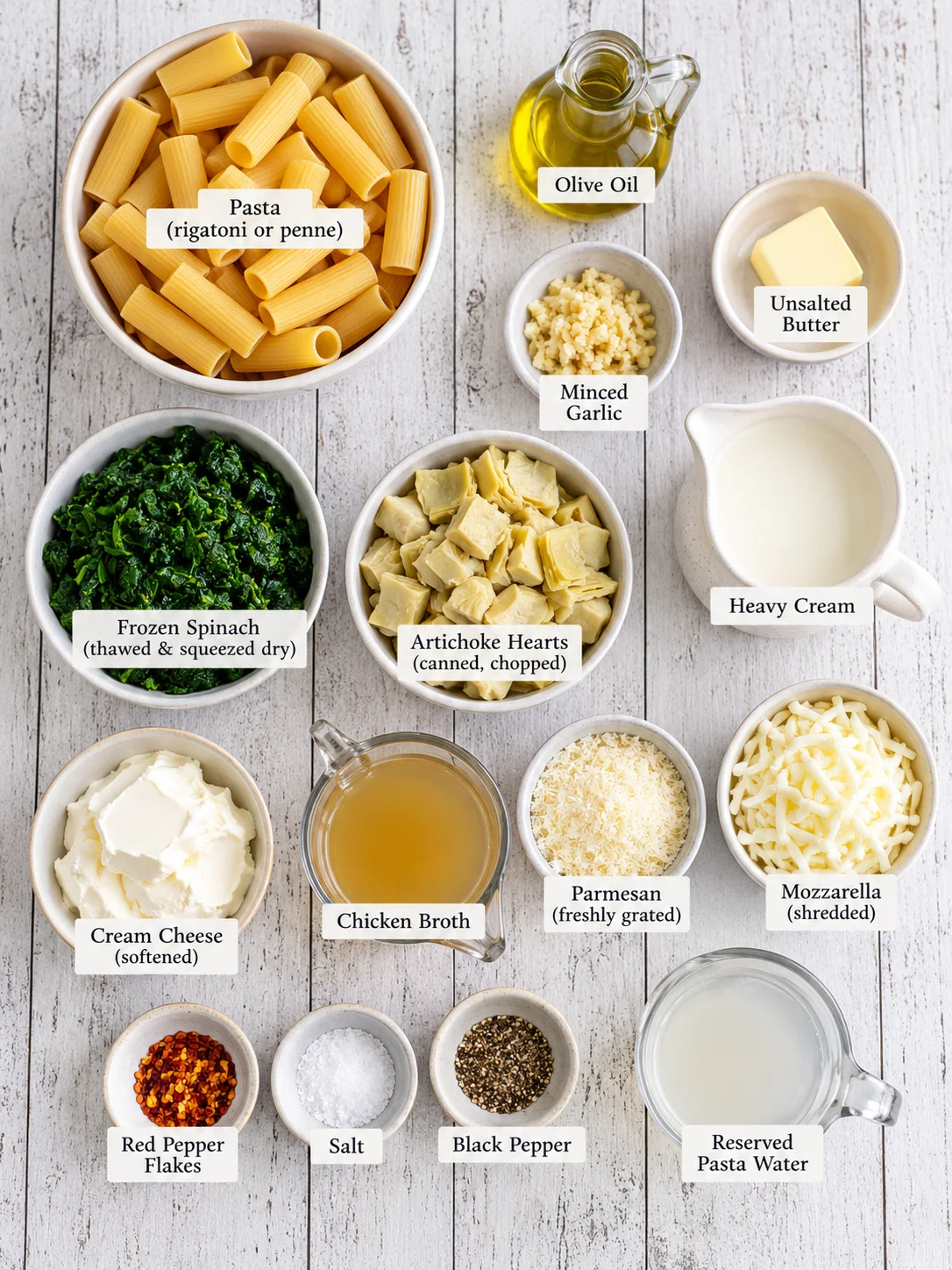
Ingredient notes:
- Cream cheese: Let it actually soften on the counter for 20–30 minutes. Cold cream cheese straight from the fridge breaks into stubborn little lumps in the hot sauce and won’t fully smooth out.
- Parmesan: Buy a block and grate it yourself. The pre-shredded bagged stuff is coated in anti-caking starch, which makes it melt grainy instead of silky.
Equipment Needed
- Large pot (for the pasta)
- Large deep skillet or Dutch oven (for the sauce)
- Colander
- Box grater or microplane
- Wooden spoon or silicone spatula
Step-by-Step Instructions
1. Cook the pasta. Bring a large pot of well-salted water to a boil. Cook the pasta 1 minute short of the package’s al dente time it’ll finish cooking in the sauce. Before draining, scoop out about ½ cup of the starchy pasta water and set it aside.
2. Dry the spinach really dry it. While the pasta cooks, take your thawed spinach and squeeze it in batches inside a clean kitchen towel or several layers of paper towel, twisting hard until no more water comes out. It should feel dense and almost dry to the touch. This is the one step people skip, and it’s the difference between a sauce that stays glossy and one that turns thin and watery halfway through dinner frozen spinach holds an enormous amount of water, and if it goes into the pan wet, that water has nowhere to go but into your sauce.
3. Build the base. Heat the olive oil and butter together in a large skillet over medium heat until the butter’s foaming. Add the garlic and cook for about 30 seconds, just until fragrant don’t let it brown, or it turns bitter fast.
4. Add the spinach and artichokes. Stir in the dried spinach and chopped artichoke hearts. Cook for 2–3 minutes, stirring occasionally, until any last bit of moisture has cooked off and the spinach smells nutty rather than grassy.
5. Melt in the cream cheese. Reduce the heat to medium-low and add the cream cheese in a few chunks. Stir slowly and consistently it’ll look separated and weird for about a minute before it smooths out. Pro tip: if it’s fighting you, splash in a tablespoon of the broth to loosen it; the extra liquid helps it emulsify instead of clump.
6. Pour in the cream and broth. Add the heavy cream and remaining broth, stirring until the sauce is smooth and gently simmering. Let it bubble for 2–3 minutes to thicken slightly.
7. Melt in the cheeses. Turn the heat to low and stir in the parmesan and mozzarella a handful at a time, letting each addition melt before adding the next. Low heat matters here cheese added to a hard simmer tends to seize into rubbery strings instead of melting smooth.
8. Toss in the pasta. Add the drained pasta directly to the skillet along with the reserved pasta water. Toss until every piece is coated and glossy, about 1–2 minutes this also finishes cooking the pasta the rest of the way. Season with salt, black pepper, and red pepper flakes to taste.
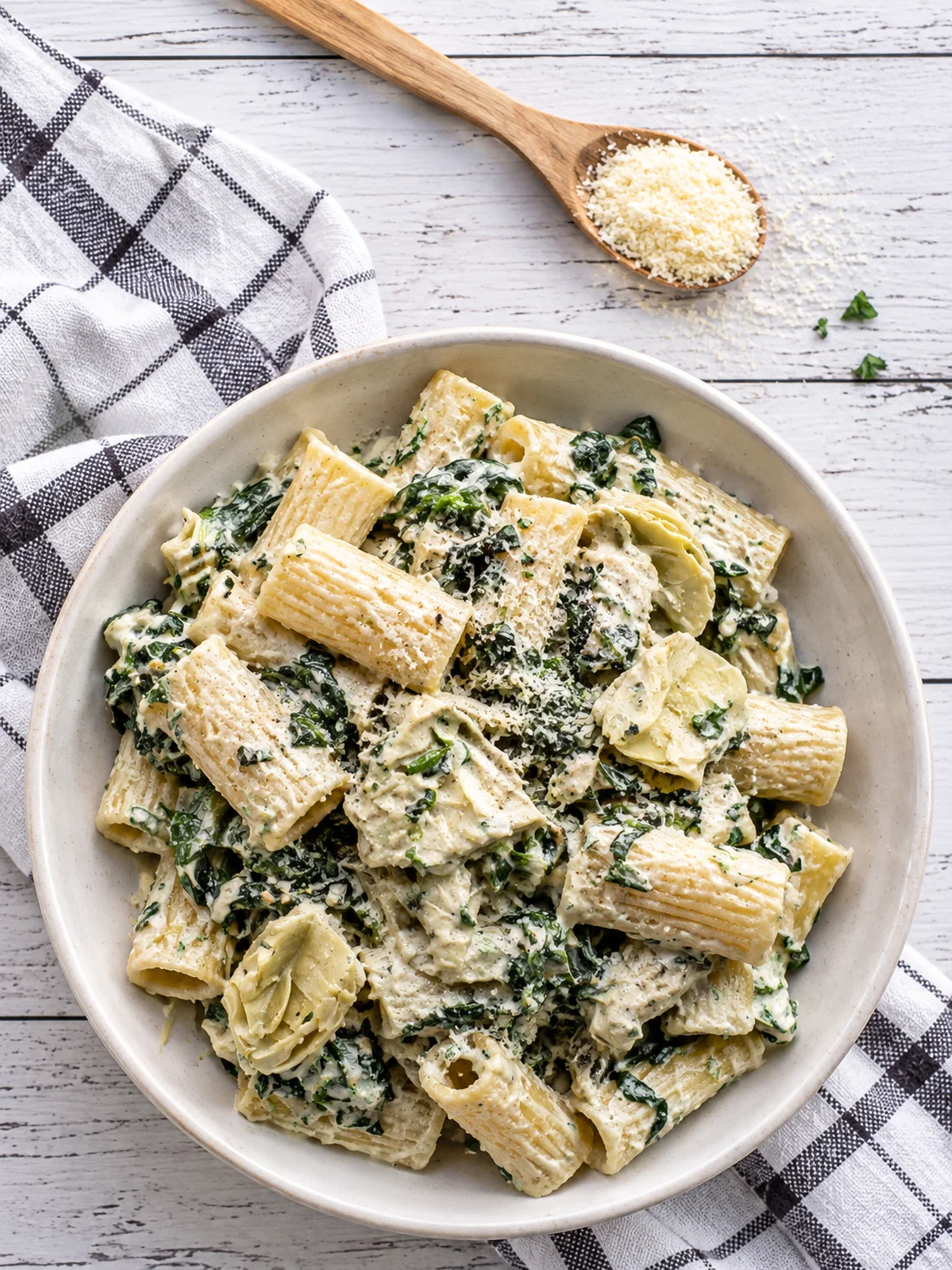
9. Serve immediately. The sauce is at its silkiest right off the heat. It’ll continue thickening as it sits, so serve promptly and stir in an extra splash of warm broth or pasta water if you’re not eating right away.
Common Mistakes to Avoid
- Skipping the spinach squeeze. This is the big one unsqueezed spinach releases water into the sauce as it cooks, turning a thick, clingy sauce into something thin and separated. Wring it out harder than feels necessary.
- Cold cream cheese, hot pan. Straight-from-the-fridge cream cheese seizes into lumps that never fully dissolve. Give it real time on the counter first.
- Boiling the cheese in. Adding parmesan and mozzarella over high heat makes the sauce grainy or stringy instead of smooth. Drop the heat before you add cheese, every time.
- Overcooking the pasta in step one. If it’s fully al dente before it hits the sauce, it’ll go mushy by the time you’re tossing and serving. Stop it a minute early.
- Not saving the pasta water. That starchy water is what lets you loosen the sauce to the right consistency without watering down the flavor. Skip it and you’re stuck adding plain water, which dilutes everything.
How to Store & Reheat
- Fridge: Store in an airtight container for up to 4 days. The sauce will thicken significantly as it chills that’s normal.
- Freezer: This one’s better fresh, since cream-based sauces can separate when frozen and thawed. If you do freeze it, use within 1 month and expect to whisk the sauce back together on reheat.
- Reheat: Warm gently in a skillet over medium-low heat with a splash of broth or milk, stirring frequently, until loosened and heated through — about 5 minutes. Microwaving works too, in 30-second bursts, stirring between each.
Recipe Variations & Substitutions
- Gluten-free: Swap in your favorite gluten-free short pasta; just watch the cook time, since GF pasta tends to go from al dente to mushy faster.
- Lower-carb: Use a chickpea or lentil-based pasta, or swap in cauliflower gnocchi for a lower-carb base.
- Dairy-free: Substitute a dairy-free cream cheese and a plant-based heavy cream alternative, and use nutritional yeast in place of parmesan for a similar savory note.
- Add protein: Shredded rotisserie chicken, crispy chopped bacon, or white beans all stir in beautifully at the end.
- Spicier version: Double the red pepper flakes or add a spoonful of chopped pickled jalapeños along with the artichokes.
- Fresh spinach swap: Use 12 oz fresh baby spinach instead of frozen wilt it in the pan in step 4 until fully collapsed, then proceed as written (no squeezing needed, but let excess liquid cook off).
Nutritional & Health Angle
This dish leans on real dairy for its richness cream cheese, parmesan, and mozzarella rather than processed cheese sauces, so what you’re tasting is closer to actual cheese flavor than a shortcut version. The spinach and artichokes also add a meaningful amount of fiber and micronutrients you wouldn’t get from a plain cream sauce. It’s not a light dish, and it’s not trying to be but swapping in a vegetable broth, using part-skim mozzarella, or adding white beans for extra fiber and protein are all easy ways to shift the balance if that’s what you’re after.
Frequently Asked Questions
Can I use fresh spinach instead of frozen?
Yes — use about 12 oz fresh baby spinach, wilting it directly in the pan with the garlic before adding the artichokes. You’ll skip the squeezing step, but let any liquid it releases cook off before moving on.
Can I make this ahead of time?
You can make the sauce up to 2 days ahead and store it separately from the pasta; reheat gently with a splash of broth before tossing with freshly cooked pasta. Combining and storing them together tends to make the pasta soak up too much sauce and go soft.
What if my sauce comes out grainy?
That usually means the cheese was added over heat that was too high, or added too quickly. Take it off the heat, let it cool for a minute, and stir in the cheese more slowly next time a low, gentle melt is key.
Can I use marinated artichoke hearts instead of plain canned?
Yes, and it’s a nice flavor upgrade just drain them well and reduce the added oil in step 3, since the marinade already brings plenty of fat and flavor.
Is there a good dairy-free version of this?
Dairy-free cream cheese and a plant-based heavy cream alternative both work well here; the texture holds up better than you’d expect, though the tang will be slightly milder without real parmesan.
Do I need a Dutch oven, or will any large skillet work?
Any large, deep skillet works fine a Dutch oven just gives you a bit more room if you’re doubling the recipe or adding extra protein like chicken.
Final Thoughts
At its core, this is just spinach artichoke dip that decided to grow up into dinner same craveable, tangy, cheesy flavor, just with pasta doing the scooping instead of a chip. The one thing worth remembering if you make it more than once: dry that spinach like you mean it. It’s a small step that does most of the work of keeping this sauce thick and glossy instead of watery. Give it a try this week and let me know in the comments what you served it alongside, or if you tried it with chicken stirred in.
- 12 oz short pasta rigatoni, penne, or shells all work well
- 2 tbsp olive oil
- 1 tbsp unsalted butter
- 4 garlic cloves minced
- 10 oz frozen chopped spinach thawed and squeezed very dry
- 14 oz canned artichoke hearts drained and roughly chopped
- 8 oz cream cheese softened at room temperature
- 1 cup heavy cream
- 1 cup chicken broth or vegetable broth for a vegetarian version
- 1 cup parmesan freshly grated
- 1 cup shredded mozzarella
- ½ tsp red pepper flakes optional, but recommended
- Salt and black pepper to taste
- Reserved pasta water about ½ cup
Large pot (for the pasta)
Large deep skillet or Dutch oven (for the sauce)
Colander
Box grater or microplane
Wooden spoon or silicone spatula
Cook the pasta. Bring a large pot of well-salted water to a boil. Cook the pasta 1 minute short of the package’s al dente time it’ll finish cooking in the sauce. Before draining, scoop out about ½ cup of the starchy pasta water and set it aside.
Dry the spinach really dry it. While the pasta cooks, take your thawed spinach and squeeze it in batches inside a clean kitchen towel or several layers of paper towel, twisting hard until no more water comes out. It should feel dense and almost dry to the touch. This is the one step people skip, and it’s the difference between a sauce that stays glossy and one that turns thin and watery halfway through dinner frozen spinach holds an enormous amount of water, and if it goes into the pan wet, that water has nowhere to go but into your sauce.
Build the base. Heat the olive oil and butter together in a large skillet over medium heat until the butter’s foaming. Add the garlic and cook for about 30 seconds, just until fragrant don’t let it brown, or it turns bitter fast.
Add the spinach and artichokes. Stir in the dried spinach and chopped artichoke hearts. Cook for 2–3 minutes, stirring occasionally, until any last bit of moisture has cooked off and the spinach smells nutty rather than grassy.
Melt in the cream cheese. Reduce the heat to medium-low and add the cream cheese in a few chunks. Stir slowly and consistently it’ll look separated and weird for about a minute before it smooths out. Pro tip: if it’s fighting you, splash in a tablespoon of the broth to loosen it; the extra liquid helps it emulsify instead of clump.
Pour in the cream and broth. Add the heavy cream and remaining broth, stirring until the sauce is smooth and gently simmering. Let it bubble for 2–3 minutes to thicken slightly.
Melt in the cheeses. Turn the heat to low and stir in the parmesan and mozzarella a handful at a time, letting each addition melt before adding the next. Low heat matters here cheese added to a hard simmer tends to seize into rubbery strings instead of melting smooth.
Toss in the pasta. Add the drained pasta directly to the skillet along with the reserved pasta water. Toss until every piece is coated and glossy, about 1–2 minutes — this also finishes cooking the pasta the rest of the way. Season with salt, black pepper, and red pepper flakes to taste.
Serve immediately. The sauce is at its silkiest right off the heat. It’ll continue thickening as it sits, so serve promptly and stir in an extra splash of warm broth or pasta water if you’re not eating right away.
Spinach Artichoke Dip Pasta
Last modified: September 23, 2026