You know the one shrimp that went from perfectly pink to gray and squeaky because it sat in the pan two minutes too long, drowning in juice that never actually reduced into anything you’d call a sauce. It happens because most recipes throw everything in one pan and hope for the best.
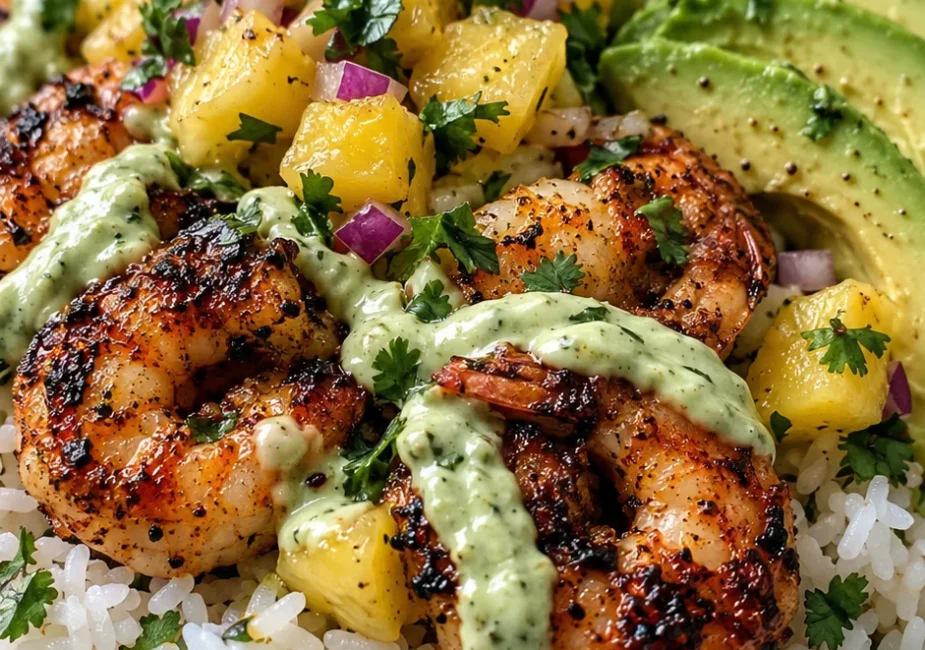
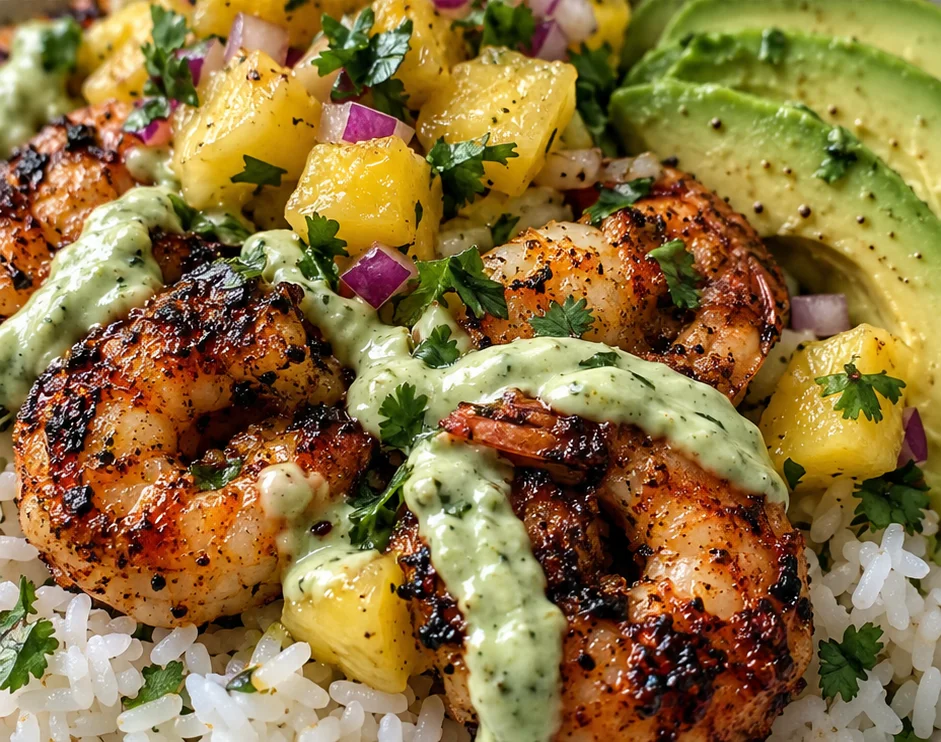
This tropical shrimp rice bowl skips that trap. The shrimp gets pulled out the second it’s done, the pineapple gets its own moment to caramelize in the same pan, and everything comes back together right at the end so you get glossy, sticky glaze instead of watery stir-fry soup. Here’s how it comes together.
Why You’ll Love This Recipe
- It’s genuinely a 35-minute dinner. No marinating overnight, no obscure ingredients just a skillet and a pot of rice.
- The pineapple actually caramelizes instead of steaming everything soggy. That’s the whole trick here, and it’s the difference between a bowl that tastes bright and one that tastes like leftovers.
- High-protein without trying too hard. A pound of shrimp across four bowls means everyone’s getting real protein, not a garnish.
- One pan for the entire sauce and protein. Less cleanup, more flavor the fond left behind from searing the shrimp becomes the base of the glaze.
- Endlessly adaptable. Swap the protein, swap the veg, keep the method.
- Kid-friendly heat level, with an easy way to turn it up if your household likes it spicier.
Recipe At a Glance
- Prep time: 15 minutes
- Cook time: 20 minutes
- Total time: 35 minutes
- Servings: 4
- Estimated calories: ~420 per bowl (rice included)
- Estimated macros: ~28g protein, ~52g carbs, ~11g fat (estimates only will vary based on exact rice portion and add-ins)
Ingredients
For the bowls:
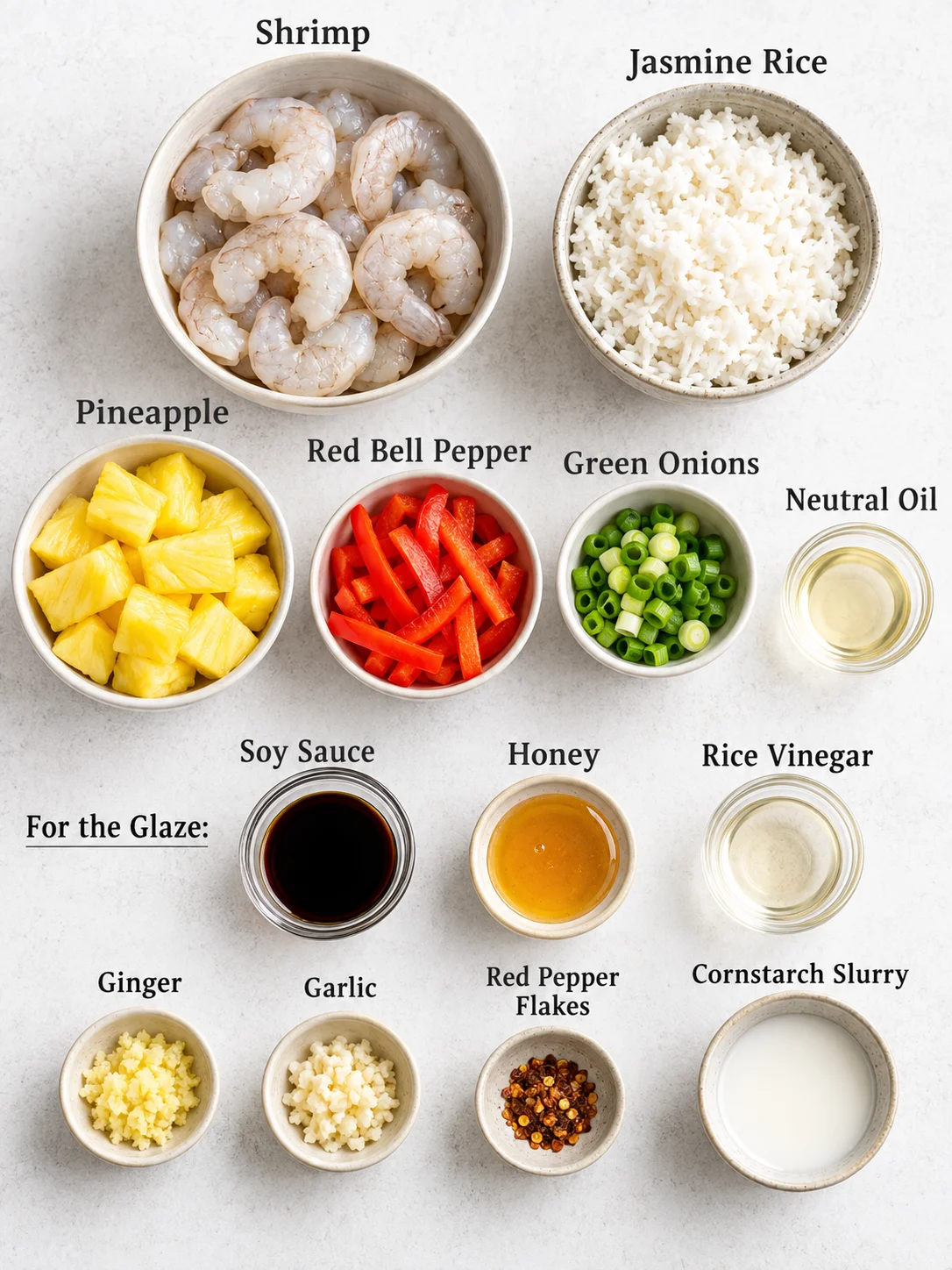
- 1 lb large shrimp, peeled and deveined, tails off
- 2 cups cooked jasmine rice (about ¾ cup dry, cooked per package instructions)
- 1½ cups fresh pineapple chunks (canned in juice works too — drained well)
- 1 red bell pepper, thinly sliced
- 3 green onions, sliced, whites and greens separated
- 1 tablespoon neutral oil (avocado or vegetable)
For the glaze:
- 3 tablespoons soy sauce (use tamari for gluten-free)
- 2 tablespoons honey
- 1 tablespoon rice vinegar
- 1 teaspoon grated fresh ginger
- 2 garlic cloves, minced
- ½ teaspoon red pepper flakes (optional, for heat)
- 1 teaspoon cornstarch mixed with 1 tablespoon water (slurry)
Notes:
- On the pineapple: fresh gives you better caramelization because it has less residual liquid than canned. If you’re using canned, pat it dry with a paper towel first or it’ll steam instead of sear.
- On the shrimp: buy them already peeled and deveined unless you enjoy that particular kitchen chore it saves a genuine 10 minutes here.
Equipment Needed
- Large nonstick or cast-iron skillet
- Medium saucepan (for rice, if not using a rice cooker)
- Small bowl (for the glaze)
Step-by-Step Instructions
- Cook the rice. Start your rice first since everything else moves fast once the skillet is hot. Set it aside, covered, to stay warm.
- Mix the glaze. In a small bowl, whisk together the soy sauce, honey, rice vinegar, ginger, garlic, and red pepper flakes if using. Keep the cornstarch slurry separate for now you’ll add it at the very end.
- Sear the shrimp. Heat the oil in your skillet over medium-high until it shimmers. Add the shrimp in a single layer (work in two batches if your pan is small crowding steams them instead of searing). Cook 1–2 minutes per side, until pink and just opaque. Pull them out onto a plate immediately, even if they look slightly underdone they’ll finish cooking when they go back in later, and this is the one step that makes or breaks the texture.
- Caramelize the pineapple this is the part most recipes skip. In the same pan, no need to wipe it out, add the pineapple and bell pepper. Let them sit mostly undisturbed for 2–3 minutes so the sugars in the pineapple actually catch and brown against the hot pan, rather than just heating through. This is the move that turns a fruit garnish into something closer to a glaze base the caramelized edges add a depth you can’t get by tossing everything in raw at the same time as the shrimp.
- Build the sauce. Add the whites of the green onions and cook 30 seconds until fragrant. Pour in the glaze mixture and let it bubble for about a minute.
- Thicken and finish. Give the cornstarch slurry a quick stir (it separates fast) and pour it in. Stir constantly for 30–60 seconds until the sauce goes glossy and coats the back of a spoon. Return the shrimp to the pan and toss just until warmed through and coated — this should take under a minute, since they’re already cooked.
- Assemble. Divide the rice between bowls, top with the shrimp-pineapple mixture, and finish with the sliced green onion tops.
Common Mistakes to Avoid
- Cooking the shrimp and pineapple together from the start. This is the big one the shrimp release liquid as they cook, which stops the pineapple from ever caramelizing. Sear the shrimp first, pull them, then let the pan do its job on the fruit.
- Overcrowding the skillet. Too much in the pan at once drops the temperature and you get steamed shrimp instead of seared. Work in batches if needed.
- Skipping the cornstarch slurry. Without it, your “glaze” is just seasoned juice that runs straight to the bottom of the bowl instead of clinging to the rice.
- Using cold rice straight from the fridge. It clumps and won’t absorb the sauce evenly freshly cooked or reheated with a splash of water works much better.
- Overcooking the shrimp on the first sear. They should look barely done when you pull them; they’ll finish cooking in step 6.
How to Store & Reheat
Store leftovers in an airtight container in the fridge for up to 3 days. The rice and shrimp mixture can be frozen separately for up to 2 months, though shrimp texture is always a little softer after freezing.
To reheat, use a skillet over medium heat with a splash of water or broth for 3–4 minutes, stirring occasionally this keeps the shrimp from turning rubbery, which a microwave tends to do. If you’re short on time, 60–90 seconds in the microwave covered with a damp paper towel works, just don’t expect the same texture.
Recipe Variations & Substitutions
- Gluten-free: Use tamari instead of soy sauce it’s a one-for-one swap with no flavor loss.
- Lower-carb: Swap the rice for cauliflower rice, cooked separately and warmed through before topping.
- Dairy-free: Already dairy-free as written no changes needed.
- Different protein: Chicken thighs or firm tofu both work; adjust sear time (chicken needs closer to 6–7 minutes per side, tofu about 3–4).
- Spicier: Double the red pepper flakes or add a diced fresh jalapeño with the bell pepper.
- Coconut rice upgrade: Cook your rice in half coconut milk, half water for a richer base that leans further into the tropical flavor.
The Nutritional Angle
This bowl leans on shrimp as a lean protein source, which is naturally low in fat relative to its protein content, paired with rice for sustained energy and bell pepper for a dose of vitamin C. It’s not a “diet” recipe and isn’t trying to be one it’s just a reasonably balanced dinner that happens to come together fast.
Frequently Asked Questions
Can I use frozen shrimp?
Yes just thaw them fully first (a quick rinse under cold water works) and pat them very dry before searing. Wet shrimp won’t brown, they’ll steam.
What rice works best for this recipe?
Jasmine rice is the closest match for the tropical flavor profile, but any long-grain white rice works. Brown rice is fine too, just budget extra cook time.
Can I make this ahead of time?
The glaze can be mixed up to 2 days ahead and stored in the fridge. The shrimp and pineapple are best cooked fresh, since the texture suffers most from reheating.
Is this recipe very spicy?
Not as written the red pepper flakes are optional and easy to scale up or down depending on your household’s tolerance.
What can I use instead of shrimp?
Chicken thighs or extra-firm tofu both work well; see the Variations section above for timing adjustments.
Do I need a specific pan for this?
A nonstick or cast-iron skillet gives the best sear and easiest caramelization on the pineapple. A regular stainless pan works too, just watch for sticking and use a bit more oil if needed.
Final Thoughts
The whole thing hinges on one small habit: pull the shrimp out before you touch the pineapple. It feels like an unnecessary extra step on a busy weeknight, but it’s the reason this bowl tastes like something you’d order out instead of something you rushed through. Give it a try and see for yourself what would you serve alongside it?
For the bowls:
- 1 lb large shrimp peeled and deveined, tails off
- 2 cups cooked jasmine rice about ¾ cup dry, cooked per package instructions
- 1½ cups fresh pineapple chunks canned in juice works too drained well
- 1 red bell pepper thinly sliced
- 3 green onions sliced, whites and greens separated
- 1 tablespoon neutral oil avocado or vegetable
For the glaze:
- 3 tablespoons soy sauce use tamari for gluten-free
- 2 tablespoons honey
- 1 tablespoon rice vinegar
- 1 teaspoon grated fresh ginger
- 2 garlic cloves minced
- ½ teaspoon red pepper flakes optional, for heat
- 1 teaspoon cornstarch mixed with 1 tablespoon water slurry
Large nonstick or cast-iron skillet
Medium saucepan (for rice, if not using a rice cooker)
Small bowl (for the glaze)
Cook the rice. Start your rice first since everything else moves fast once the skillet is hot. Set it aside, covered, to stay warm.
Mix the glaze. In a small bowl, whisk together the soy sauce, honey, rice vinegar, ginger, garlic, and red pepper flakes if using. Keep the cornstarch slurry separate for now you’ll add it at the very end.
Sear the shrimp. Heat the oil in your skillet over medium-high until it shimmers. Add the shrimp in a single layer (work in two batches if your pan is small crowding steams them instead of searing). Cook 1–2 minutes per side, until pink and just opaque. Pull them out onto a plate immediately, even if they look slightly underdone they’ll finish cooking when they go back in later, and this is the one step that makes or breaks the texture.
Caramelize the pineapple this is the part most recipes skip. In the same pan, no need to wipe it out, add the pineapple and bell pepper. Let them sit mostly undisturbed for 2–3 minutes so the sugars in the pineapple actually catch and brown against the hot pan, rather than just heating through. This is the move that turns a fruit garnish into something closer to a glaze base the caramelized edges add a depth you can’t get by tossing everything in raw at the same time as the shrimp.
Build the sauce. Add the whites of the green onions and cook 30 seconds until fragrant. Pour in the glaze mixture and let it bubble for about a minute.
Thicken and finish. Give the cornstarch slurry a quick stir (it separates fast) and pour it in. Stir constantly for 30–60 seconds until the sauce goes glossy and coats the back of a spoon. Return the shrimp to the pan and toss just until warmed through and coated this should take under a minute, since they’re already cooked.
Assemble. Divide the rice between bowls, top with the shrimp-pineapple mixture, and finish with the sliced green onion tops.
Tropical Shrimp Rice Bowl
Last modified: September 19, 2026