Separate the fat: Pour everything from the roasting pan into a fat separator or tall glass. Let it settle for five minutes, then skim off 6 tablespoons of clear fat and set the dark drippings underneath aside. If you didn’t get enough fat, make up the difference with butter.
Deglaze the pan: Set the roasting pan over two burners on medium heat. Add 1 cup of the cold stock and scrape hard with a wooden spoon until every browned patch lifts off the bottom. Pour this liquid in with your reserved drippings. Pro tip: if the fond looks nearly black in spots, taste the deglazing liquid before you commit it over-roasted drippings turn bitter, and it’s better to find out now than after it’s in the gravy.
Make the roux: In a medium saucepan over medium heat, whisk the turkey fat and flour together. Keep whisking for 3 to 4 minutes, until the paste turns the color of peanut butter and smells faintly like toasted piecrust. Raw flour tastes like raw flour no matter how long the gravy simmers afterward, so don’t rush this.
Add the cold stock: Pull the pan off the heat for a moment and pour in the remaining 3 cups of cold stock plus your deglazing liquid, whisking constantly. This is the part people get wrong. Hot liquid hitting a hot roux gelatinizes the starch instantly, which means any flour that hasn’t dispersed yet gets sealed into a lump you’ll never whisk out. Cold liquid buys you thirty to sixty seconds of working time enough to get everything smooth before it starts to thicken.
Simmer and season: Return to medium heat, add the thyme, bay leaf, soy sauce, and black pepper. Bring to a gentle simmer and cook 8 to 10 minutes, stirring often, until the gravy coats the back of a spoon and a finger drawn through it leaves a clean line.
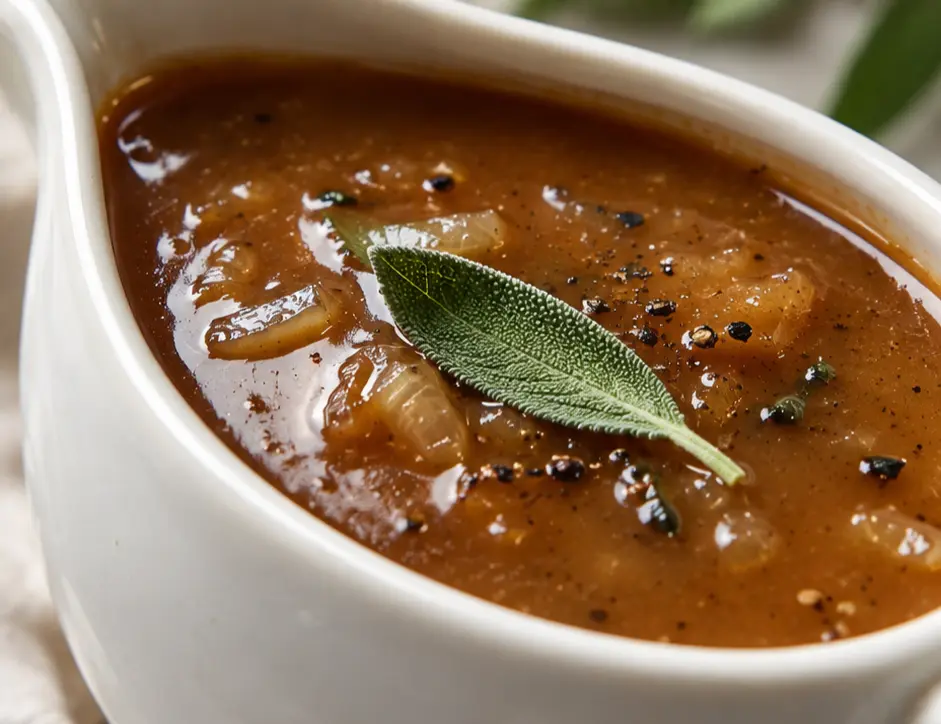
Strain and finish: Pour through a fine-mesh strainer into your gravy boat. Stir in the vinegar or wine, then taste and salt. Serve hot it thickens as it sits, so add a splash of stock if it tightens up too much.