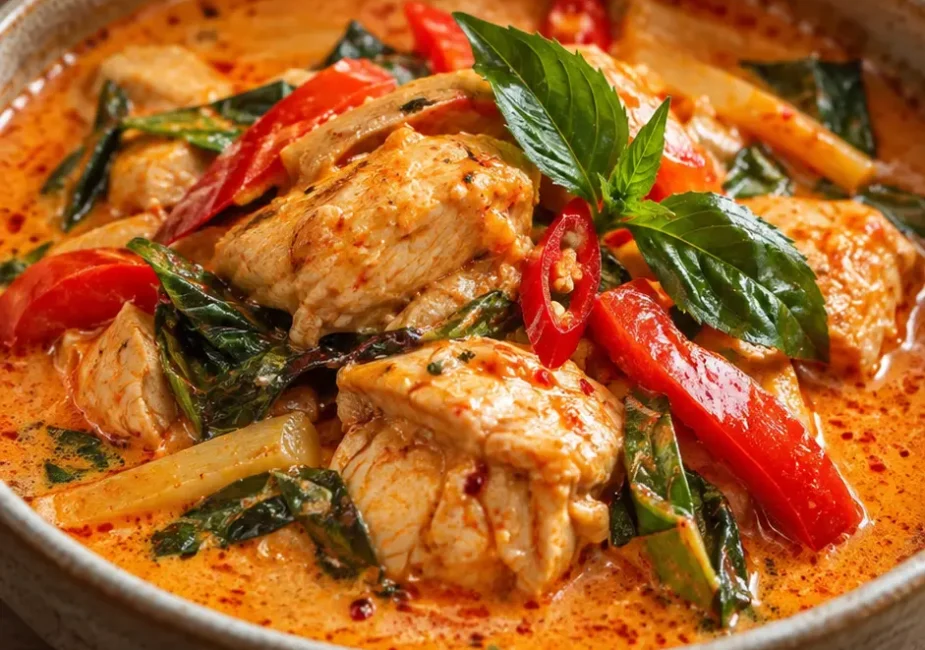
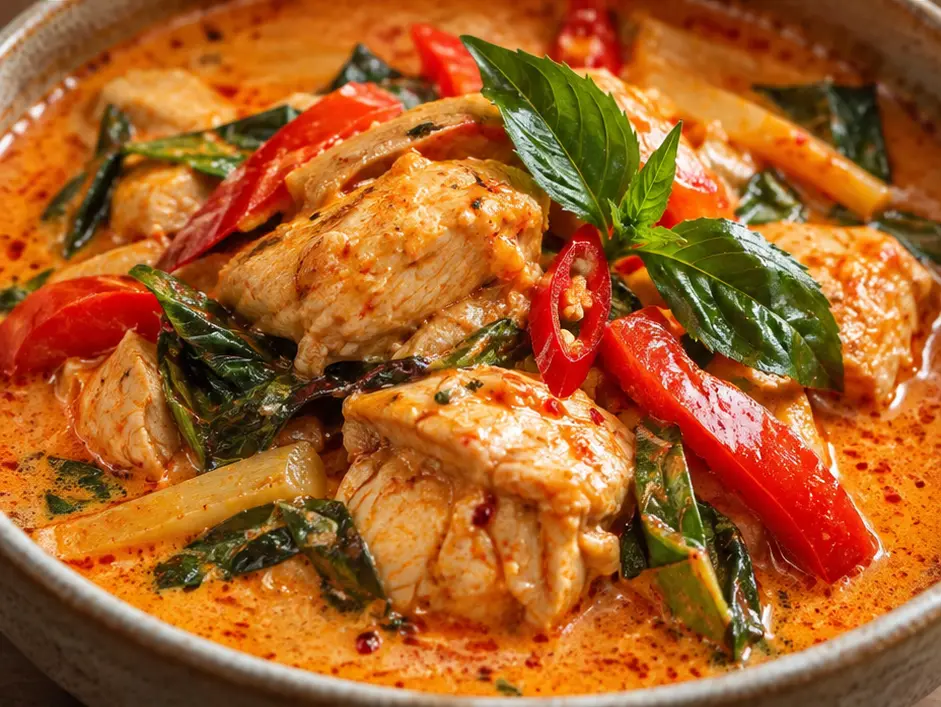
The Paste Is Doing Almost All the Work If You Treat It Right
A jar of red curry paste looks like a shortcut, and in a lot of ways it is one, but most home versions of this dish taste flat because the paste goes straight into a pot of liquid instead of getting its moment in hot fat first. Curry paste is built from oil-soluble compounds chilies, lemongrass, galangal and those flavors bloom dramatically when they hit real heat before any liquid dilutes them.
That one step is the difference between a curry that tastes like it came from a good Thai restaurant and one that tastes like coconut-flavored soup. Here’s how it comes together.
Why You’ll Love It
- One pot, 30 minutes, genuinely restaurant-level flavor no special equipment or hard-to-find ingredients beyond the curry paste itself.
- Frying the paste in the coconut cream before adding liquid is the real key it’s a small step that most quick versions skip entirely. More detail below.
- Naturally gluten-free and dairy-free, since coconut milk replaces any cream or dairy base.
- Endlessly adaptable to whatever vegetables or protein you have on hand.
- Balanced, not one-note sweet, salty, and a little sour all show up thanks to fish sauce, sugar, and lime.
- Budget-friendly for the flavor payoff, since a small jar of curry paste goes a long way across multiple meals.
Recipe At a Glance
- Prep time: 10 minutes
- Cook time: 20 minutes
- Total time: about 30 minutes
- Servings: 4
- Estimated calories: ~410 per serving (estimate; varies by coconut milk fat content and rice serving size)
- Estimated macros: ~28g protein, ~14g carbs, ~28g fat per serving
(Nutrition figures are estimates based on standard ingredient values, not a lab analysis — use them as a general guide.)
Ingredients
- 2 cans (13.5 oz each) full-fat coconut milk, unshaken
- 3 tablespoons Thai red curry paste
- 1.5 lbs boneless, skinless chicken thighs, sliced into bite-sized pieces
- 1 red bell pepper, sliced
- 1 small zucchini, sliced into half-moons
- 2 tablespoons fish sauce
- 1 tablespoon brown sugar
- 1 tablespoon lime juice
- 1 cup fresh Thai basil leaves (or regular basil)
- Cooked jasmine rice, for serving
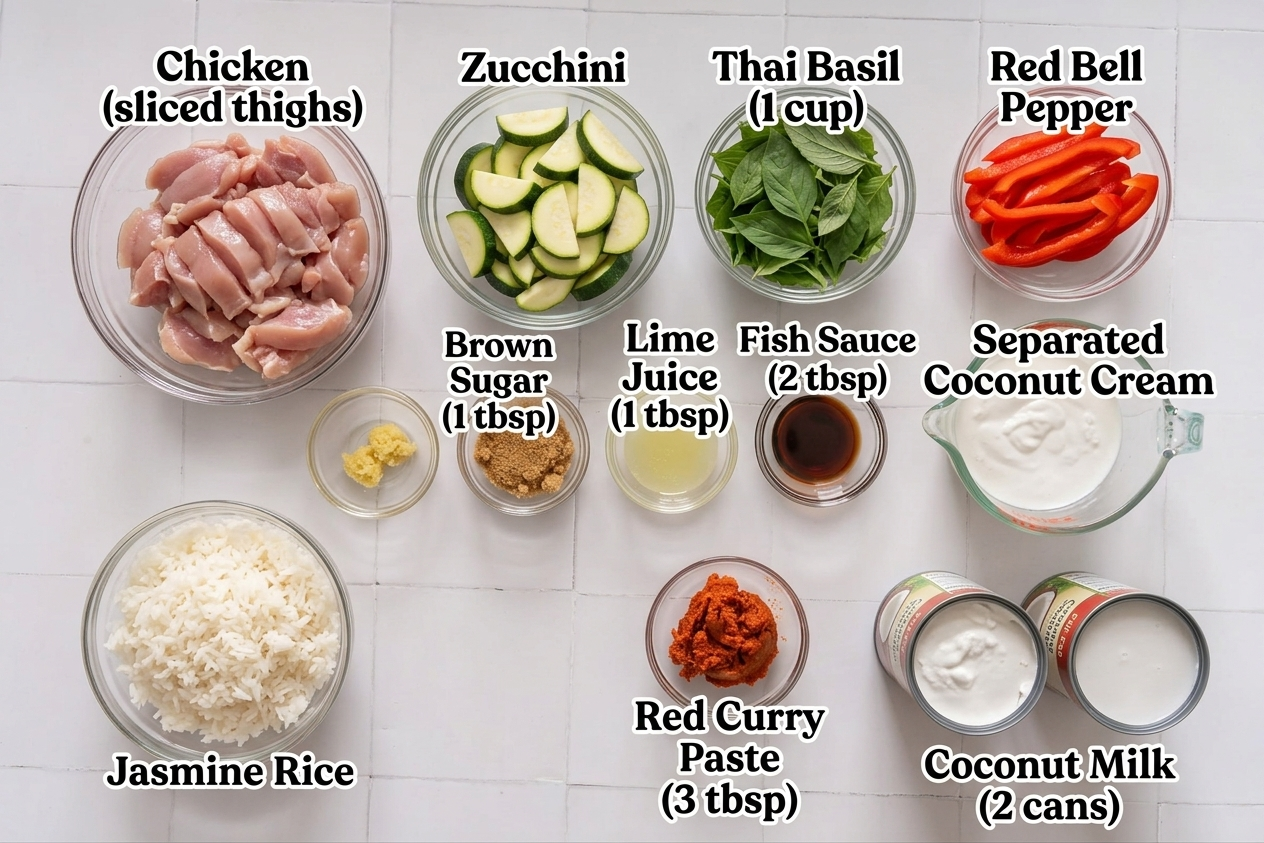
Ingredient notes: Don’t shake the coconut milk cans before opening the thick cream rises to the top during storage, and separating it out is exactly what makes the paste-blooming step work. Thai basil, if you can find it, brings a slightly anise-like flavor that regular sweet basil doesn’t quite replicate, though regular basil still works fine in a pinch.
Equipment Needed
- Large skillet or wok
- Can opener
- Spoon, for skimming the coconut cream
Step-by-Step Instructions
- Skim the coconut cream: Open both cans of coconut milk without shaking them, and carefully spoon off the thick cream that’s risen to the top into a large skillet or wok, setting the remaining thinner liquid aside.
- Bloom the curry paste in the cream this is the step that changes everything: Heat the skimmed coconut cream over medium heat until it starts to bubble and separate slightly, then add the red curry paste. Cook, stirring constantly, for 2–3 minutes, until the paste turns a shade darker and smells intensely fragrant rather than raw. Frying the paste in the fat-rich coconut cream instead of dumping it straight into the full can of liquid is what actually unlocks its flavor the chili oils and aromatics in the paste are fat-soluble, so blooming them in hot fat first extracts far more flavor than simmering the paste in liquid ever would.
- Add the chicken: Add the sliced chicken to the skillet and stir to coat it in the bloomed paste. Cook for 3–4 minutes, until the outside is no longer pink.
- Add the remaining coconut milk: Pour in the reserved thinner coconut milk from both cans and stir to combine. Bring to a gentle simmer.
- Add the vegetables and seasonings: Stir in the bell pepper, zucchini, fish sauce, and brown sugar. Simmer for 10–12 minutes, until the chicken is cooked through and the vegetables are tender but not mushy.
- Finish with lime and basil: Remove from heat and stir in the lime juice and basil leaves, letting the basil wilt slightly from the residual heat. Pro tip: taste before serving and adjust a little more fish sauce for saltiness, more sugar for sweetness, or more lime for brightness, depending on your curry paste brand’s intensity.
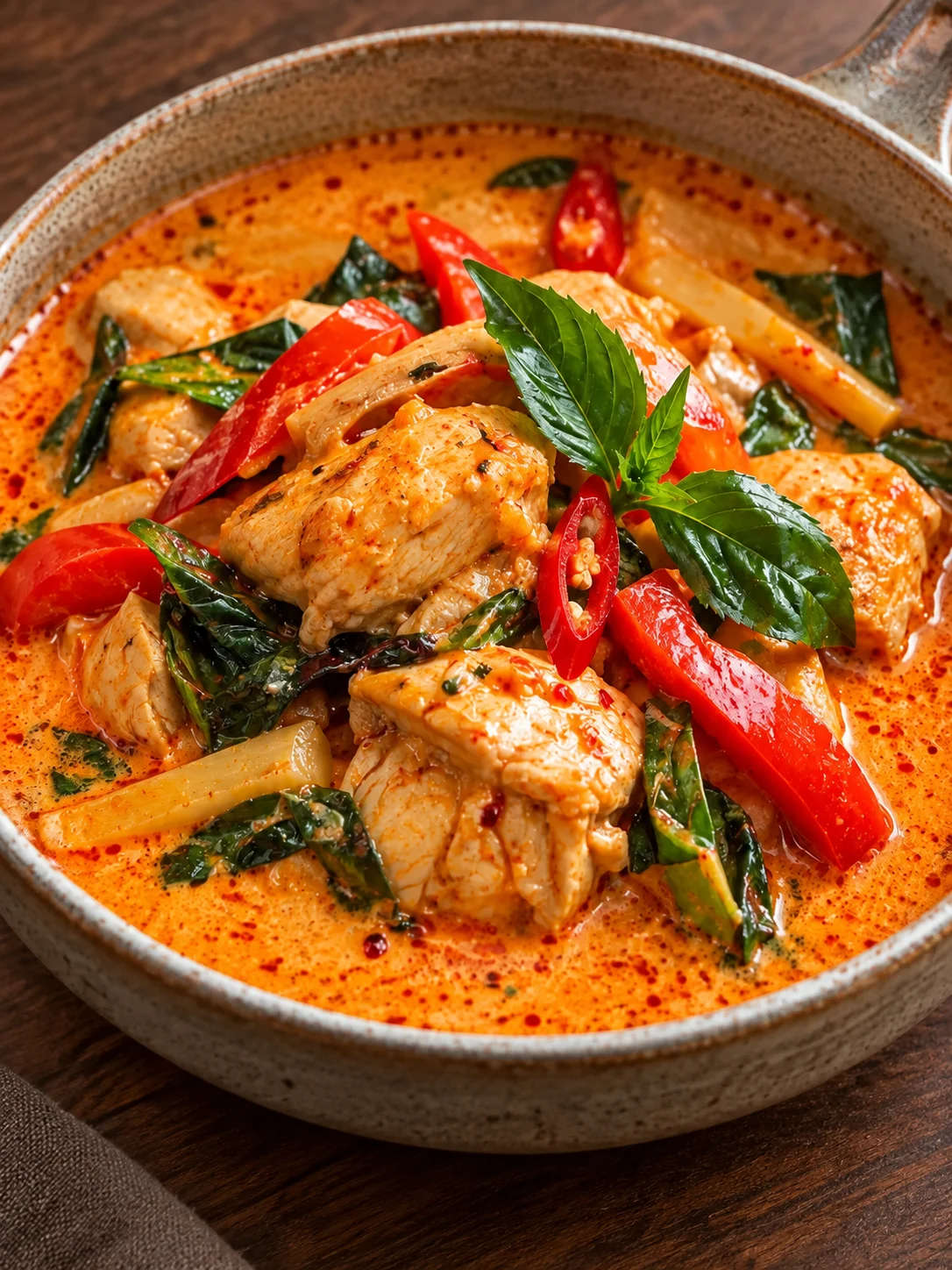
- Serve over rice: Spoon the curry over jasmine rice.
Common Mistakes to Avoid
- Adding the curry paste straight to liquid instead of blooming it first. This is exactly what leaves the finished curry tasting flat and thin the fry step in hot coconut cream is non-negotiable for real depth.
- Shaking the coconut milk cans before opening. This mixes the cream back into the liquid, leaving you without the concentrated fat needed for the blooming step.
- Overcooking the vegetables. They should still have some bite mushy vegetables are a common sign of simmering too long after they go in.
- Skipping the lime juice at the end. Without it, the curry can taste overly rich and one-dimensional; the acidity balances the coconut fat and sweetness.
- Using low-fat coconut milk. It won’t separate into a usable cream layer, which undermines the entire blooming technique.
How to Store & Reheat
Store leftovers in an airtight container in the fridge for up to 4 days. This curry also freezes well for up to 3 months — the coconut milk base holds up better than many cream-based sauces once thawed.
To reheat, warm gently in a saucepan over medium-low heat, stirring occasionally, for about 5–7 minutes, until heated through. Avoid a hard boil, which can cause the coconut milk to separate slightly.
Recipe Variations & Substitutions
- Shrimp swap: Use 1 lb of peeled, deveined shrimp instead of chicken, adding them in the last 4–5 minutes of simmering so they don’t overcook.
- Vegetarian version: Swap the chicken for extra-firm tofu and use a vegetarian fish sauce alternative or a splash of soy sauce.
- Spicier version: Add an extra tablespoon of curry paste, or stir in sliced fresh Thai chilies with the vegetables.
- Lower-carb: Serve over cauliflower rice instead of jasmine rice to cut the overall carb count significantly.
- Different vegetables: Bamboo shoots, snap peas, or baby corn all work well in place of or alongside the bell pepper and zucchini.
- Green curry variation: Swap the red curry paste for green curry paste for a different, slightly more herbal flavor profile using the same technique.
Nutritional & Health Angle
This dish leans on chicken thighs for protein and coconut milk for its richness, which means it’s higher in saturated fat than a broth-based dish but naturally free of dairy and gluten. Using light coconut milk for the second can (keeping full-fat only for the cream-skimming step) is one way to bring the richness down slightly without losing the blooming technique. This isn’t formulated as a specific diet plan, just a flavorful, naturally allergen-friendly dinner for those avoiding dairy or gluten.
FAQ
Can I use chicken breast instead of thighs?
Yes, though thighs hold up better in a simmering curry without drying out if using breast, reduce the simmer time slightly and watch it closely toward the end.
What if my coconut milk doesn’t separate into a thick cream layer?
This can happen with lower-fat or well-shaken cans in that case, use a tablespoon of neutral oil to bloom the paste instead, though you’ll lose a bit of the coconut richness in that step.
Can I make this ahead of time?
Yes, and the flavor often improves after a day in the fridge as the spices continue to meld just add the lime juice and basil fresh when reheating for the best brightness.
Is this recipe gluten-free?
Yes, as written it’s naturally gluten-free just double-check your specific fish sauce and curry paste brands, since a few contain gluten-based additives.
Can I use a different type of curry paste?
Yes green or yellow curry paste both work with the same blooming technique, though the flavor profile will shift noticeably with each.
What can I substitute for fish sauce?
Soy sauce or a vegetarian fish sauce alternative both work, though you’ll lose some of the distinct savory depth fish sauce specifically provides.
Final Thoughts
The vegetables and protein are flexible, but that first step of blooming the curry paste in hot coconut cream is really what separates this from a flat, average curry. It takes an extra few minutes of attention at the start, and it’s worth every bit of it.
How spicy are you making yours an extra spoonful of paste, or keeping it mild?.
- 2 cans 13.5 oz each full-fat coconut milk, unshaken
- 3 tablespoons Thai red curry paste
- 1.5 lbs boneless skinless chicken thighs, sliced into bite-sized pieces
- 1 red bell pepper sliced
- 1 small zucchini sliced into half-moons
- 2 tablespoons fish sauce
- 1 tablespoon brown sugar
- 1 tablespoon lime juice
- 1 cup fresh Thai basil leaves or regular basil
- Cooked jasmine rice for serving
Skim the coconut cream: Open both cans of coconut milk without shaking them, and carefully spoon off the thick cream that’s risen to the top into a large skillet or wok, setting the remaining thinner liquid aside.
Bloom the curry paste in the cream this is the step that changes everything: Heat the skimmed coconut cream over medium heat until it starts to bubble and separate slightly, then add the red curry paste. Cook, stirring constantly, for 2–3 minutes, until the paste turns a shade darker and smells intensely fragrant rather than raw. Frying the paste in the fat-rich coconut cream instead of dumping it straight into the full can of liquid is what actually unlocks its flavor the chili oils and aromatics in the paste are fat-soluble, so blooming them in hot fat first extracts far more flavor than simmering the paste in liquid ever would.
Add the chicken: Add the sliced chicken to the skillet and stir to coat it in the bloomed paste. Cook for 3–4 minutes, until the outside is no longer pink.
Add the remaining coconut milk: Pour in the reserved thinner coconut milk from both cans and stir to combine. Bring to a gentle simmer.
Add the vegetables and seasonings: Stir in the bell pepper, zucchini, fish sauce, and brown sugar. Simmer for 10–12 minutes, until the chicken is cooked through and the vegetables are tender but not mushy.
Finish with lime and basil: Remove from heat and stir in the lime juice and basil leaves, letting the basil wilt slightly from the residual heat. Pro tip: taste before serving and adjust a little more fish sauce for saltiness, more sugar for sweetness, or more lime for brightness, depending on your curry paste brand’s intensity.
Serve over rice: Spoon the curry over jasmine rice.
30-Minute Thai Red Curry with Chicken
Last modified: September 24, 2026