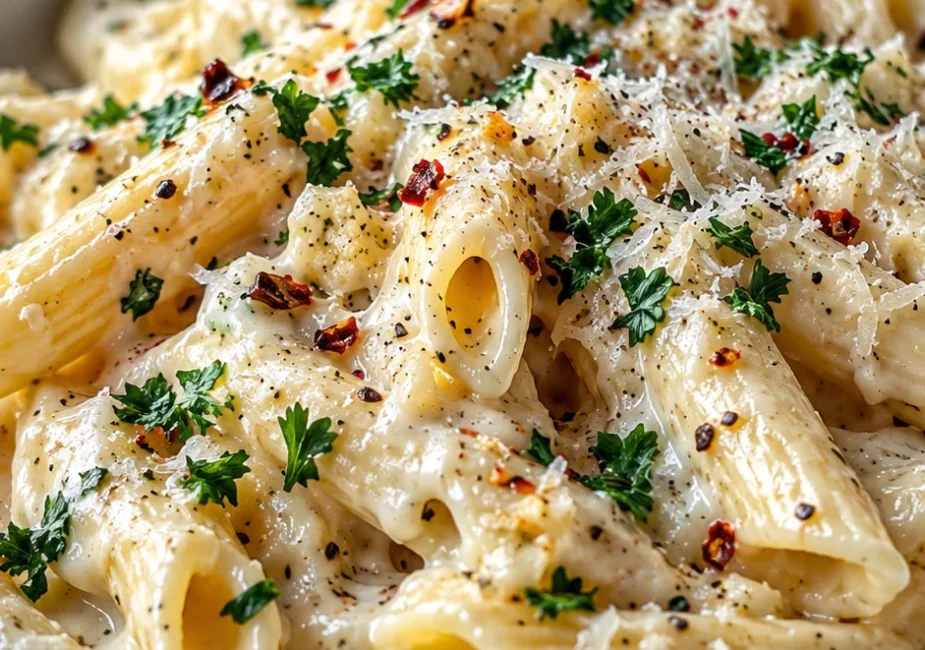
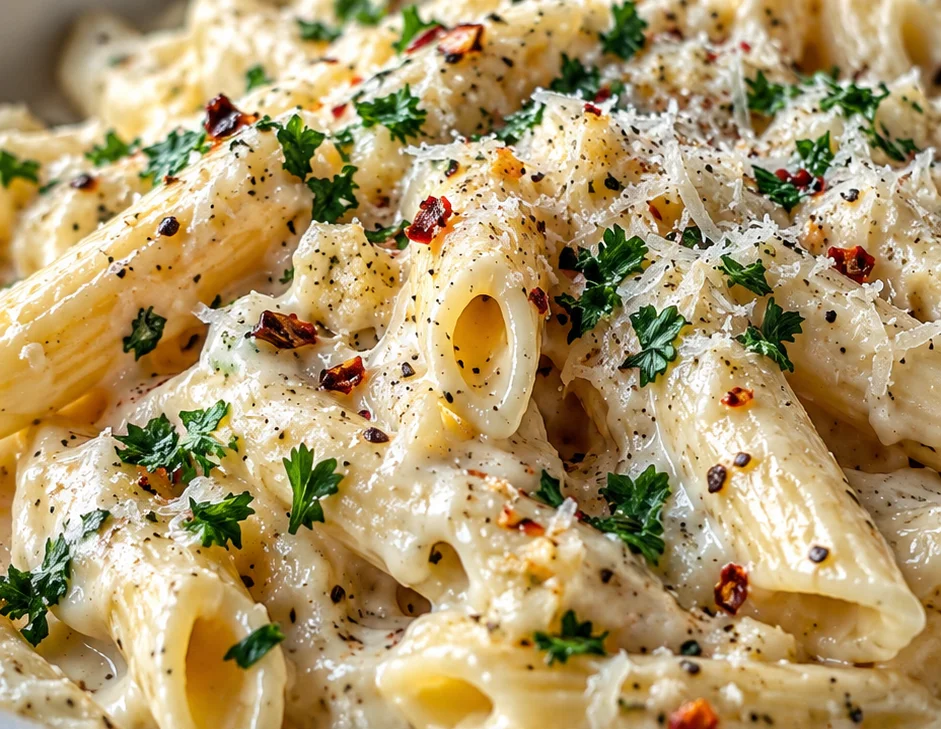
There’s a specific sound this dish makes in the last two minutes of cooking a low, steady bubble as the sauce goes from thin and milky to thick enough to coat the back of a spoon. That sound is basically the whole appeal of one-pot pasta: you can hear when it’s done before you even taste it.
Garlic, butter, and parmesan do almost all the work here, which is exactly why the technique matters more than the ingredient list. Get the garlic timing right and the sauce turns silky. Get it wrong and you’re eating something bitter and grainy. Here’s how it comes together.
Why You’ll Love This Recipe
- One pot, start to finish. The pasta cooks directly in the sauce liquid, so there’s no separate pot of water and no draining over the sink.
- The sauce comes together without cream. Butter, parmesan, and starchy pasta water do the thickening — it’s rich without being heavy.
- Garlic gets pulled off the heat at exactly the right moment, which is the difference between a sauce that tastes toasty and one that tastes burnt. More on that in the instructions.
- Ready in under 30 minutes, including the time it takes the pasta to actually cook through.
- Pantry staples only. No specialty ingredients if you keep pasta and parmesan in the house, you likely have everything else already.
- Endlessly adjustable. It’s a strong base for chicken, shrimp, mushrooms, or a handful of spinach stirred in at the end.
Recipe At a Glance
- Prep time: 5 minutes
- Cook time: 20 minutes
- Total time: 25 minutes
- Servings: 4
- Estimated nutrition per serving (based on standard semolina pasta): ~430 calories, 14g protein, 55g carbohydrates, 17g fat. These numbers are estimates only and will vary depending on the pasta and cheese you use.
Ingredients
- 12 oz pasta (short shapes like penne or fusilli hold the sauce better than long noodles)
- 4 tablespoons unsalted butter
- 6 cloves garlic, thinly sliced (not minced see note below)
- 3½ cups low-sodium chicken or vegetable broth
- 1 cup water
- 1 cup freshly grated parmesan, plus more for serving
- ½ teaspoon black pepper
- ¼ teaspoon red pepper flakes, optional
- 2 tablespoons fresh parsley, chopped, for topping
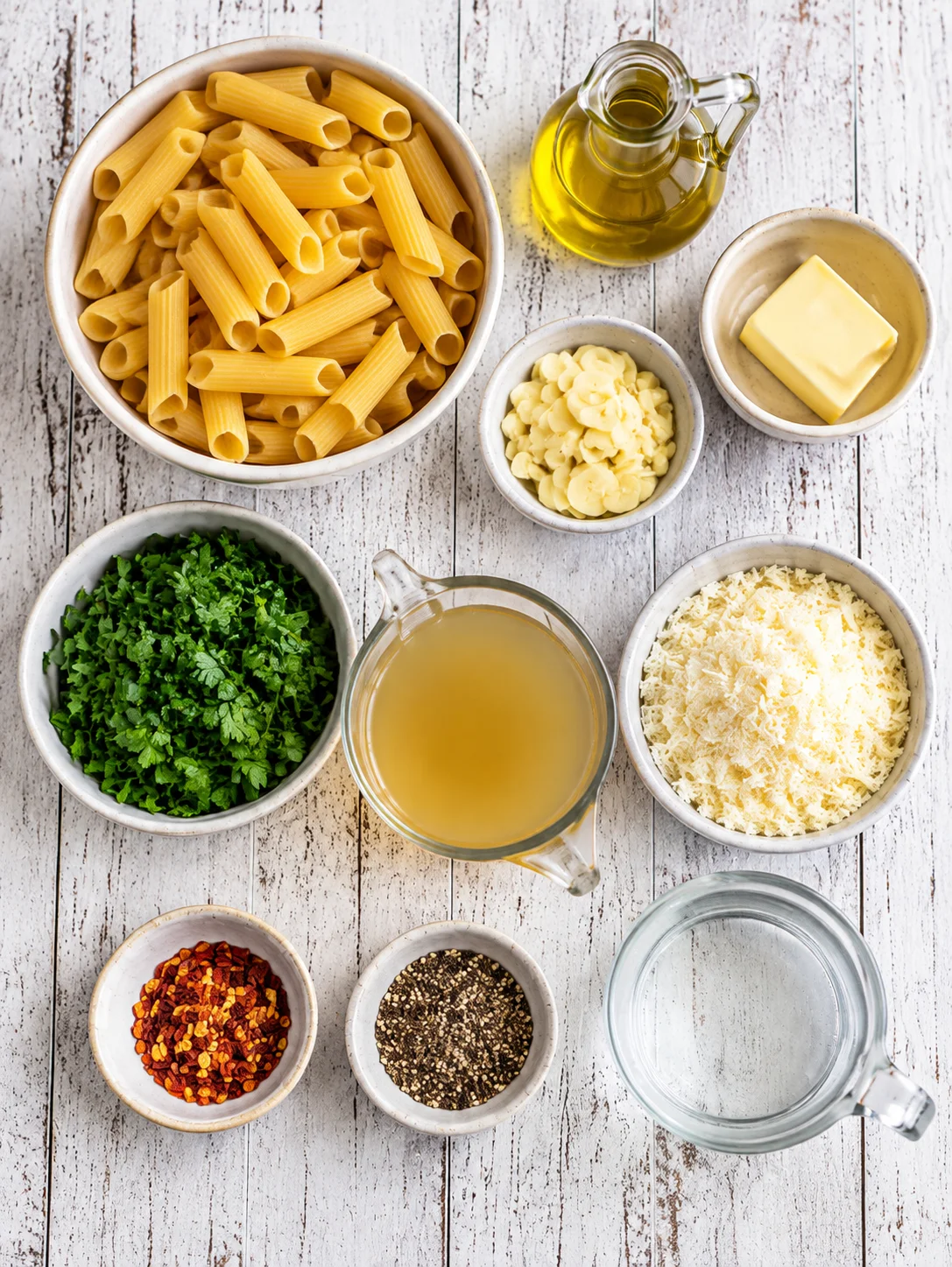
Ingredient notes: Slice the garlic instead of mincing it. Sliced garlic cooks more evenly and is much easier to pull out of the butter the instant it turns golden, whereas minced garlic burns in patches before you can catch it. Also, pre-shredded parmesan in a bag often contains anti-clumping starches that keep it from melting smoothly a block you grate yourself will melt into the sauce far more evenly.
Equipment Needed
- Large deep skillet or a wide, shallow pot with a lid
- Box grater or food processor for the parmesan
- Wooden spoon or silicone spatula
Step-by-Step Instructions
1. Melt the butter and start the garlic. Melt the butter in your skillet over medium heat. Add the sliced garlic and cook, stirring often, for about 90 seconds.
2. Pull the garlic off the heat right as it turns golden. Watch closely here the moment the garlic edges turn light golden (not deep brown), remove the pan from the heat entirely for about 15 seconds before adding the liquid in the next step. This single pause is the difference between a nutty, fragrant sauce and a bitter one. Garlic keeps browning from residual heat even after you think you’ve caught it in time, and a pan that’s still screaming hot when the broth hits it can scorch the garlic sitting at the bottom in the two or three seconds it takes the liquid to cool things down.
3. Add the liquid and pasta. Return the pan to medium heat, then pour in the broth and water. Add the pasta directly to the liquid along with the black pepper and red pepper flakes if using. Stir once to make sure no pasta is sticking to the bottom.
4. Simmer, stirring occasionally. Bring to a gentle simmer, then partially cover and cook for 10–12 minutes, stirring every couple of minutes so the pasta doesn’t stick or clump. Pro tip: if the liquid is evaporating faster than the pasta is softening, add an extra splash of water rather than turning up the heat a hard boil will cook the pasta unevenly.
5. Check for doneness. The pasta is ready when it’s tender and most of the liquid has reduced into a thin, starchy sauce clinging to the bottom of the pan. There should still be a little liquid left this is what turns into sauce in the next step, not a mistake to fix.
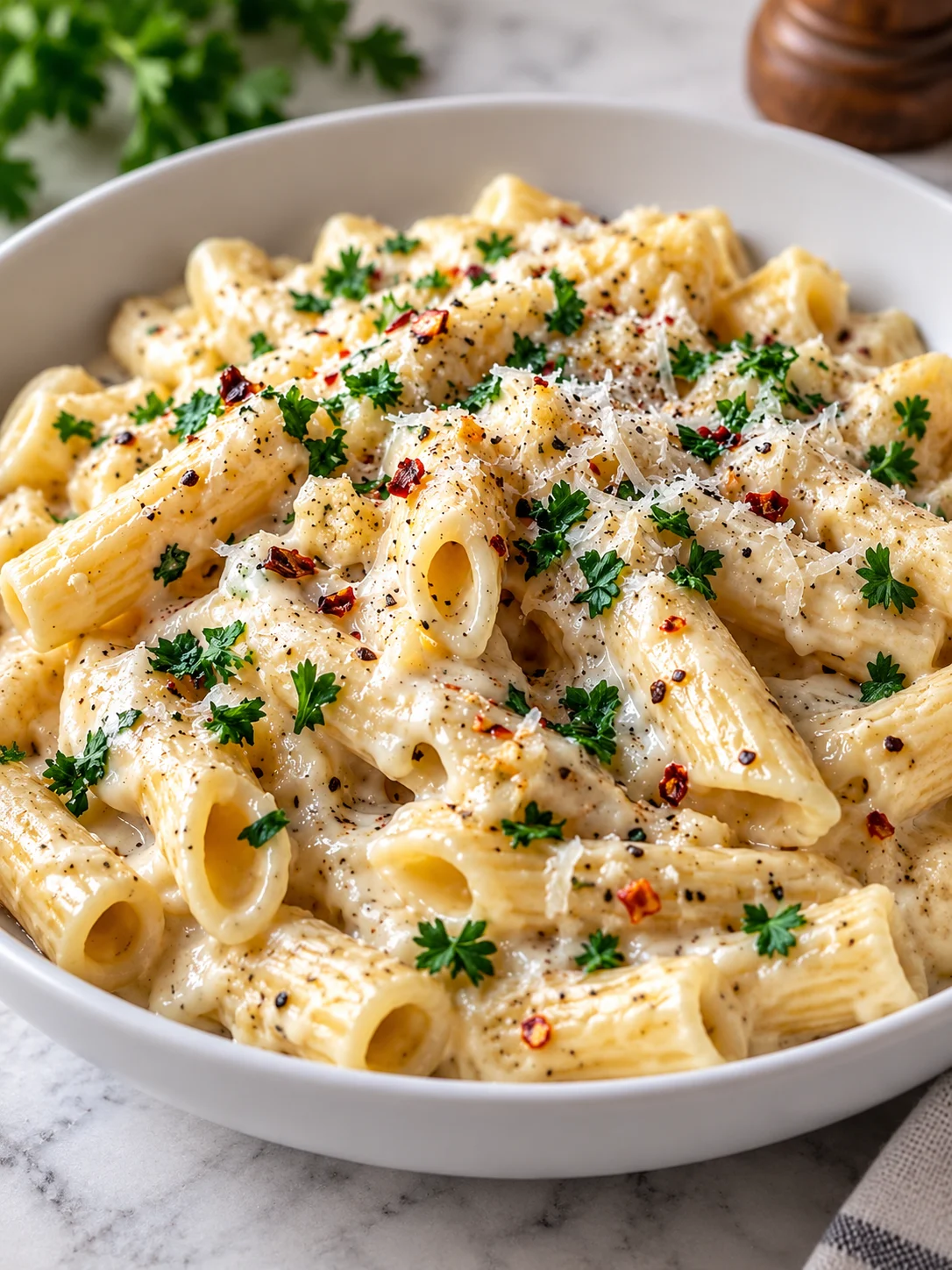
6. Stir in the parmesan off the heat. Remove the pan from the heat and add the parmesan gradually, stirring constantly, until it melts into a glossy sauce that coats every piece of pasta. Adding it off the heat keeps the cheese from clumping or turning grainy, which happens when parmesan hits liquid that’s still actively bubbling.
7. Serve. Top with parsley and extra parmesan, and serve right away while the sauce is still warm and glossy — it thickens noticeably as it cools.
Common Mistakes to Avoid
- Letting the garlic go past golden before pulling the pan off heat. Even a few extra seconds turns it bitter, and there’s no fixing a burnt-garlic sauce once it’s in there.
- Adding the parmesan while the pan is still simmering. This is what causes a grainy or clumpy sauce instead of a smooth one — always pull the heat first.
- Using pre-shredded parmesan. The anti-clumping coating keeps it from melting into the sauce the way freshly grated cheese does.
- Boiling too hard. A vigorous boil cooks the outside of the pasta before the inside catches up, leaving you with mushy edges and a firm center.
- Skipping the stir-and-check routine. One-pot pasta needs occasional stirring, unlike a pot of boiling water — walk away too long and it’ll stick to the bottom.
How to Store & Reheat
Refrigerator: Store in an airtight container for up to 4 days. The sauce will thicken as it chills, which is normal.
Freezer: This isn’t an ideal freezer dish the sauce tends to separate on thawing but if needed, it holds for about 1 month in a sealed container.
Reheat: Add a splash of broth or water and reheat gently in a skillet over medium-low heat, stirring until the sauce loosens back up, about 3–4 minutes. Microwaving works too, in 30-second bursts with a stir in between, though the texture is noticeably better from the stovetop.
Recipe Variations & Substitutions
- Add protein: Stir in shredded rotisserie chicken or cooked shrimp during the last 2 minutes so it warms through without overcooking.
- Gluten-free: Use a gluten-free short pasta; you may need slightly less liquid, since GF pasta often absorbs less.
- Vegetable boost: Fold in a couple handfuls of baby spinach or chopped kale right after removing the pan from the heat — the residual warmth wilts it perfectly.
- Dairy-free: Swap the butter for a plant-based alternative and use a dairy-free parmesan substitute; the texture will be slightly less silky but still workable.
- Mushroom version: Sauté sliced mushrooms in the butter before the garlic for an earthier, more savory base.
- Extra creamy: Stir in 2 tablespoons of cream cheese along with the parmesan for an even richer finish.
A Note on Nutrition
This recipe gets its protein mostly from the parmesan and broth rather than a dedicated protein source, so it pairs well with a side of grilled chicken or a simple salad if you want a more complete meal. Using a low-sodium broth also gives you more control over the final saltiness, since parmesan already brings plenty of its own. As always, these are general observations rather than medical advice talk to a nutritionist or doctor about anything specific to your own needs.
Frequently Asked Questions
Can I use a different pasta shape?
Short shapes like penne, fusilli, or shells work best because they hold the sauce well, but you can use spaghetti broken in half if that’s what you have — just watch it closely since long noodles can clump more easily in a shallow pan.
Do I have to use chicken broth?
No vegetable broth works fine for a vegetarian version, and even water with a bit of extra salt will work in a pinch, though the broth adds noticeably more flavor.
Can I make this ahead of time?
It’s best fresh, since the sauce is at its silkiest right when the parmesan melts in. If you need to make it ahead, slightly undercook the pasta and reheat gently with extra broth to finish it off.
Why did my sauce turn out grainy?
This almost always means the parmesan went in while the pan was still hot and simmering. Pull the pan off the heat completely before stirring in the cheese next time.
Can I use pre-shredded parmesan?
You can, but the sauce won’t be quite as smooth, since the anti-clumping starch in bagged shredded cheese resists melting the way freshly grated cheese does.
What if I don’t have a deep skillet?
A wide, shallow pot works just as well the important part is enough surface area for the pasta to cook evenly in the liquid without stacking on top of itself.
Final Thoughts
The whole dish really does hinge on that one small pause after the garlic turns golden it’s a five-second habit that keeps the sauce tasting nutty instead of bitter, and once you’ve done it a couple of times it becomes automatic. Everything else here is about as low-effort as pasta gets. What do you usually serve alongside this one a salad, garlic bread, or just a fork and a big bowl?
- 12 oz pasta short shapes like penne or fusilli hold the sauce better than long noodles
- 4 tablespoons unsalted butter
- 6 cloves garlic thinly sliced (not minced see note below)
- 3½ cups low-sodium chicken or vegetable broth
- 1 cup water
- 1 cup freshly grated parmesan plus more for serving
- ½ teaspoon black pepper
- ¼ teaspoon red pepper flakes optional
- 2 tablespoons fresh parsley chopped, for topping
Large deep skillet or a wide, shallow pot with a lid
Box grater or food processor for the parmesan
Wooden spoon or silicone spatula
Melt the butter and start the garlic. Melt the butter in your skillet over medium heat. Add the sliced garlic and cook, stirring often, for about 90 seconds.
Pull the garlic off the heat right as it turns golden. Watch closely here the moment the garlic edges turn light golden (not deep brown), remove the pan from the heat entirely for about 15 seconds before adding the liquid in the next step. This single pause is the difference between a nutty, fragrant sauce and a bitter one. Garlic keeps browning from residual heat even after you think you’ve caught it in time, and a pan that’s still screaming hot when the broth hits it can scorch the garlic sitting at the bottom in the two or three seconds it takes the liquid to cool things down.
Add the liquid and pasta. Return the pan to medium heat, then pour in the broth and water. Add the pasta directly to the liquid along with the black pepper and red pepper flakes if using. Stir once to make sure no pasta is sticking to the bottom.
Simmer, stirring occasionally. Bring to a gentle simmer, then partially cover and cook for 10–12 minutes, stirring every couple of minutes so the pasta doesn’t stick or clump. Pro tip: if the liquid is evaporating faster than the pasta is softening, add an extra splash of water rather than turning up the heat a hard boil will cook the pasta unevenly.
Check for doneness. The pasta is ready when it’s tender and most of the liquid has reduced into a thin, starchy sauce clinging to the bottom of the pan. There should still be a little liquid left this is what turns into sauce in the next step, not a mistake to fix.
Stir in the parmesan off the heat. Remove the pan from the heat and add the parmesan gradually, stirring constantly, until it melts into a glossy sauce that coats every piece of pasta. Adding it off the heat keeps the cheese from clumping or turning grainy, which happens when parmesan hits liquid that’s still actively bubbling.
Serve. Top with parsley and extra parmesan, and serve right away while the sauce is still warm and glossy it thickens noticeably as it cools.
Creamy One-Pot Garlic Pasta
Last modified: September 24, 2026