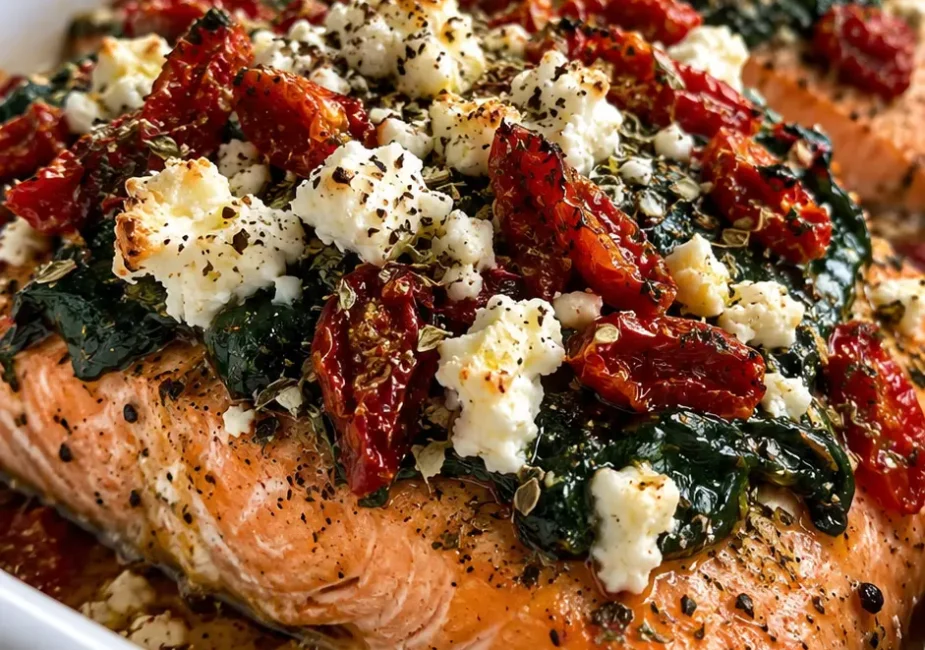
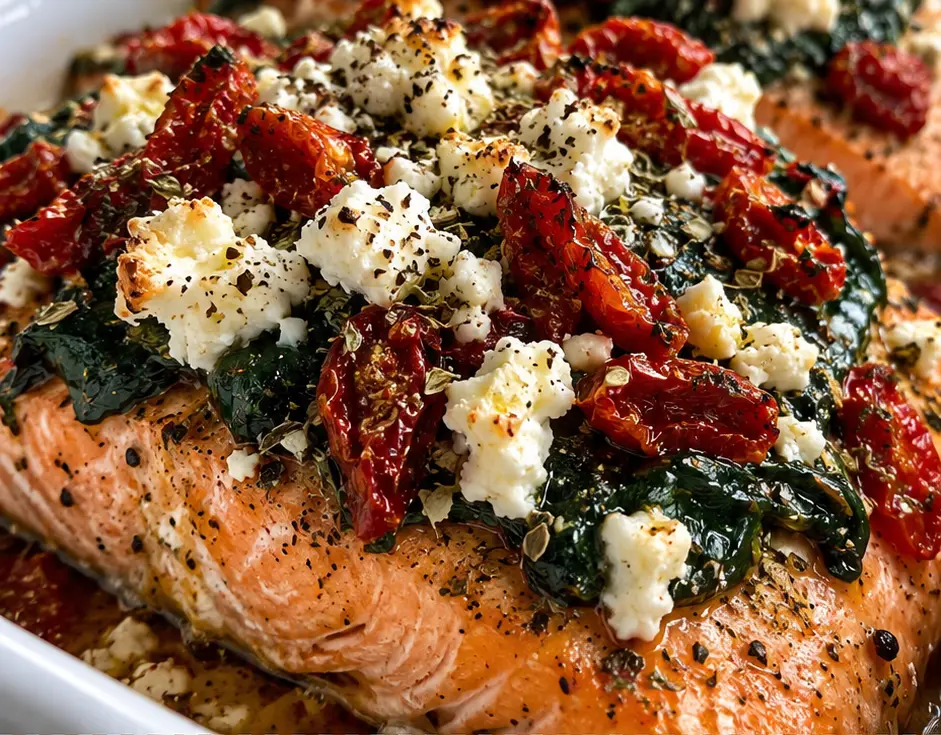
A few of the details below the exact ingredient list, internal blog links, and related post suggestions — are placeholders I’ve filled in with reasonable defaults since specifics weren’t provided. Swap in your real numbers, links, and testing notes wherever you see a bracketed note, and this is ready to publish.
Most sheet-pan salmon recipes go one of two ways: the fish turns out chalky and dry because it sat in a hot oven too long, or the vegetables underneath stay raw and watery because everything went in at the same time. It’s a fair trade-off complaint, and it’s the reason a lot of people quietly give up on “healthy weeknight salmon” and go back to pasta.
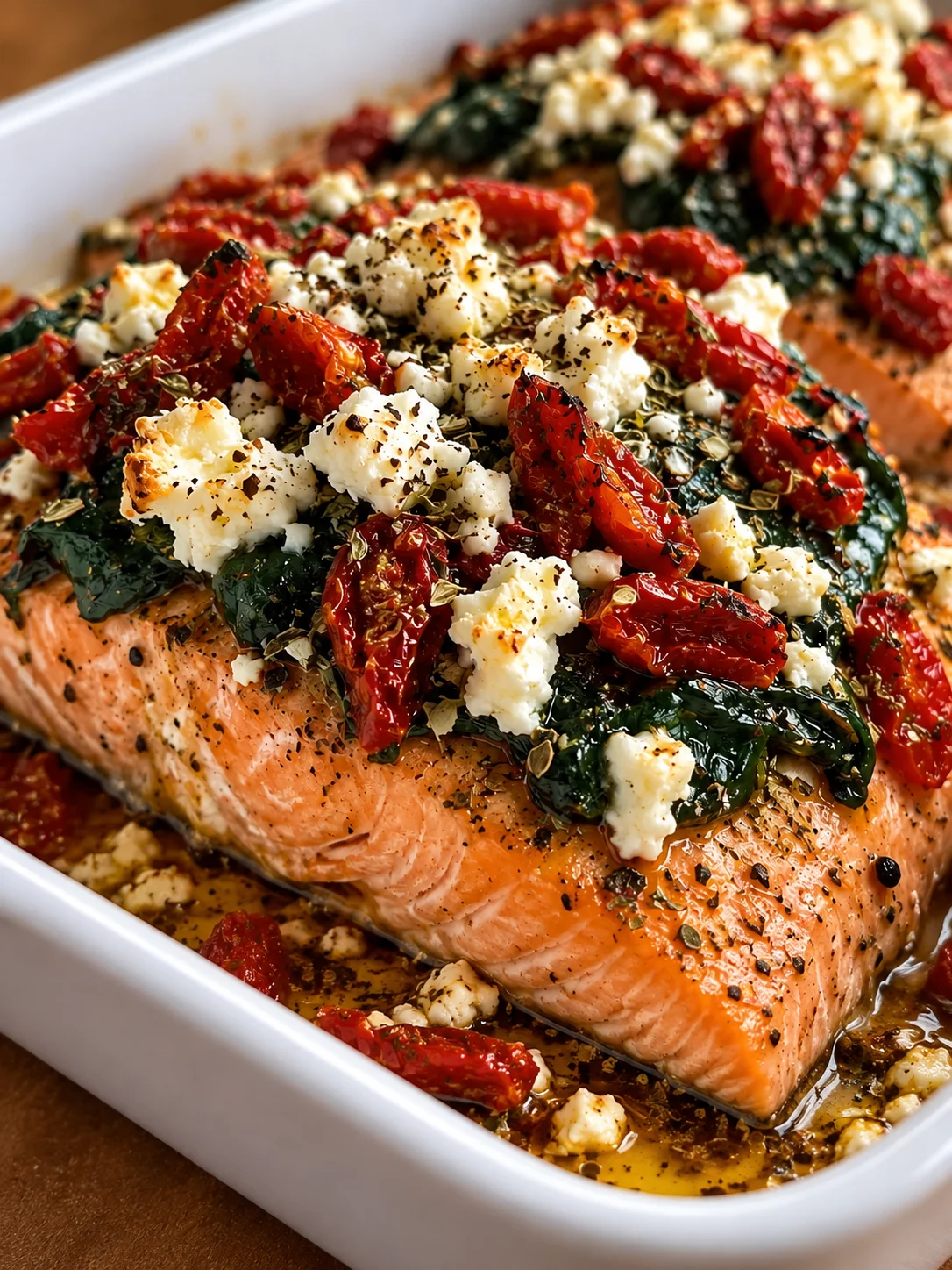
This one splits the difference. The salmon stays flaky and just-cooked, the cherry tomatoes actually blister and collapse into a light sauce, and the whole thing is on the table in about 20 minutes, using one sheet pan and almost no cleanup. Here’s how it comes together.
Why You’ll Love This Recipe
- It’s genuinely 20 minutes, not “20 minutes” with an asterisk. Prep and cook time both count here — there’s no marinating step hiding in the fine print.
- One pan, one oven, minimal dishes. The tomatoes, olives, and onion roast right alongside the salmon, so you’re not juggling a skillet and a sheet pan at the same time.
- The salmon comes out flaky, not steamed. A short dry-brine step (more on that below) is what keeps the texture from going mushy, which is the single biggest complaint people have about baked salmon.
- It’s naturally gluten-free and low-carb, with feta and olive oil doing a lot of the flavor work instead of a heavy sauce or breading.
- Big, punchy Mediterranean flavor with pantry-staple ingredients — no specialty grocery run required.
- It reheats well, which most fish recipes genuinely do not.
Recipe At a Glance
- Prep time: 10 minutes
- Cook time: 15 minutes
- Total time: 25 minutes
- Servings: 4
- Estimated calories: ~410 per serving (estimate only)
- Estimated macros: ~34g protein, ~9g carbs, ~27g fat (estimate only, based on standard nutrition databases — will vary with fillet size and oil used)
Ingredients
- 4 salmon fillets (about 6 oz each), skin-on or skinless
- 2 tablespoons olive oil, divided
- 1 pint cherry tomatoes, halved
- 1/2 cup pitted kalamata olives, halved
- 1/2 small red onion, thinly sliced
- 2 tablespoons capers, drained
- 3 garlic cloves, thinly sliced
- 1 teaspoon dried oregano
- 1/2 teaspoon kosher salt, plus more for the salmon
- 1/4 teaspoon black pepper
- 1/2 cup crumbled feta
- 1 lemon, half sliced into thin rounds, half juiced
- 2 tablespoons chopped fresh parsley, for serving
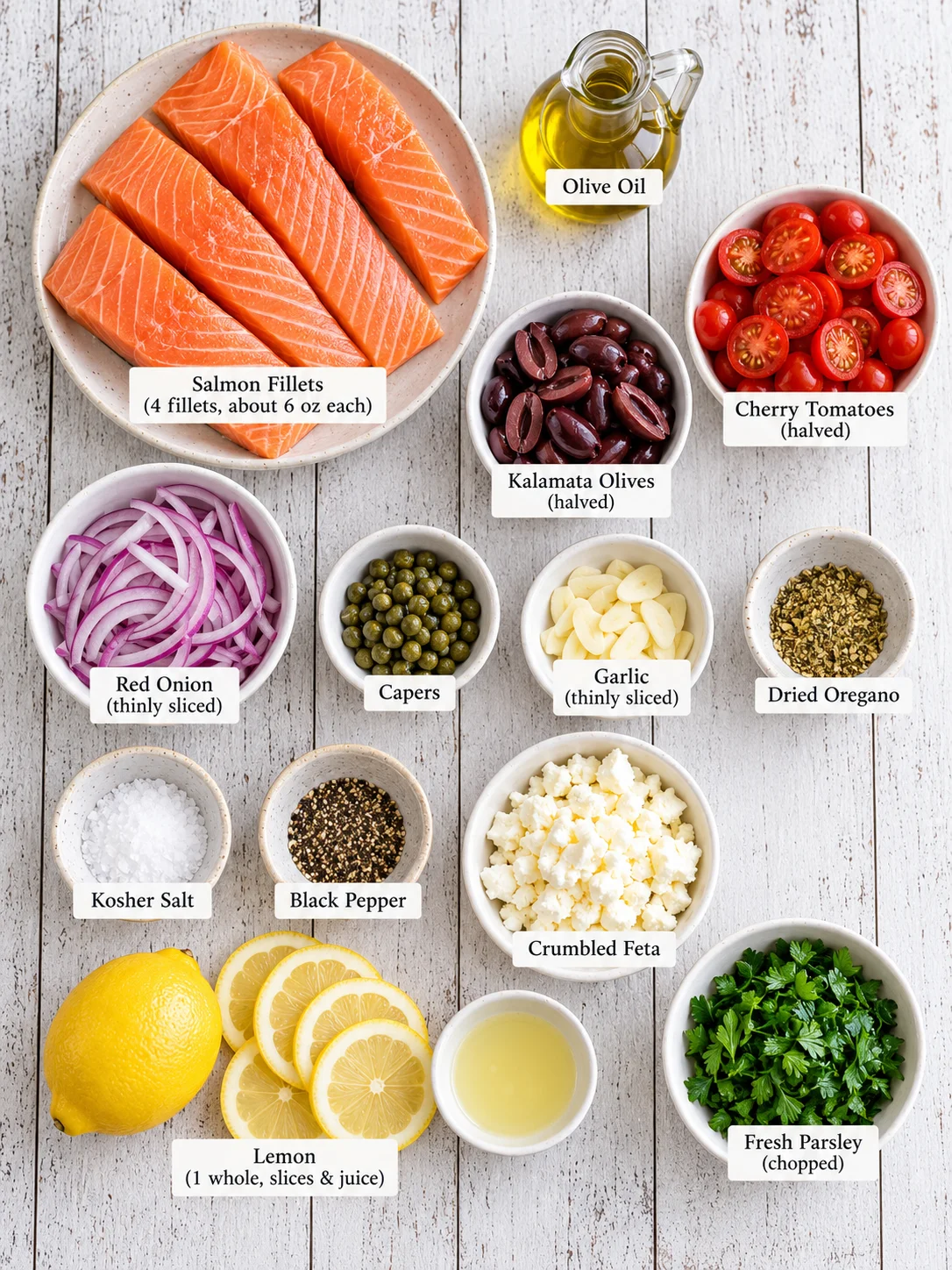
Notes on ingredients: Skin-on fillets are a little more forgiving here since the skin protects the flesh from drying out, but skinless works fine too — just watch the timing closely near the end. For the feta, block feta packed in brine crumbles better and tastes noticeably fresher than the pre-crumbled bags, which are often coated in anti-caking starch that dulls the flavor.
Equipment Needed
- Rimmed sheet pan
- Parchment paper or foil (for easier cleanup)
- Mixing bowl
- Instant-read thermometer (optional, but useful for doneness)
Step-by-Step Instructions
1. Dry-brine the salmon. Pat the fillets completely dry with paper towels, then season both sides with salt. Set them on a plate, uncovered, and let them sit for 10–15 minutes while you prep everything else. This is the step most sheet-pan salmon recipes skip, and it’s the reason this one turns out flakier: salting ahead of time draws a little surface moisture out of the fish, which then reabsorbs and seasons the flesh from the inside instead of just sitting on top. Skip it, and the salmon tends to steam in the oven instead of roast, which is what leaves it pale and a little rubbery.
2. Preheat the oven to 425°F (220°C). Line your sheet pan with parchment paper.
3. Toss the vegetables. In a mixing bowl, combine the cherry tomatoes, olives, red onion, capers, garlic, oregano, 1 tablespoon of olive oil, the 1/2 teaspoon salt, and black pepper. Toss well and spread in an even layer on the sheet pan.
4. Give the vegetables a head start. Roast the tomato mixture alone for 5 minutes before the salmon goes in. This is a small step, but it matters — cherry tomatoes need a bit more time than a salmon fillet to actually blister and soften, and starting them solo means you’re not stuck choosing between undercooked veggies and overcooked fish.
5. Add the salmon. Remove the pan, nestle the salmon fillets among the vegetables, and brush the tops with the remaining tablespoon of olive oil. Lay a few lemon slices over each fillet.
6. Roast until just cooked through. Bake for 10–12 minutes, until the salmon flakes easily with a fork and reaches an internal temperature of 130–135°F for medium (it’ll carry over to about 140°F while resting). Pro tip: pull it a touch earlier than you think you should — salmon keeps cooking from residual heat once it’s out of the oven, and that’s usually where the “dry salmon” problem actually happens.
7. Finish and serve. Squeeze the lemon juice over everything, scatter the feta and parsley on top, and let the pan rest for 2–3 minutes before serving.
Common Mistakes to Avoid
- Skipping the dry-brine step. This is the one that trips people up most — salmon straight from the fridge with no salting time tends to release liquid in the oven and steam instead of roast, leading to that dull, flaky-but-mushy texture everyone’s trying to avoid.
- Adding the tomatoes and salmon to the oven at the same time. The tomatoes need a longer cook time to break down; give them that 5-minute head start.
- Overcrowding the pan. If the vegetables are piled on top of each other, they’ll steam instead of blister. Use a full-size sheet pan, not a small one.
- Cooking salmon to full opacity in the oven. By the time it looks fully cooked, it’s usually overcooked. Pull it while the center is still a shade translucent.
- Using pre-crumbled feta and expecting bold flavor. It’s convenient, but block feta genuinely tastes better here and melts slightly instead of staying chalky.
How to Store & Reheat
Store leftovers in an airtight container in the fridge for up to 3 days. For longer storage, the salmon (without the tomato mixture) freezes well for up to 2 months, tightly wrapped.
To reheat, warm gently in a 275°F oven for about 10 minutes, covered loosely with foil — this keeps the salmon from drying out the way a microwave tends to. If you’re short on time, 45–60 seconds in the microwave at 50% power works, but the texture is noticeably better from the oven.
Recipe Variations & Substitutions
- Dairy-free: Leave out the feta, or swap in a few tablespoons of chopped kalamata olives for extra briny flavor.
- Extra vegetables: Add sliced zucchini or bell pepper strips along with the tomatoes for a heartier one-pan meal.
- Different fish: Cod or halibut both work with the same method — just adjust the cook time down slightly since they’re thinner cuts.
- Spicier version: Add a pinch of crushed red pepper flakes to the tomato mixture before roasting.
- Herb swap: Fresh dill or basil in place of parsley gives a different but equally good finish.
- Lower-sodium version: Cut the capers and reduce the added salt by half, then season to taste at the end instead.
The Nutritional Angle
This recipe leans on salmon as its main protein source, which brings a solid amount of omega-3 fatty acids to the plate along with lean protein. The olive oil and olives contribute mostly unsaturated fat, and because there’s no flour, breading, or heavy cream sauce involved, the carb count stays low. As always, exact nutrition will vary depending on fillet size and how much oil you use — the numbers above are estimates, not a substitute for checking your specific ingredients.
Frequently Asked Questions
Can I use frozen salmon for this recipe?
Yes, just thaw it completely and pat it very dry before the dry-brine step — excess moisture from frozen fish is the main thing that can throw off the roasting time.
What can I use instead of kalamata olives?
Castelvetrano or Niçoise olives both work well if kalamata isn’t your thing; just adjust the salt slightly since olive varieties differ in brininess.
How do I know when the salmon is actually done?
The most reliable way is an instant-read thermometer — pull it around 130–135°F and let it rest, since it’ll climb a few more degrees on its own.
Can I make this ahead of time?
The vegetable mixture can be prepped and refrigerated up to a day ahead, but the salmon itself is best roasted fresh — it doesn’t hold up as well reheated from raw.
Is this recipe gluten-free?
Yes, every ingredient here is naturally gluten-free — just double-check your capers and olives if you’re cooking for someone with celiac disease, since some brined products are processed in shared facilities.
Can I make this in an air fryer instead of the oven?
Yes roast the vegetables at 400°F for about 6 minutes, then add the salmon and cook another 8–10 minutes, checking a couple minutes early since air fryers run hot.
Final Thoughts
The dry-brine step is the small, easy-to-skip detail that makes the biggest difference here it’s a five-minute head start that’s the real reason this salmon comes out flaky instead of mushy, and it’s worth doing every time, not just when you remember. Everything else about this recipe is genuinely low-effort: one pan, pantry staples, and a 20-minute window from fridge to table.
What do you usually serve alongside your baked salmon rice, crusty bread, a big salad? I’d love to hear what you pair it with.
- 4 salmon fillets about 6 oz each, skin-on or skinless
- 2 tablespoons olive oil divided
- 1 pint cherry tomatoes halved
- 1/2 cup pitted kalamata olives halved
- 1/2 small red onion thinly sliced
- 2 tablespoons capers drained
- 3 garlic cloves thinly sliced
- 1 teaspoon dried oregano
- 1/2 teaspoon kosher salt plus more for the salmon
- 1/4 teaspoon black pepper
- 1/2 cup crumbled feta
- 1 lemon half sliced into thin rounds, half juiced
- 2 tablespoons chopped fresh parsley for serving
Rimmed sheet pan
Parchment paper or foil (for easier cleanup)
Mixing bowl
Instant-read thermometer (optional, but useful for doneness)
Dry-brine the salmon. Pat the fillets completely dry with paper towels, then season both sides with salt. Set them on a plate, uncovered, and let them sit for 10–15 minutes while you prep everything else. This is the step most sheet-pan salmon recipes skip, and it's the reason this one turns out flakier: salting ahead of time draws a little surface moisture out of the fish, which then reabsorbs and seasons the flesh from the inside instead of just sitting on top. Skip it, and the salmon tends to steam in the oven instead of roast, which is what leaves it pale and a little rubbery.
Preheat the oven to 425°F (220°C). Line your sheet pan with parchment paper.
Toss the vegetables. In a mixing bowl, combine the cherry tomatoes, olives, red onion, capers, garlic, oregano, 1 tablespoon of olive oil, the 1/2 teaspoon salt, and black pepper. Toss well and spread in an even layer on the sheet pan.
Give the vegetables a head start. Roast the tomato mixture alone for 5 minutes before the salmon goes in. This is a small step, but it matters cherry tomatoes need a bit more time than a salmon fillet to actually blister and soften, and starting them solo means you're not stuck choosing between undercooked veggies and overcooked fish.
Add the salmon. Remove the pan, nestle the salmon fillets among the vegetables, and brush the tops with the remaining tablespoon of olive oil. Lay a few lemon slices over each fillet.
Roast until just cooked through. Bake for 10–12 minutes, until the salmon flakes easily with a fork and reaches an internal temperature of 130–135°F for medium (it'll carry over to about 140°F while resting). Pro tip: pull it a touch earlier than you think you should salmon keeps cooking from residual heat once it's out of the oven, and that's usually where the "dry salmon" problem actually happens.
Finish and serve. Squeeze the lemon juice over everything, scatter the feta and parsley on top, and let the pan rest for 2–3 minutes before serving.
Easy 20-Minute Mediterranean Baked Salmon
Last modified: September 24, 2026