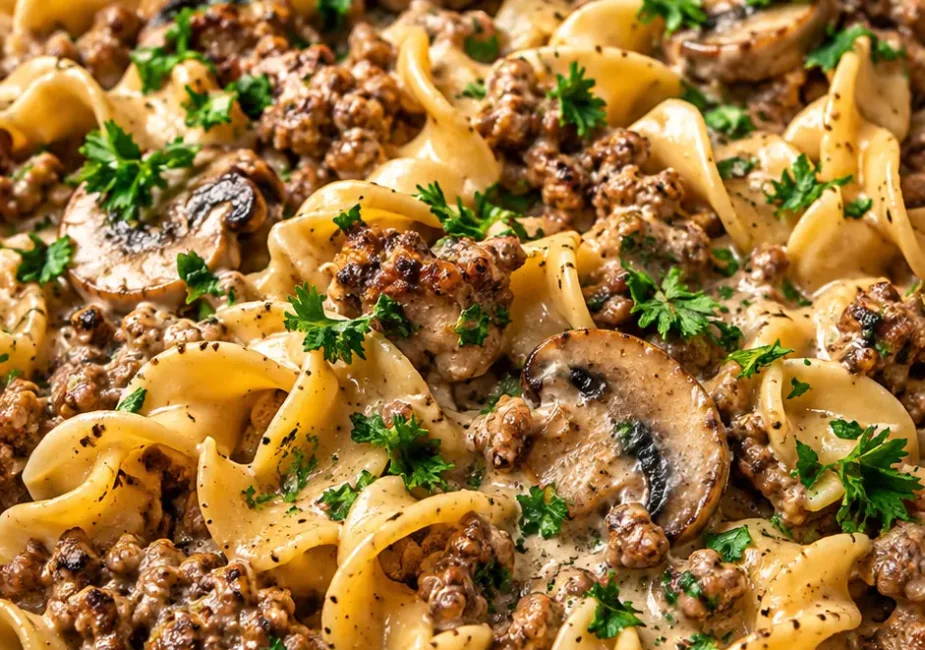
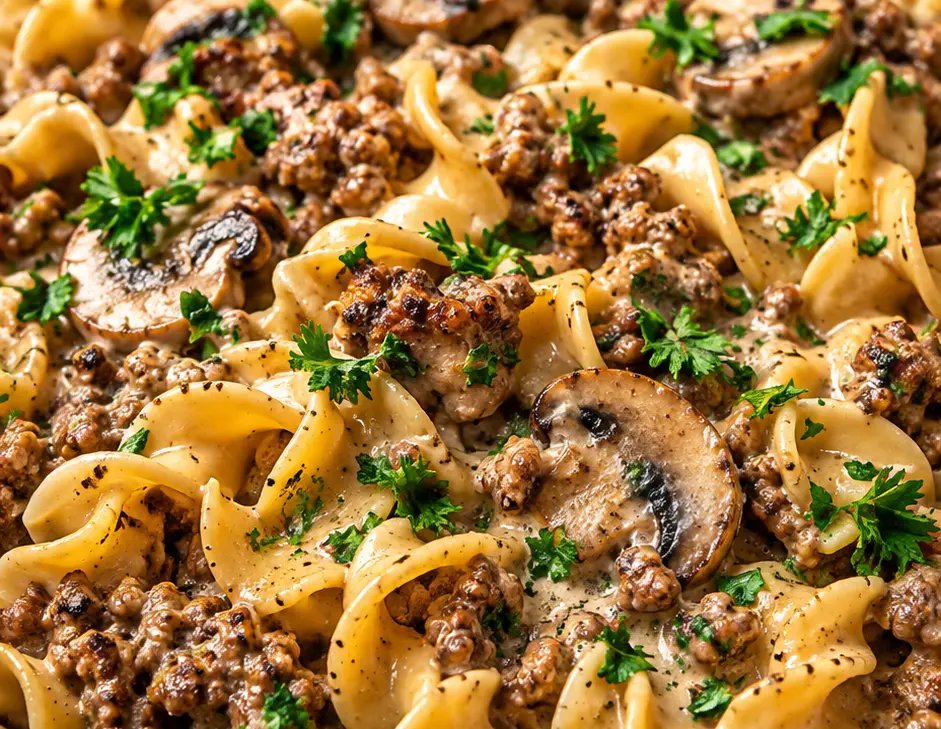
There’s one ingredient in stroganoff that decides whether the whole dish turns out silky or grainy, and it’s not the beef, the mushrooms, or even the noodles. It’s the sour cream specifically, what’s happening around it in the pan the moment it goes in.
Sour cream is a delicate emulsion, and dumping it straight into a pan of actively bubbling sauce is asking it to hold together under conditions it wasn’t built for. Handle that one moment right, and the rest of this dish is genuinely simple, one-pan comfort food. Here’s how it comes together.
Why You’ll Love It
- A properly silky sauce, not a broken or grainy one. How and when the sour cream goes in and what happens right after makes the real difference here.
- Everything cooks in one pan, noodles included, so there’s minimal cleanup.
- Ready in about 30 minutes, which makes it a realistic weeknight option despite tasting like a slower-cooked comfort dish.
- Budget-friendly. Ground beef costs noticeably less than the sliced steak most classic stroganoff recipes call for.
- Deep, savory mushroom flavor that builds real depth without needing a long ingredient list.
- Reheats well, unlike a lot of cream-based dishes that separate in the fridge.
Recipe At a Glance
- Prep time: 10 minutes
- Cook time: 20 minutes
- Total time: 30 minutes
- Servings: 4
- Estimated nutrition per serving: ~520 calories, 28g protein, 42g carbohydrates, 26g fat. These are estimates only and will shift depending on your ground beef fat content and sour cream brand.
Ingredients
- 1 lb ground beef (85/15 recommended)
- 8 oz mushrooms, sliced (cremini or white button both work)
- 1 small yellow onion, diced
- 3 cloves garlic, minced
- 2 tablespoons all-purpose flour
- 2½ cups beef broth
- 1 tablespoon Worcestershire sauce
- 1 teaspoon Dijon mustard
- 8 oz egg noodles
- ¾ cup sour cream, room temperature
- Salt and black pepper, to taste
- 2 tablespoons chopped fresh parsley, for topping
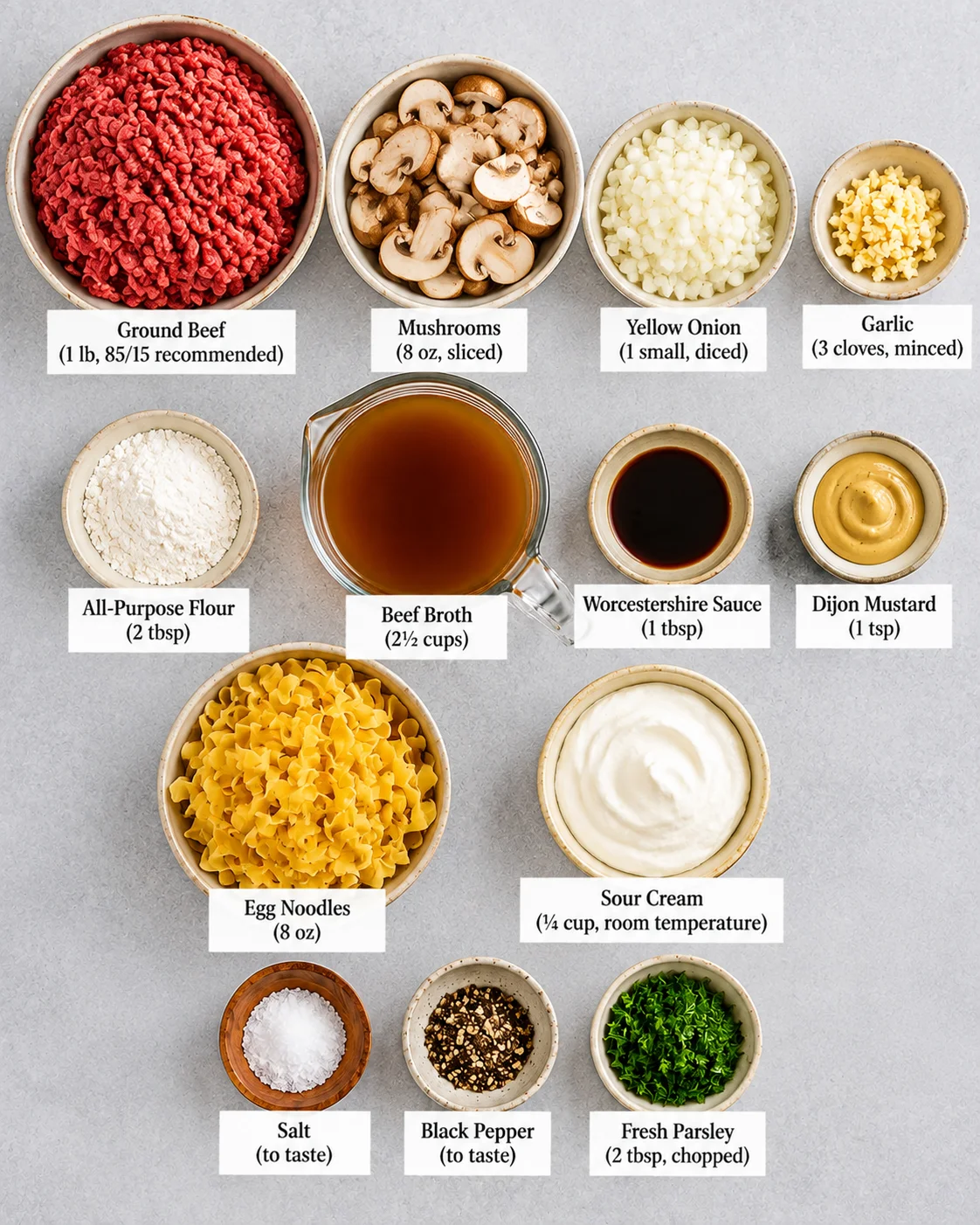
Ingredient notes: Take the sour cream out of the fridge while you start cooking so it’s closer to room temperature by the time you need it. Cold sour cream added straight from the fridge is more prone to curdling on contact with a hot pan than sour cream that’s had a chance to lose some of that chill.
Equipment Needed
- Large, deep skillet with a lid
- Wooden spoon or silicone spatula
Step-by-Step Instructions
1. Brown the beef. Cook the ground beef in a large skillet over medium-high heat, breaking it up as it browns, about 6–7 minutes. Drain excess fat, leaving a thin layer for flavor.
2. Cook the mushrooms and onion. Add the mushrooms and onion to the pan with the beef and cook for 5–6 minutes, until the mushrooms have released their liquid and started to brown and the onion is softened.
3. Add garlic and flour. Stir in the garlic and cook for 30 seconds until fragrant. Sprinkle the flour over everything and stir constantly for about 1 minute, until it’s no longer visible as a raw powder.
4. Build the sauce and cook the noodles. Pour in the beef broth, Worcestershire sauce, and Dijon mustard, stirring to work out any flour lumps. Add the egg noodles directly to the pan, bring to a simmer, then cover and cook for 8–10 minutes, stirring occasionally, until the noodles are tender and the liquid has reduced into a thickened sauce.
5. Take the pan off the heat before adding sour cream. Remove the skillet from the heat entirely not just turn the burner down and let it sit for about 30 seconds before stirring in the sour cream. Pro tip: stir the sour cream in gradually, working it into the sauce in two or three additions rather than dumping it all in at once, so it has an easier time incorporating smoothly. Adding it off the heat instead of into an actively simmering pan is what keeps the proteins in the sour cream from separating and turning the sauce grainy.
6. Let the dish rest before serving. Let the stroganoff sit, uncovered, for about 5 minutes once the sour cream is fully incorporated. This short rest matters more than it looks like it should: the sauce is still slightly thin right when the sour cream goes in, but the noodles keep absorbing liquid and the starch already in the sauce keeps setting up as everything cools slightly, so a sauce that seems a bit loose at first will noticeably thicken to the right coating consistency by the time you serve it.
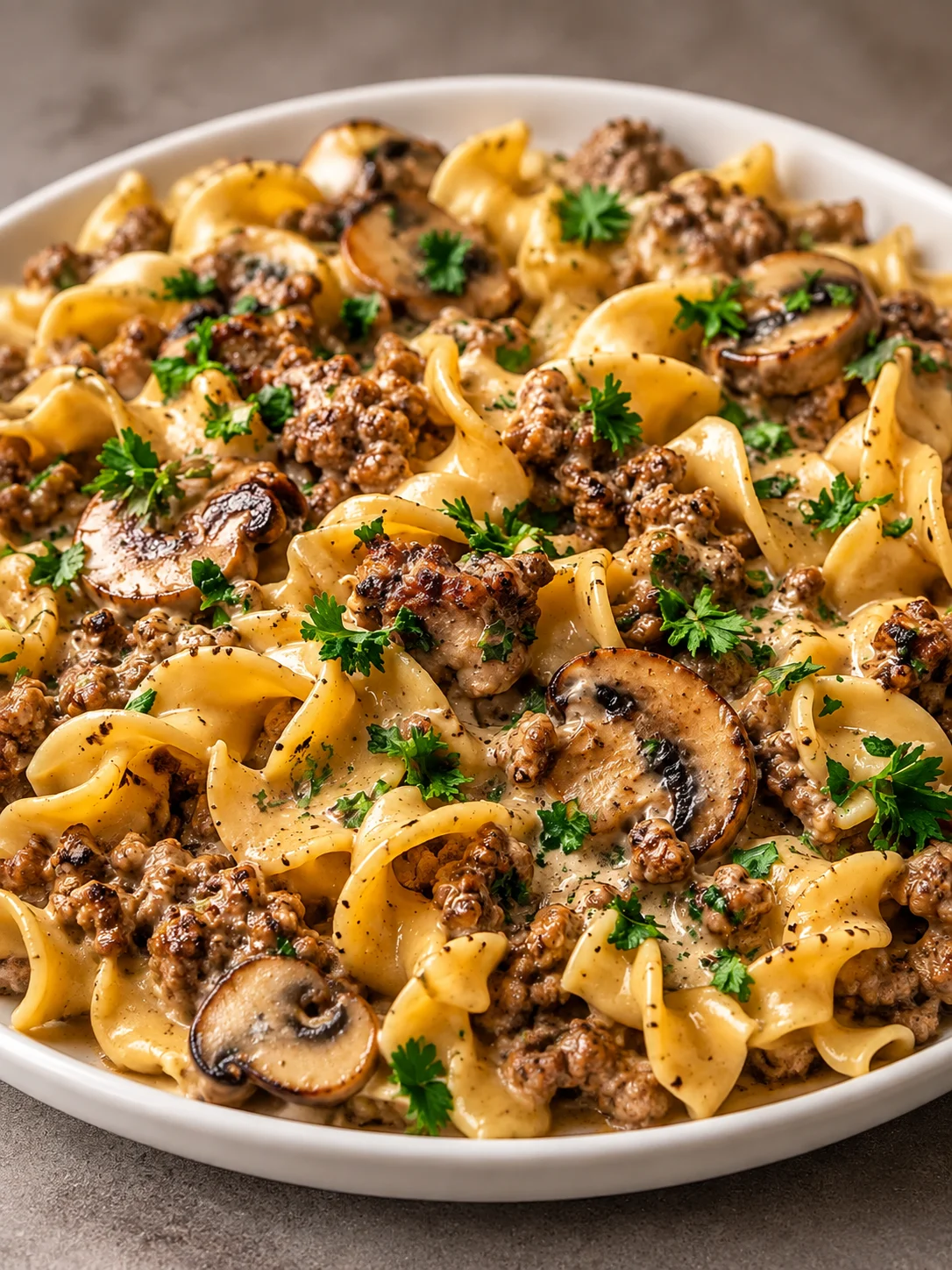
7. Season and serve. Taste and adjust salt and pepper the broth and Worcestershire already bring a fair amount of salt, so season gradually. Top with fresh parsley and serve warm.
Common Mistakes to Avoid
- Stirring the sour cream into a still-simmering pan. This is the exact mistake that causes the sauce to curdle or turn grainy instead of staying smooth removing the pan from the heat first, as in Step 5, prevents it.
- Serving immediately without letting it rest. The sauce looks thinner than it actually is right after the sour cream goes in; skipping the rest means serving a sauce that hasn’t finished thickening.
- Using cold sour cream straight from the fridge. It’s more prone to separating on contact with hot liquid than sour cream that’s had time to come closer to room temperature.
- Overcooking the noodles. Since they cook directly in the sauce, pull them right at tender they’ll continue softening slightly during the rest in Step 6.
- Skipping the flour step. Without it, the sauce stays thin no matter how long you simmer it, since there’s nothing there to thicken it.
How to Store & Reheat
Refrigerator: Store in an airtight container for up to 3 days.
Freezer: This isn’t an ideal candidate for freezing, since sour cream-based sauces tend to separate on thawing best enjoyed fresh or from the fridge within a few days.
Reheat: Reheat gently in a skillet over medium-low heat with a splash of broth or milk to loosen the sauce, stirring often, about 4–5 minutes. Avoid high heat, which risks curdling the sauce a second time; the microwave works in shorter, lower-power bursts if you’re short on time.
Recipe Variations & Substitutions
- Ground turkey version: Swap in ground turkey for a lighter option; add a touch more Worcestershire since turkey has less inherent flavor than beef.
- Gluten-free: Use a gluten-free flour blend and gluten-free egg noodles or a similar pasta shape.
- Dairy-free: Swap the sour cream for a dairy-free sour cream alternative; the texture may be slightly less rich but the technique stays the same.
- Extra vegetables: Stir in a handful of frozen peas during the last few minutes of cooking for some color and freshness.
- Different pasta: Wide egg noodles are classic, but rotini or fusilli work if that’s what you have on hand.
- Richer version: Stir in a tablespoon of cream cheese along with the sour cream for an even silkier, richer sauce.
A Note on Nutrition
This dish leans on ground beef for protein and iron, with the sour cream contributing calcium along with the dish’s signature richness. Using a leaner ground beef and a reduced-fat sour cream will bring the overall fat content down if that’s something you’re tracking, though the sauce will be a touch less rich as a result. As always, these are general observations rather than medical advice a nutritionist or doctor is the right resource for anything specific to your own needs.
Frequently Asked Questions
Why did my sauce curdle?
This almost always happens when the sour cream is stirred into a pan that’s still actively simmering. Removing the pan from the heat first, as described in Step 5, gives the sour cream a much better chance of incorporating smoothly.
Can I use Greek yogurt instead of sour cream?
Yes, though it has a slightly tangier flavor and can be a bit more prone to separating under heat, so the same off-heat technique matters even more if you go this route.
Can I make this ahead of time?
It’s best served fresh, since the noodles continue absorbing sauce the longer they sit and can turn a bit mushy by the next day. If you need to make it ahead, slightly undercook the noodles and add a splash of broth when reheating.
What if my sauce still seems too thin after resting?
Give it a few more minutes off the heat, or stir in an extra small sprinkle of flour mixed with a splash of cold water and warm briefly over low heat just avoid a hard simmer once the sour cream is in.
Can I use steak instead of ground beef?
Yes thin-sliced sirloin or tenderloin makes for a more classic stroganoff. Sear it quickly in batches before starting the mushroom step, since steak needs much less cook time than ground beef.
What’s the best way to reheat leftovers without curdling the sauce?
Low, gentle heat is key a skillet over medium-low with a splash of broth or milk, stirred often, works better than blasting it in the microwave on high.
Final Thoughts
That short rest at the end is easy to skip when everything smells done and you’re ready to eat, but it’s genuinely what turns a slightly thin sauce into one that properly clings to the noodles. Give the sour cream and the dish as a whole that little bit of patience and the payoff is obvious. If you’ve made stroganoff before, I’d love to know: how would you rate this one against your usual version?
- 1 lb ground beef 85/15 recommended
- 8 oz mushrooms sliced (cremini or white button both work)
- 1 small yellow onion diced
- 3 cloves garlic minced
- 2 tablespoons all-purpose flour
- 2½ cups beef broth
- 1 tablespoon Worcestershire sauce
- 1 teaspoon Dijon mustard
- 8 oz egg noodles
- ¾ cup sour cream room temperature
- Salt and black pepper to taste
- 2 tablespoons chopped fresh parsley for topping
Brown the beef. Cook the ground beef in a large skillet over medium-high heat, breaking it up as it browns, about 6–7 minutes. Drain excess fat, leaving a thin layer for flavor.
Cook the mushrooms and onion. Add the mushrooms and onion to the pan with the beef and cook for 5–6 minutes, until the mushrooms have released their liquid and started to brown and the onion is softened.
Add garlic and flour. Stir in the garlic and cook for 30 seconds until fragrant. Sprinkle the flour over everything and stir constantly for about 1 minute, until it’s no longer visible as a raw powder.
Build the sauce and cook the noodles. Pour in the beef broth, Worcestershire sauce, and Dijon mustard, stirring to work out any flour lumps. Add the egg noodles directly to the pan, bring to a simmer, then cover and cook for 8–10 minutes, stirring occasionally, until the noodles are tender and the liquid has reduced into a thickened sauce.
Take the pan off the heat before adding sour cream. Remove the skillet from the heat entirely not just turn the burner down and let it sit for about 30 seconds before stirring in the sour cream. Pro tip: stir the sour cream in gradually, working it into the sauce in two or three additions rather than dumping it all in at once, so it has an easier time incorporating smoothly. Adding it off the heat instead of into an actively simmering pan is what keeps the proteins in the sour cream from separating and turning the sauce grainy.
Let the dish rest before serving. Let the stroganoff sit, uncovered, for about 5 minutes once the sour cream is fully incorporated. This short rest matters more than it looks like it should: the sauce is still slightly thin right when the sour cream goes in, but the noodles keep absorbing liquid and the starch already in the sauce keeps setting up as everything cools slightly, so a sauce that seems a bit loose at first will noticeably thicken to the right coating consistency by the time you serve it.
Season and serve. Taste and adjust salt and pepper the broth and Worcestershire already bring a fair amount of salt, so season gradually. Top with fresh parsley and serve warm.
One-Pan Ground Beef Stroganoff
Last modified: September 29, 2026