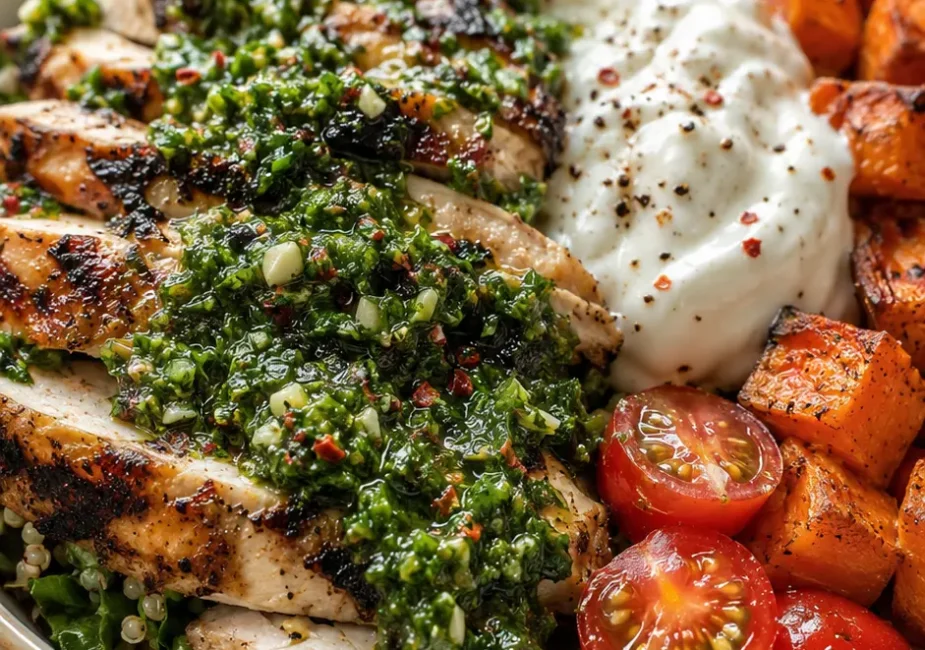
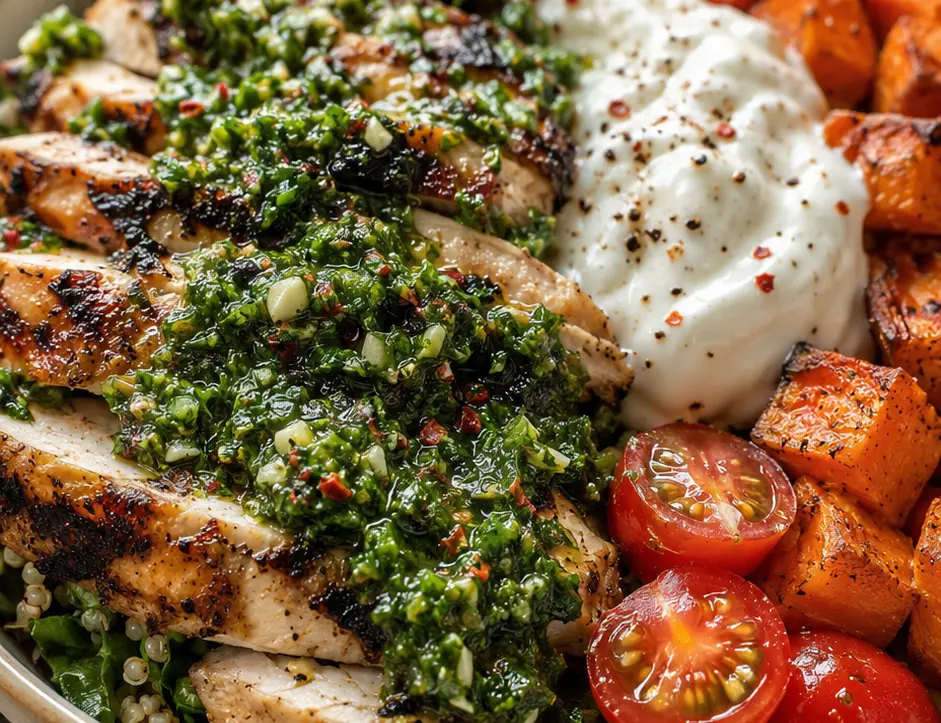
Most homemade chimichurri swings too far in one direction either so vinegary it makes your eyes water, or so oily it tastes more like herb-flecked salad dressing than a sauce with any real bite. Both problems come from the same place: nobody measures the oil and vinegar, they just eyeball it and hope.
A rough but reliable ratio fixes that, and once you’ve got it down, chimichurri becomes one of those sauces you’ll want to put on nearly everything. Grilled chicken is just the vehicle here the sauce is doing most of the talking. Here’s how it comes together.
Why You’ll Love It
- A chimichurri that’s actually balanced, not sharp with vinegar or greasy with oil — the ratio behind that is covered step by step below.
- High protein, naturally light, without tasting like a diet meal.
- Ready in about 30 minutes, most of it hands-off marinating time.
- Bright, herb-forward flavor that works over rice, greens, or roasted vegetables.
- Make-ahead friendly. The chimichurri actually improves after an hour or two in the fridge.
- A genuinely versatile sauce you’ll likely end up using on more than just this one dish.
Recipe At a Glance
- Prep time: 15 minutes (plus 20 minutes marinating)
- Cook time: 10 minutes
- Total time: 45 minutes
- Servings: 4 bowls
- Estimated nutrition per bowl (chicken, rice, chimichurri, and toppings): ~440 calories, 32g protein, 34g carbohydrates, 20g fat. Estimates only your rice portion and chimichurri quantity will shift these numbers.
Ingredients
For the chicken:
- 1½ lb boneless skinless chicken thighs or breasts
- 2 tablespoons olive oil
- 2 cloves garlic, minced
- 1 teaspoon smoked paprika
- ½ teaspoon salt
- ¼ teaspoon black pepper
For the chimichurri:
- 1 cup fresh parsley, finely chopped (measured after chopping)
- 2 tablespoons fresh oregano leaves, chopped (or 1 teaspoon dried)
- 3 cloves garlic, minced
- ½ cup olive oil
- 3 tablespoons red wine vinegar
- ½ teaspoon red pepper flakes
- ½ teaspoon salt
For the bowls:
- 3 cups cooked rice or quinoa
- 1 cup halved cherry tomatoes
- 1 avocado, sliced
- ½ cup thinly sliced red onion
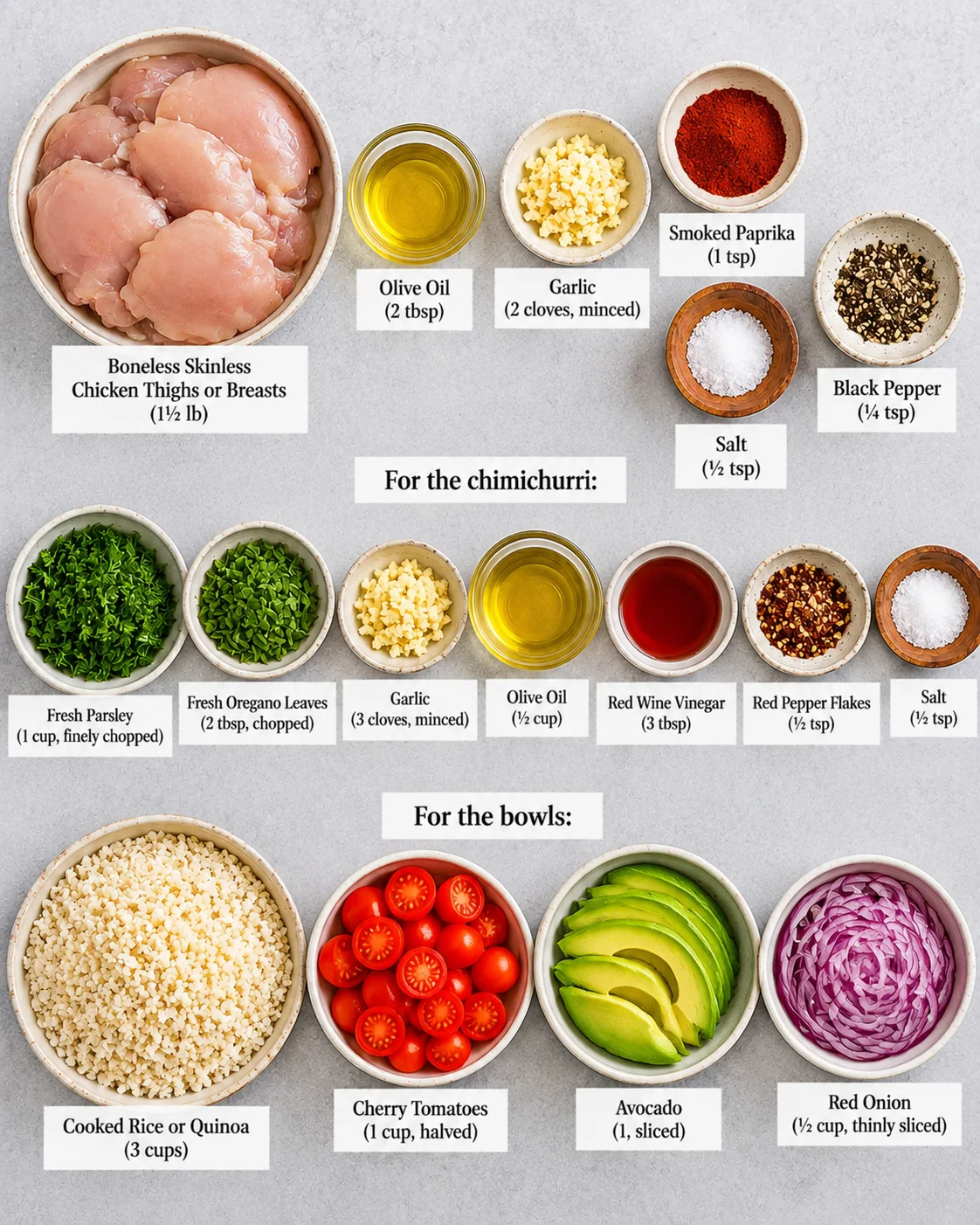
Ingredient notes: Chop the parsley by hand rather than pulsing it in a food processor. A food processor bruises the leaves and releases more liquid, which waters down the sauce and makes it harder to control the final texture hand-chopped parsley stays a little more textured and holds the oil and vinegar better.
Equipment Needed
- Grill, grill pan, or regular skillet
- Cutting board and knife, for chopping herbs
- Small mixing bowl, for the chimichurri
Step-by-Step Instructions
1. Marinate the chicken. Toss the chicken with the olive oil, garlic, smoked paprika, salt, and pepper. Let it sit for at least 20 minutes at room temperature while you make the chimichurri.
2. Build the chimichurri with a real ratio, not a guess. Combine the chopped parsley, oregano, and garlic in a bowl. Add the olive oil and red wine vinegar in roughly a 3-to-1 ratio about ½ cup oil to 3 tablespoons vinegar rather than eyeballing equal amounts of each. This ratio is the actual difference between a chimichurri that tastes bright and balanced and one that tastes like you poured straight vinegar over parsley: oil-heavy sauces like this need noticeably more oil than acid to taste rounded rather than sharp, since the vinegar’s acidity reads much stronger by volume than the oil’s richness does. Stir in the red pepper flakes and salt, then taste it should taste punchy but not make you wince.
3. Let the chimichurri sit. Set the chimichurri aside for at least 15 minutes before serving, if you have the time. It only gets better as the garlic and herbs mellow into the oil.
4. Cook the chicken. Heat a grill, grill pan, or skillet over medium-high heat. Cook the chicken for 5–7 minutes per side (thighs) or 6–8 minutes per side (breasts), until it reaches 165°F internally and the outside has good color. Pro tip: let the chicken rest for 5 minutes after cooking before slicing cutting into it right away lets a noticeable amount of juice run out onto the cutting board instead of staying in the meat.
5. Slice the chicken. Slice the rested chicken against the grain into strips.
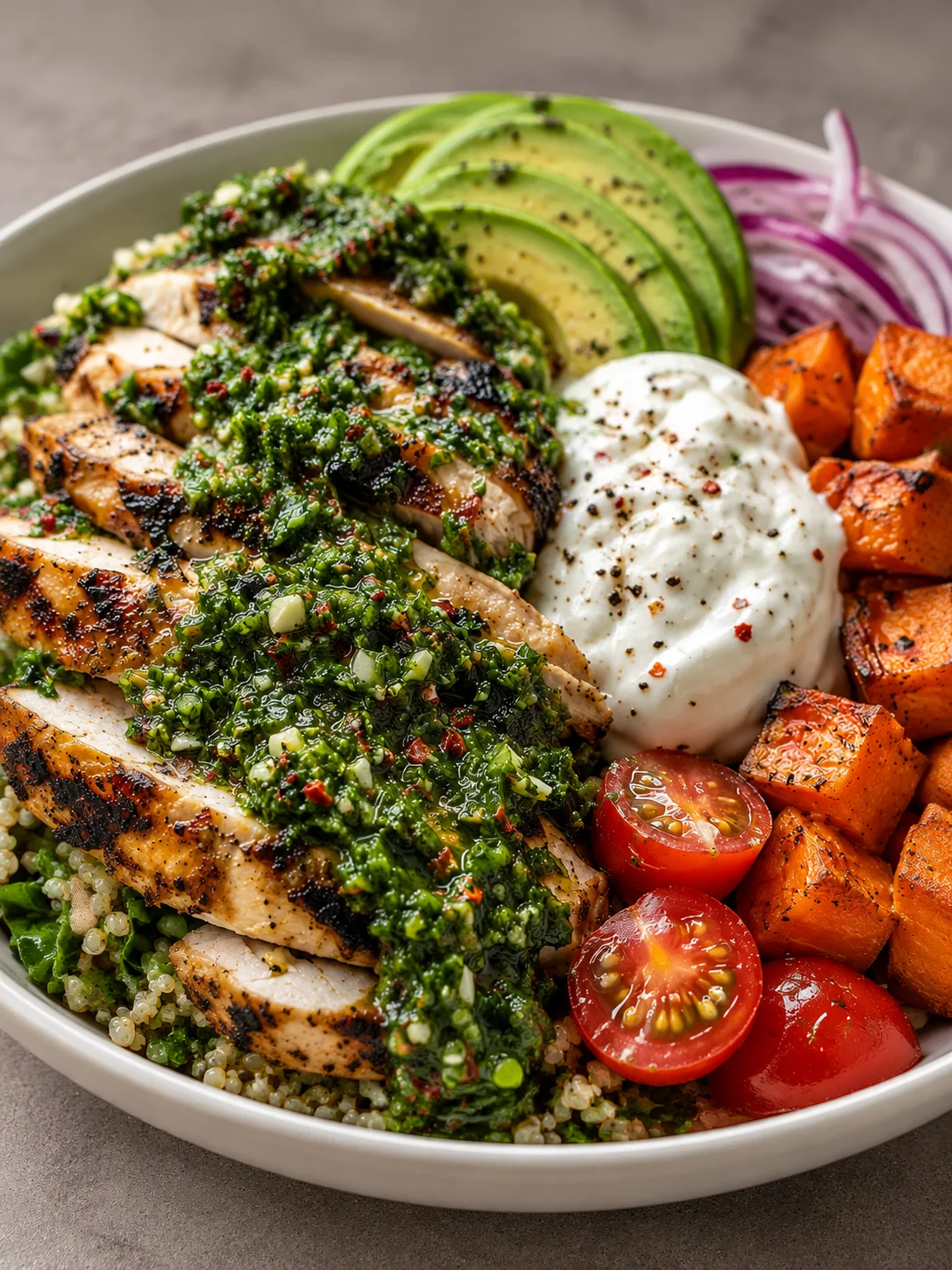
6. Assemble the bowls. Divide the rice or quinoa among four bowls. Top with the sliced chicken, cherry tomatoes, avocado, and red onion.
7. Finish with chimichurri. Spoon the chimichurri generously over each bowl and serve immediately.
Common Mistakes to Avoid
- Eyeballing equal parts oil and vinegar. This is the exact mistake that leaves chimichurri tasting overly sharp a roughly 3-to-1 oil-to-vinegar ratio reads as balanced, while equal parts usually tastes far too acidic.
- Blending the herbs in a food processor. It bruises the parsley and waters down the sauce; hand-chopping keeps the texture and flavor more concentrated.
- Skipping the resting time for the chimichurri. A fresh-made batch tastes noticeably sharper than one that’s had even 15 minutes to mellow.
- Slicing the chicken immediately after cooking. This lets a lot of the juice escape onto the board instead of staying in the meat a 5-minute rest first makes a real difference.
- Making the chimichurri too far in advance. While a short rest helps, more than a day or two in the fridge and the bright herb flavor starts to fade noticeably.
How to Store & Reheat
Refrigerator: Store the chicken and chimichurri separately in airtight containers for up to 4 days. The chimichurri actually holds up well and can even be made a day ahead.
Freezer: The cooked chicken freezes well for up to 2 months. Don’t freeze the chimichurri the fresh herbs lose their texture and brightness on thawing.
Reheat: Reheat the chicken in a skillet over medium heat for 2–3 minutes per side, or in the microwave in 30-second bursts. Serve with cold chimichurri straight from the fridge rather than heating it, since heat mutes the fresh herb flavor.
Recipe Variations & Substitutions
- Steak version: Swap the chicken for grilled flank or skirt steak, sliced against the grain chimichurri is traditionally served with steak, so this is a natural direction.
- Gluten-free: Already naturally gluten-free as written.
- Dairy-free: Also naturally dairy-free no changes needed.
- Lower-carb: Swap the rice for cauliflower rice or a bed of greens.
- Extra heat: Add an extra ¼ teaspoon of red pepper flakes to the chimichurri, or a diced fresh chili.
- Shrimp version: Swap in grilled shrimp for a faster-cooking protein; reduce cook time to about 2 minutes per side.
A Note on Nutrition
This bowl leans on chicken for lean protein, with the chimichurri contributing healthy fats from the olive oil rather than a heavy dressing or cream-based sauce. If you’re watching sodium, keep an eye on how much salt you add to both the chicken and the chimichurri, since they’re seasoned somewhat independently. As always, these are general observations rather than medical advice a nutritionist or doctor is the right resource for anything specific to your own needs.
Frequently Asked Questions
Can I make the chimichurri ahead of time?
Yes, and it actually improves after sitting for a bit up to a day ahead works well, stored in the fridge in a sealed container.
Why does my chimichurri taste too vinegary?
This usually comes down to using roughly equal parts oil and vinegar instead of a heavier ratio of oil. Aim for about 3 parts oil to 1 part vinegar as a starting point, then adjust to taste from there.
Can I use a food processor for the herbs?
You can, but pulse it briefly rather than fully pureeing over-processing bruises the parsley and releases extra liquid that can water down the sauce.
What if I don’t have red wine vinegar?
White wine vinegar or a mild apple cider vinegar both work as substitutes, though the flavor will shift slightly away from the classic version.
Can I grill the chicken indoors?
Yes a grill pan or even a regular skillet over medium-high heat works fine and gets you most of the way to the same result, just without the smoky char.
Is this recipe keto-friendly?
Swap the rice for cauliflower rice or leafy greens and it fits comfortably into a lower-carb or keto plan, since the chicken and chimichurri are both naturally low in carbohydrates.
Final Thoughts
That rough 3-to-1 oil-to-vinegar ratio is such a small thing to keep in mind, but it’s the reason this chimichurri tastes bright and balanced instead of sharp enough to make you wince. Once you’ve got that down, you’ll probably find yourself making a batch just to have on hand. Which protein are you trying this sauce with first chicken, or steak?
For the chicken:
- 1½ lb boneless skinless chicken thighs or breasts
- 2 tablespoons olive oil
- 2 cloves garlic minced
- 1 teaspoon smoked paprika
- ½ teaspoon salt
- ¼ teaspoon black pepper
For the chimichurri:
- 1 cup fresh parsley finely chopped (measured after chopping)
- 2 tablespoons fresh oregano leaves chopped (or 1 teaspoon dried)
- 3 cloves garlic minced
- ½ cup olive oil
- 3 tablespoons red wine vinegar
- ½ teaspoon red pepper flakes
- ½ teaspoon salt
For the bowls:
- 3 cups cooked rice or quinoa
- 1 cup halved cherry tomatoes
- 1 avocado sliced
- ½ cup thinly sliced red onion
Grill, grill pan, or regular skillet
Cutting board and knife, for chopping herbs
Small mixing bowl, for the chimichurri
Marinate the chicken. Toss the chicken with the olive oil, garlic, smoked paprika, salt, and pepper. Let it sit for at least 20 minutes at room temperature while you make the chimichurri.
Build the chimichurri with a real ratio, not a guess. Combine the chopped parsley, oregano, and garlic in a bowl. Add the olive oil and red wine vinegar in roughly a 3-to-1 ratio about ½ cup oil to 3 tablespoons vinegar rather than eyeballing equal amounts of each. This ratio is the actual difference between a chimichurri that tastes bright and balanced and one that tastes like you poured straight vinegar over parsley: oil-heavy sauces like this need noticeably more oil than acid to taste rounded rather than sharp, since the vinegar’s acidity reads much stronger by volume than the oil’s richness does. Stir in the red pepper flakes and salt, then taste it should taste punchy but not make you wince.
Let the chimichurri sit. Set the chimichurri aside for at least 15 minutes before serving, if you have the time. It only gets better as the garlic and herbs mellow into the oil.
Cook the chicken. Heat a grill, grill pan, or skillet over medium-high heat. Cook the chicken for 5–7 minutes per side (thighs) or 6–8 minutes per side (breasts), until it reaches 165°F internally and the outside has good color. Pro tip: let the chicken rest for 5 minutes after cooking before slicing cutting into it right away lets a noticeable amount of juice run out onto the cutting board instead of staying in the meat.
Slice the chicken. Slice the rested chicken against the grain into strips.
Assemble the bowls. Divide the rice or quinoa among four bowls. Top with the sliced chicken, cherry tomatoes, avocado, and red onion.
Finish with chimichurri. Spoon the chimichurri generously over each bowl and serve immediately.
Healthy Chimichurri Grilled Chicken Bowl
Last modified: September 29, 2026