Melt the butter and start the garlic. Melt the butter in your skillet over medium heat. Add the sliced garlic and cook, stirring often, for about 90 seconds.
Pull the garlic off the heat right as it turns golden. Watch closely here the moment the garlic edges turn light golden (not deep brown), remove the pan from the heat entirely for about 15 seconds before adding the liquid in the next step. This single pause is the difference between a nutty, fragrant sauce and a bitter one. Garlic keeps browning from residual heat even after you think you’ve caught it in time, and a pan that’s still screaming hot when the broth hits it can scorch the garlic sitting at the bottom in the two or three seconds it takes the liquid to cool things down.
Add the liquid and pasta. Return the pan to medium heat, then pour in the broth and water. Add the pasta directly to the liquid along with the black pepper and red pepper flakes if using. Stir once to make sure no pasta is sticking to the bottom.
Simmer, stirring occasionally. Bring to a gentle simmer, then partially cover and cook for 10–12 minutes, stirring every couple of minutes so the pasta doesn’t stick or clump. Pro tip: if the liquid is evaporating faster than the pasta is softening, add an extra splash of water rather than turning up the heat a hard boil will cook the pasta unevenly.
Check for doneness. The pasta is ready when it’s tender and most of the liquid has reduced into a thin, starchy sauce clinging to the bottom of the pan. There should still be a little liquid left this is what turns into sauce in the next step, not a mistake to fix.
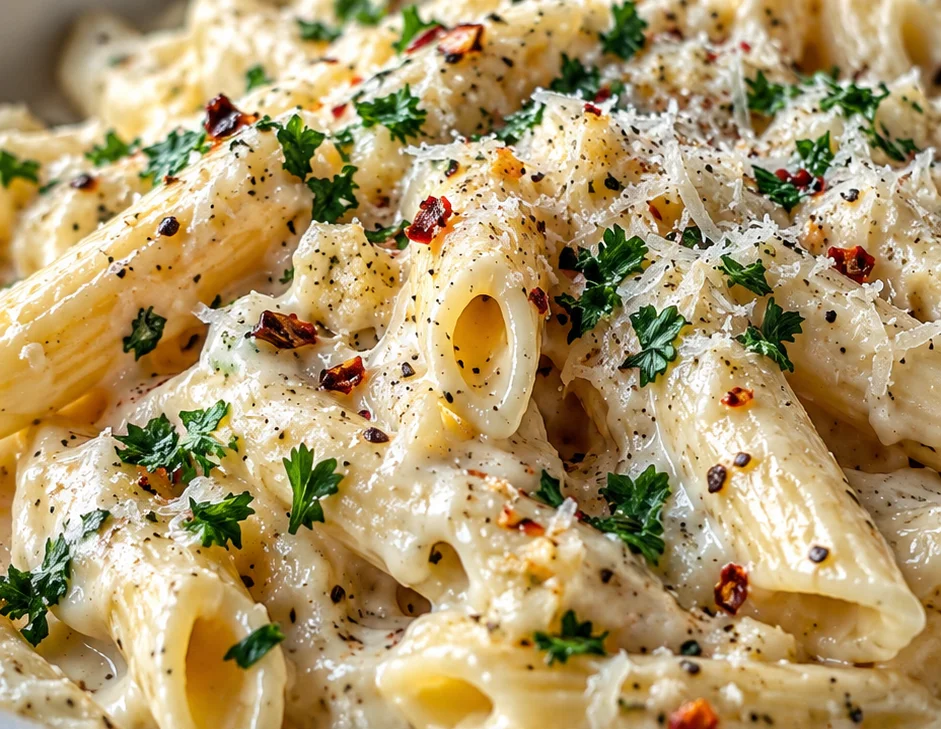
Stir in the parmesan off the heat. Remove the pan from the heat and add the parmesan gradually, stirring constantly, until it melts into a glossy sauce that coats every piece of pasta. Adding it off the heat keeps the cheese from clumping or turning grainy, which happens when parmesan hits liquid that’s still actively bubbling.
Serve. Top with parsley and extra parmesan, and serve right away while the sauce is still warm and glossy it thickens noticeably as it cools.