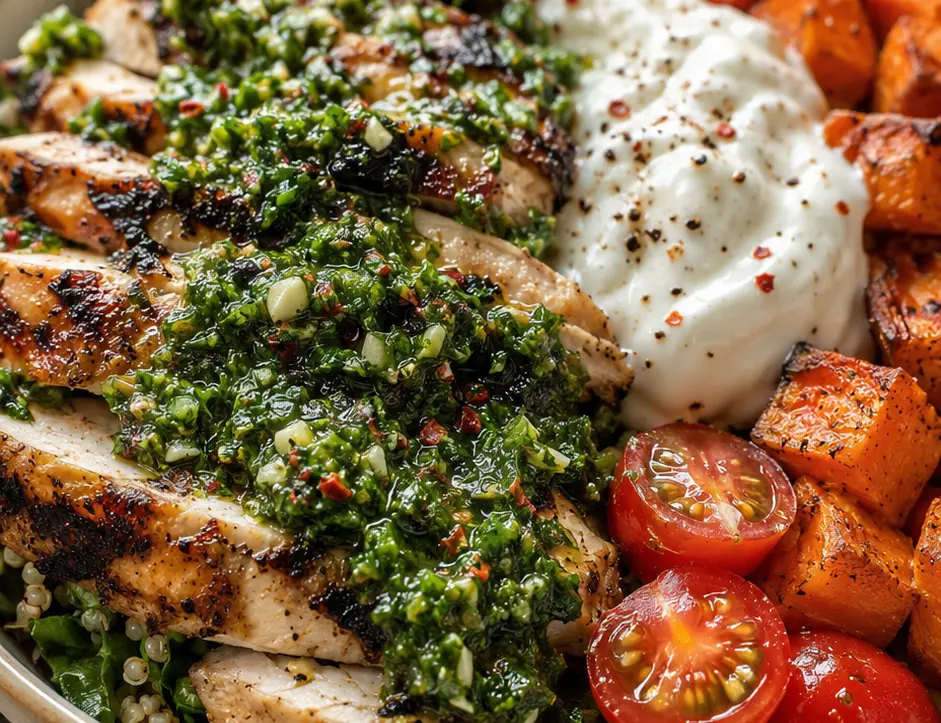
Marinate the chicken. Toss the chicken with the olive oil, garlic, smoked paprika, salt, and pepper. Let it sit for at least 20 minutes at room temperature while you make the chimichurri.
Build the chimichurri with a real ratio, not a guess. Combine the chopped parsley, oregano, and garlic in a bowl. Add the olive oil and red wine vinegar in roughly a 3-to-1 ratio about ½ cup oil to 3 tablespoons vinegar rather than eyeballing equal amounts of each. This ratio is the actual difference between a chimichurri that tastes bright and balanced and one that tastes like you poured straight vinegar over parsley: oil-heavy sauces like this need noticeably more oil than acid to taste rounded rather than sharp, since the vinegar’s acidity reads much stronger by volume than the oil’s richness does. Stir in the red pepper flakes and salt, then taste it should taste punchy but not make you wince.
Let the chimichurri sit. Set the chimichurri aside for at least 15 minutes before serving, if you have the time. It only gets better as the garlic and herbs mellow into the oil.
Cook the chicken. Heat a grill, grill pan, or skillet over medium-high heat. Cook the chicken for 5–7 minutes per side (thighs) or 6–8 minutes per side (breasts), until it reaches 165°F internally and the outside has good color. Pro tip: let the chicken rest for 5 minutes after cooking before slicing cutting into it right away lets a noticeable amount of juice run out onto the cutting board instead of staying in the meat.
Slice the chicken. Slice the rested chicken against the grain into strips.
Assemble the bowls. Divide the rice or quinoa among four bowls. Top with the sliced chicken, cherry tomatoes, avocado, and red onion.
Finish with chimichurri. Spoon the chimichurri generously over each bowl and serve immediately.