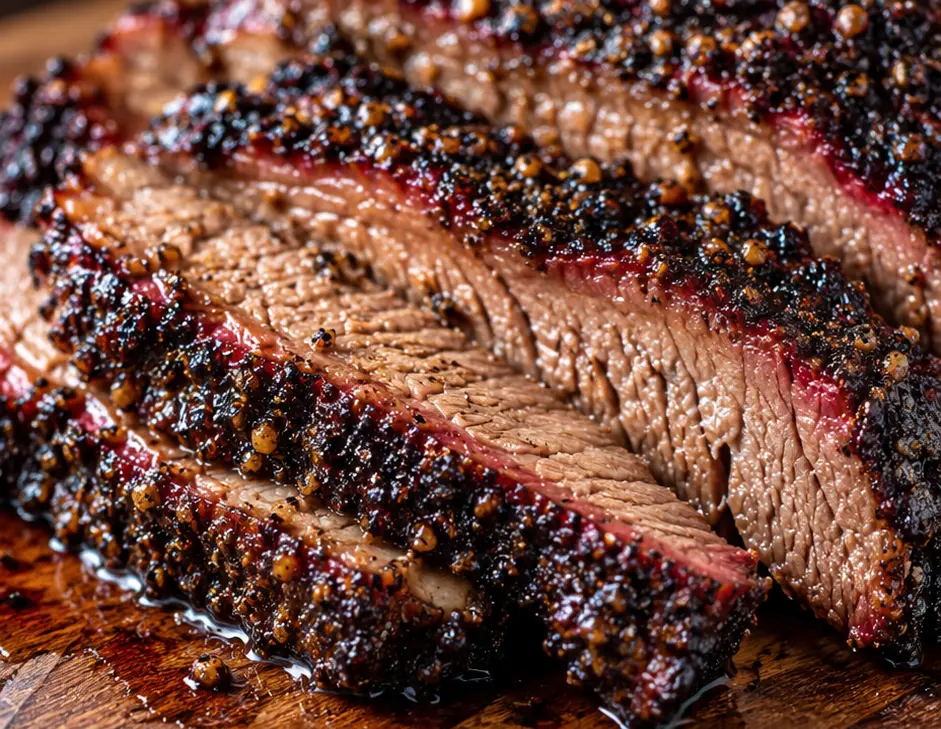
Season the brisket: Combine the salt, pepper, garlic powder, and smoked paprika in a small bowl. Pat the brisket completely dry with paper towels, then coat it generously on all sides with the rub, pressing it into the meat. Pro tip: if you have the time, do this the night before and leave the brisket uncovered in the fridge — the salt has longer to penetrate the meat instead of just sitting on the surface.
Preheat and set up the pan: Preheat your oven to 275°F. Place the seasoned brisket fat-side up on a wire rack set inside a roasting pan, and pour the beef broth into the bottom of the pan (not over the meat) to keep the environment humid as it bakes.
Bake low and slow: Bake uncovered for about 5–6 hours, until the internal temperature reaches 165°F. Don't be alarmed if the temperature seems to stall for an hour or more somewhere around 150°F that's the collagen breaking down and moisture evaporating from the surface, and it will start climbing again on its own.
Wrap it tightly: Once it hits 165°F, remove the brisket from the oven and wrap it tightly in two layers of foil (or butcher paper, if you have it). Return it to the oven and continue baking until the internal temperature reaches 200–203°F, roughly another 1–2 hours.
Rest wrapped for a full hour this is the step that matters most: Pull the brisket from the oven still wrapped, and let it rest for a minimum of 45–60 minutes before slicing, ideally in a cooler with towels around it to hold the heat. This extended rest lets the juices redistribute through the whole cut instead of running out onto the cutting board the moment you slice it cutting into brisket right out of the oven is the single most common reason people end up with dry slices despite doing everything else right.
Slice against the grain: Unwrap the brisket and check the direction the muscle fibers run it can shift partway through a whole brisket. Slice against the grain in pieces about pencil-thickness for the most tender bite.