Ingredients
Equipment
Method
- Pat dry and pound it even: Take the lamb out of the fridge 45 minutes before cooking. Unroll it, cut side up, and pat it dry. If one side is much thicker, cover it with cling film and pound the thick parts gently until it's roughly 4 to 5 cm all over. Dry meat browns better, and even meat cooks evenly.
- Make the herb paste: Blitz the garlic, rosemary, thyme, 1/4 cup olive oil, mustard, lemon zest, 1 1/2 teaspoons of the salt, and 1/2 teaspoon of the pepper until you have a thick, spoonable paste. It should smell punchy and a bit lemony, not oily and flat. If it looks too runny, add a few more rosemary leaves rather than more oil.
- Season the inside, then roll it snug: Spread most of the paste over the cut side, right to the edges. This is the whole trick. Once rolled, a boneless leg is thick, and salt on the outside simply cannot travel that far in an hour. Paste inside seasons the meat from the centre out, so middle slices taste as good as the end pieces. Roll it tightly, seam side down, with no loose flaps hanging out — they dry out first.
- Tie and season the outside: Tie the roll with kitchen twine every 4 cm or so, firm but not so tight that it bulges. Rub the outside with the extra tablespoon of olive oil, the remaining 1 teaspoon of salt, and 1/2 teaspoon of pepper, then spread the last spoonful of paste over the top. Set it on the rack in the roasting pan, seam side down, with a few rosemary sprigs tucked underneath.
- Roast hot, then low: Heat the oven to 230°C (450°F). Roast for 20 minutes, until the top starts to colour and smell like roast garlic. Drop the heat to 165°C (325°F) and roast 50 to 60 minutes more. Start checking early. Slide the thermometer into the centre of the thickest part, not near a fold. Pull it at 130°F (54°C) for medium-rare, 135°F (57°C) for medium. It will climb a few degrees as it rests — that's part of the plan.
- Rest it properly: Tent the lamb loosely with foil and leave it alone for 20 minutes. Don't slice into it to check — that just lets the juices run out onto the board. While it rests, spoon the pan juices into a small jug. They are thin, garlicky, and perfect drizzled back over the slices.
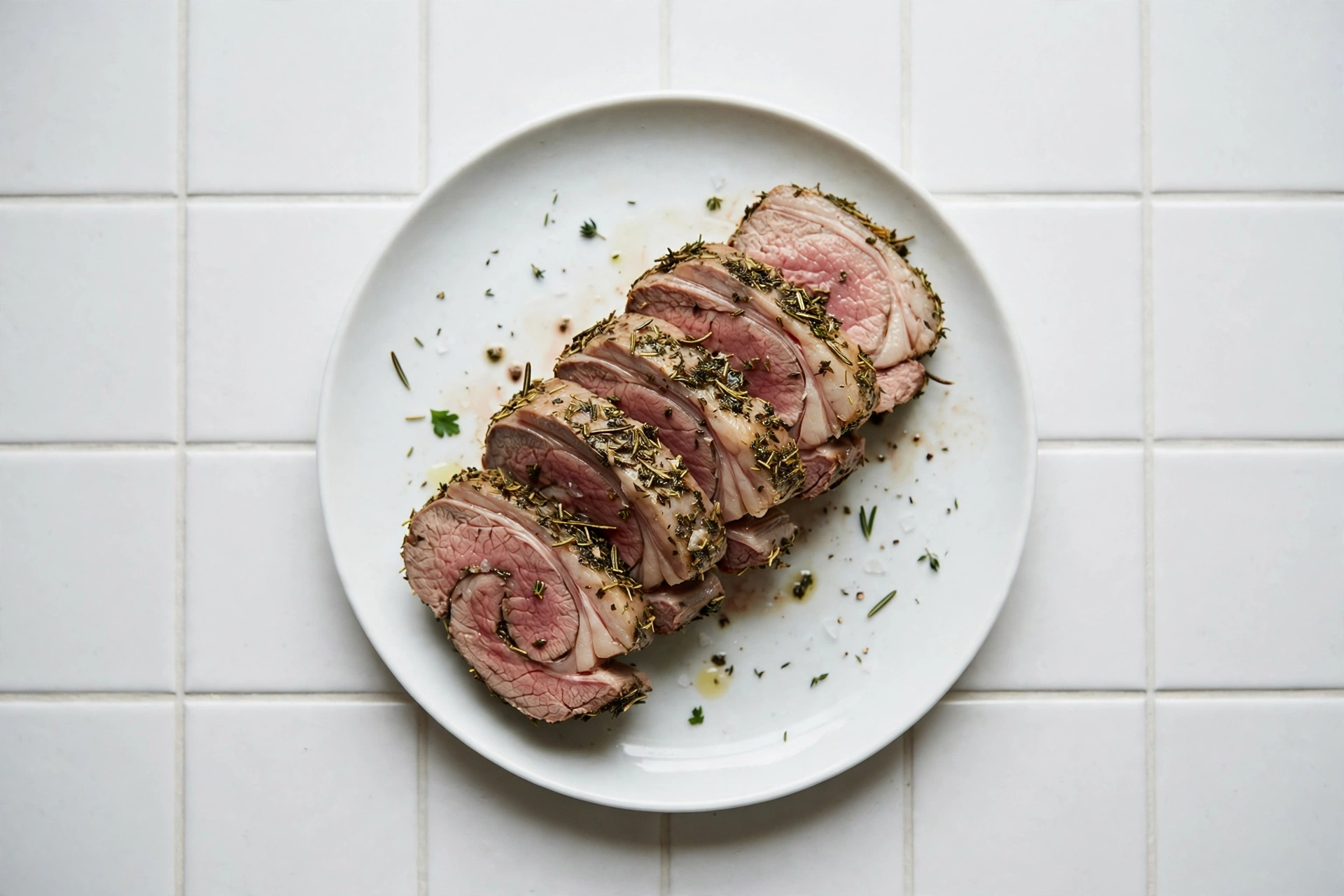
- Slice thin, against the grain: Cut off the twine, then slice across the roll in thin slices, about 1 cm thick. Look for the lines running through the meat and cut across them, not along them, or the slices will feel chewy even when the lamb is perfectly cooked. Serve with the warm pan juices.
Notes
Estimated nutrition per serving: about 382 kcal, 43 g protein, 21 g fat, 2 g carbohydrate. These are estimates only and will vary with the size of the lamb and how much fat is trimmed.