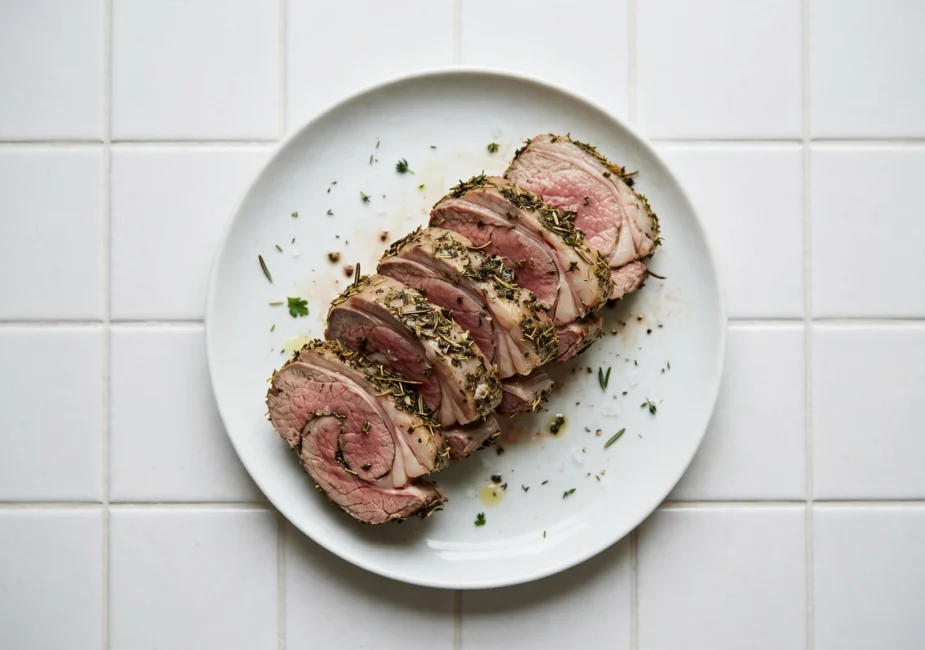
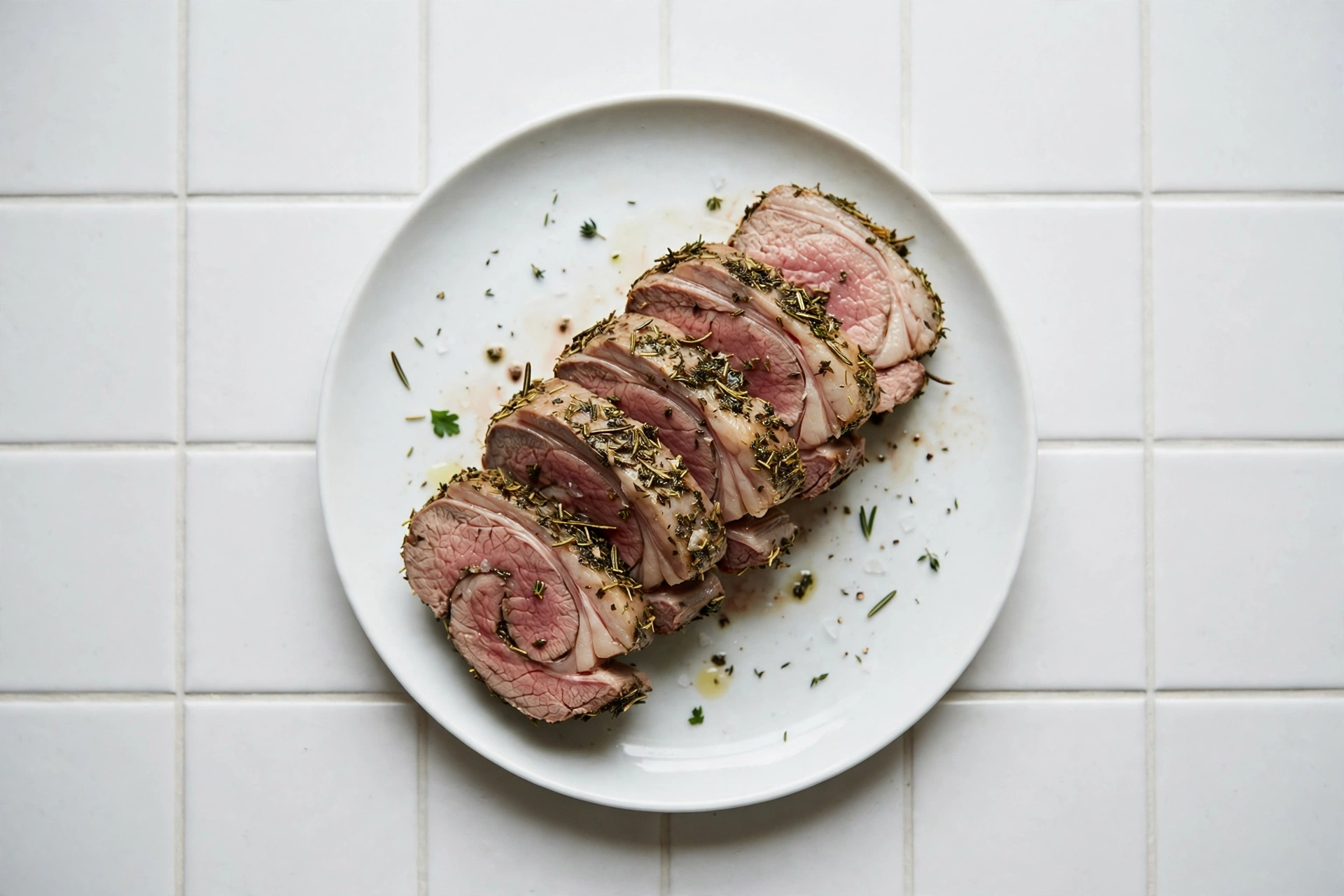
There’s a specific kind of Sunday that calls for this roast. The house is quiet in the morning, someone’s coming over later, and you want dinner to feel like an occasion without spending the whole day chained to the stove. You want something you can put in the oven, walk away from, and still slice at the table to a little chorus of approval.
That’s this lamb. It’s rosemary and garlic all the way through, not just on the crust, with a golden outside and a blushing pink centre that stays juicy even on the second day. Here’s how it comes together.
Jump to Recipe
Why You’ll Love It
- The seasoning actually reaches the middle. Most roasts taste great on the edge and plain in the centre. Here the herb paste goes inside before you roll it, so every slice is seasoned.
- It cooks evenly. Pounding the lamb to one thickness and tying it snug means no thin end dried out while the thick end is still underdone.
- The crust gets a head start. A hot blast at the beginning browns the outside, then a lower heat finishes the inside gently.
- It’s forgiving if you watch the thermometer, not the clock. Ovens run hot and cold, lambs vary in size. One number — 130°F for medium-rare — takes the guesswork out.
- Leftovers are genuinely useful. Thin slices work cold in sandwiches, warm in wraps, or tossed through pasta the next night.
Recipe Card Summary
- Prep time: 25 minutes
- Cook time: 1 hour 15 minutes
- Rest time: 20 minutes
- Total time: 2 hours
- Servings: 8
- Estimated calories per serving: about 382 kcal
- Estimated macros per serving: 43 g protein, 21 g fat, 2 g carbohydrate
- Calories and macros are estimates only and will vary with the size of your lamb and how much fat you trim.
Ingredients
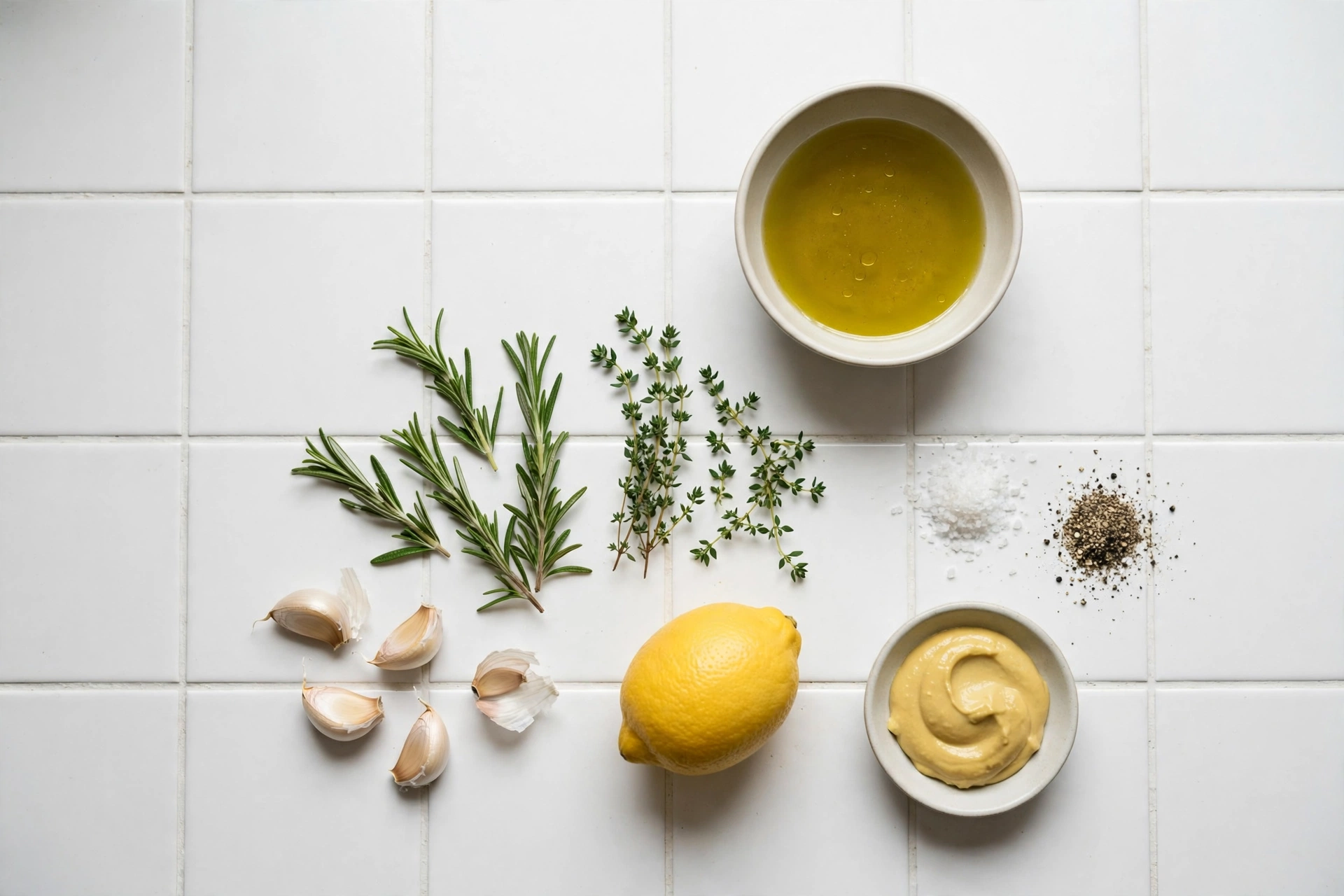
- 1 boneless leg of lamb, about 2 to 2.2 kg (4.5 lb), butterflied
- 6 garlic cloves, roughly chopped
- 2 tablespoons fresh rosemary leaves
- 1 tablespoon fresh thyme leaves
- 1/4 cup olive oil
- 1 tablespoon Dijon mustard
- 1 teaspoon finely grated lemon zest
- 2 1/2 teaspoons kosher salt, divided
- 1 teaspoon black pepper, divided
- 1 tablespoon olive oil, extra, for the outside
- Fresh rosemary sprigs, for the pan
Notes: If your lamb comes netted, cut the net off so you can open it flat, season it properly, and tie it yourself. Kosher salt also scatters more evenly than fine table salt, which can clump in the paste.
Equipment Needed
- Large cutting board
- Meat mallet or heavy rolling pin
- Kitchen twine
- Roasting pan with a rack
- Instant-read meat thermometer
- Sharp carving knife
- Aluminium foil
Step-by-Step Instructions
1. Pat dry and pound it even: Take the lamb out of the fridge 45 minutes before cooking. Unroll it, cut side up, and pat it dry. If one side is much thicker, cover it with cling film and pound the thick parts gently until it’s roughly 4 to 5 cm all over. Dry meat browns better, and even meat cooks evenly.
2. Make the herb paste: Blitz the garlic, rosemary, thyme, 1/4 cup olive oil, mustard, lemon zest, 1 1/2 teaspoons of the salt, and 1/2 teaspoon of the pepper until you have a thick, spoonable paste. It should smell punchy and a bit lemony, not oily and flat. If it looks too runny, add a few more rosemary leaves rather than more oil.
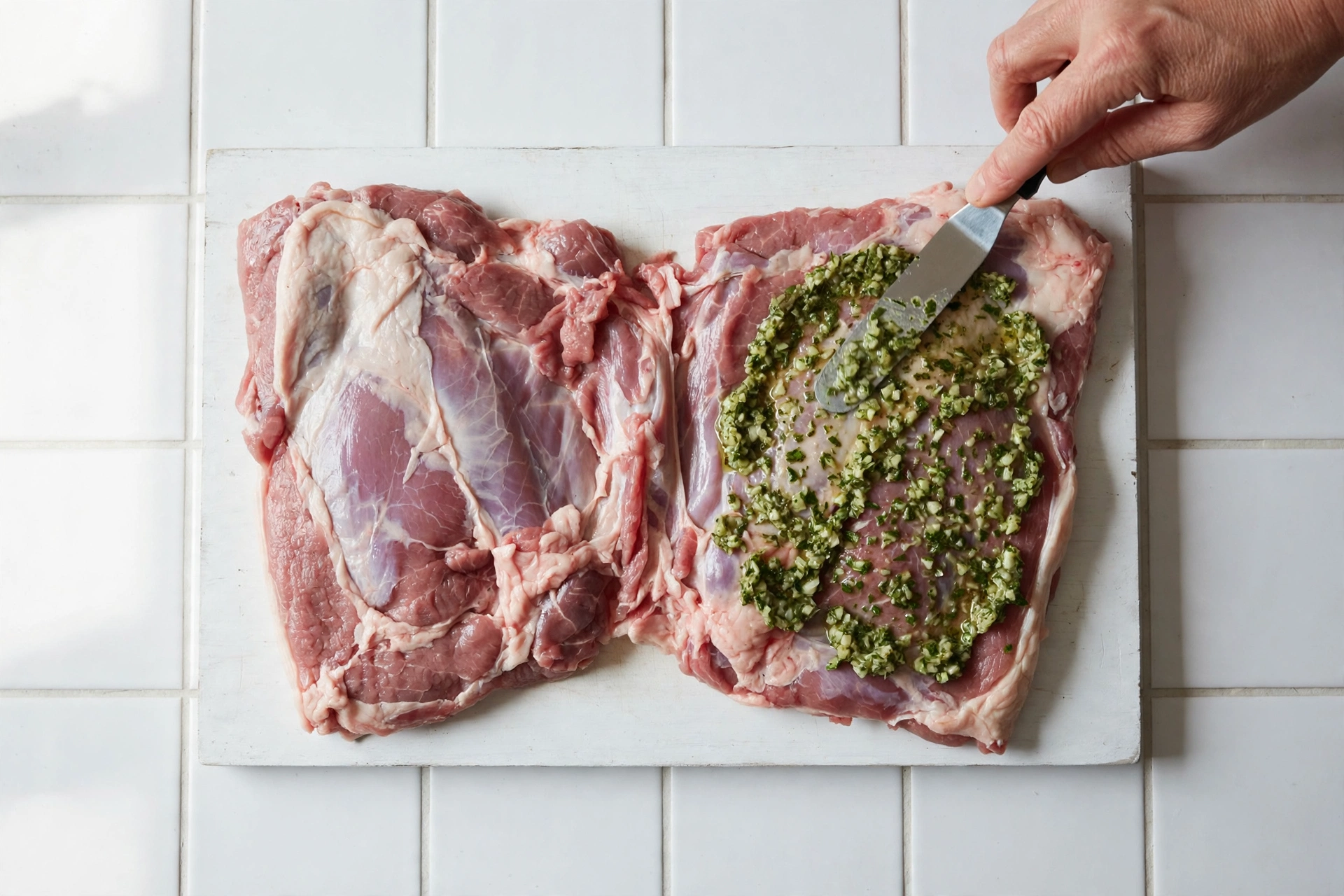
3. Season the inside, then roll it snug: Spread most of the paste over the cut side, right to the edges. This is the whole trick. Once rolled, a boneless leg is thick, and salt on the outside simply cannot travel that far in an hour. Paste inside seasons the meat from the centre out, so middle slices taste as good as the end pieces. Roll it tightly, seam side down, with no loose flaps hanging out — they dry out first.
4. Tie and season the outside: Tie the roll with kitchen twine every 4 cm or so, firm but not so tight that it bulges. Rub the outside with the extra tablespoon of olive oil, the remaining 1 teaspoon of salt, and 1/2 teaspoon of pepper, then spread the last spoonful of paste over the top. Set it on the rack in the roasting pan, seam side down, with a few rosemary sprigs tucked underneath.
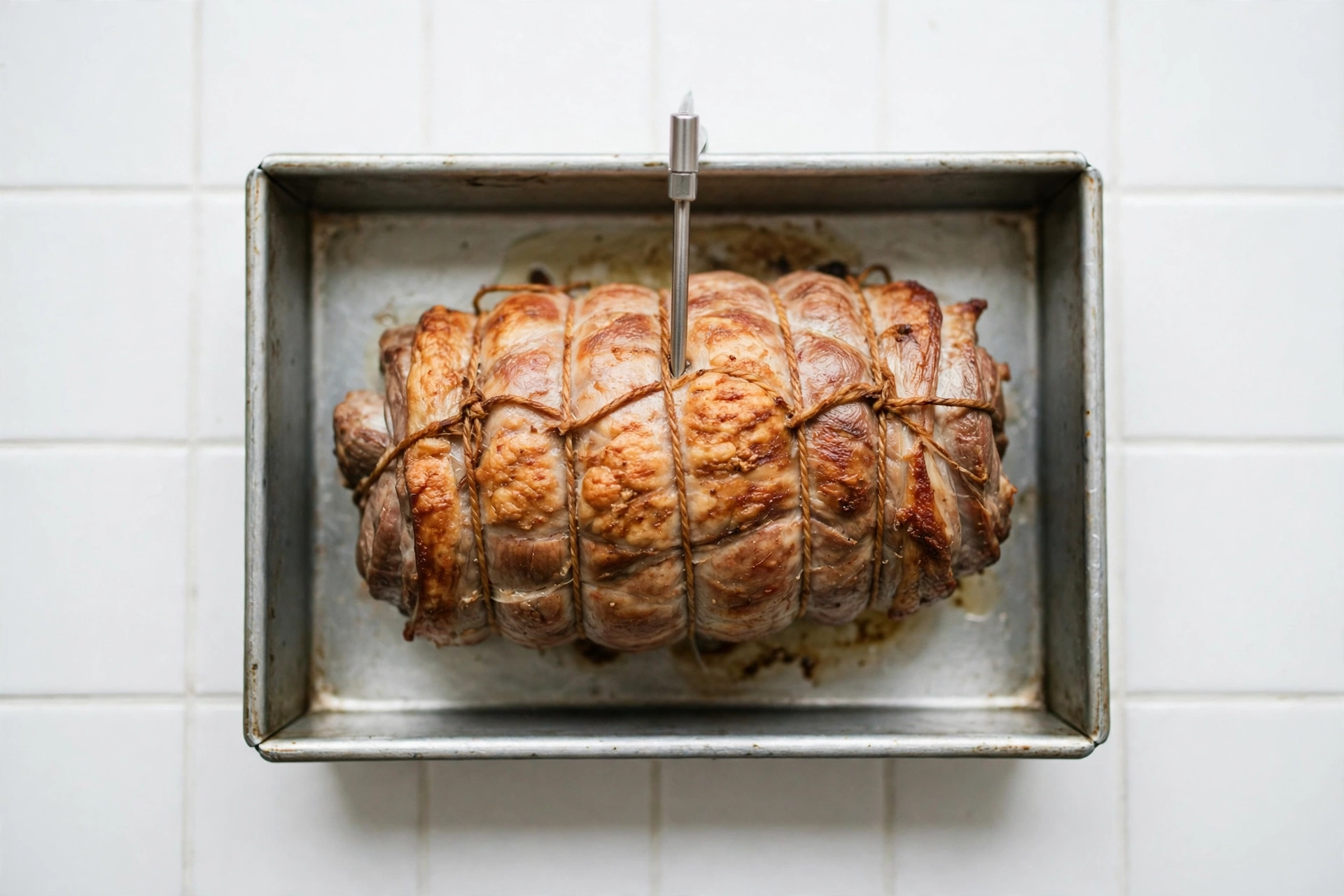
5. Roast hot, then low: Heat the oven to 230°C (450°F). Roast for 20 minutes, until the top starts to colour and smell like roast garlic. Drop the heat to 165°C (325°F) and roast 50 to 60 minutes more. Pro tip: Start checking early. Slide the thermometer into the centre of the thickest part, not near a fold. Pull it at 130°F (54°C) for medium-rare, 135°F (57°C) for medium. It will climb a few degrees as it rests — that’s part of the plan.
6. Rest it properly: Tent the lamb loosely with foil and leave it alone for 20 minutes. Don’t slice into it to check — that just lets the juices run out onto the board. While it rests, spoon the pan juices into a small jug. They are thin, garlicky, and perfect drizzled back over the slices.
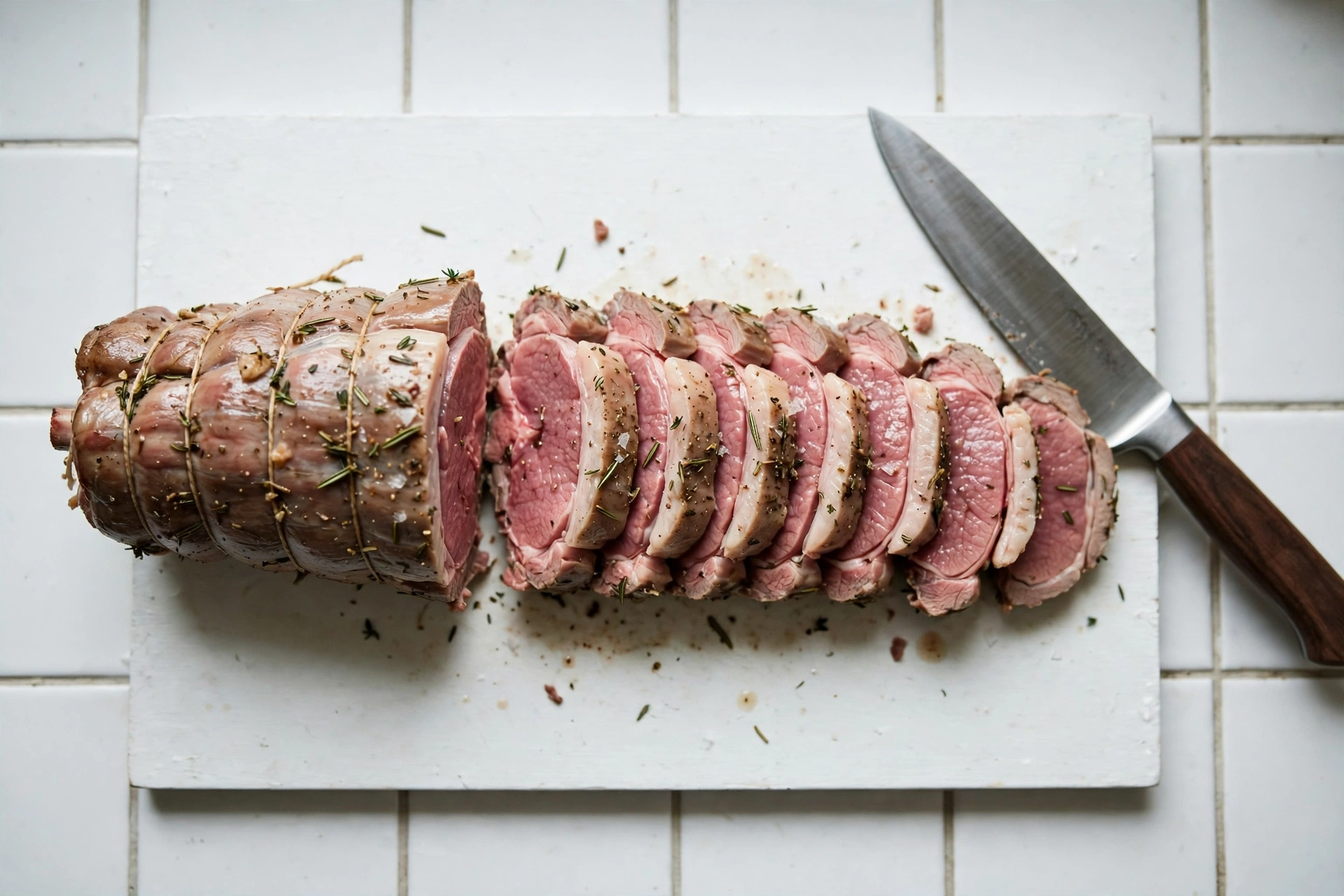
7. Slice thin, against the grain: Cut off the twine, then slice across the roll in thin slices, about 1 cm thick. Look for the lines running through the meat and cut across them, not along them, or the slices will feel chewy even when the lamb is perfectly cooked. Serve with Crispy Garlic Roasted Potatoes and the warm pan juices.
Common Mistakes
- Only seasoning the outside. This quietly ruins a boneless roast — the centre stays bland while the crust does all the work. Put the paste inside before you roll.
- Skipping the rest. Cut too soon and the juices flood the board instead of staying in the meat. Twenty minutes is what keeps the slices juicy.
- Cooking by time alone. A 2 kg lamb and a 2.5 kg lamb are not the same roast. Trust the thermometer in the centre, not a time from another recipe.
- Tying it loosely. A loose roll unrolls, cooks unevenly, and falls apart when sliced. Snug ties, about a hand’s width apart, keep its shape.
- Slicing thick and with the grain. Thick slices can feel tough. Thin slices, cut across the grain, make the same lamb taste tender.
How to Store & Reheat
Cool leftovers within two hours, then store slices in an airtight container in the fridge for 3 to 4 days. For the freezer, wrap slices tightly, then put them in a freezer bag with as much air pressed out as you can. They keep well for 2 to 3 months.
To reheat, lay slices in a single layer in a baking dish, splash over a tablespoon or two of water or pan juices, cover tightly with foil, and warm in a 150°C (300°F) oven for 12 to 15 minutes, until just hot through. Gentle heat matters — a very hot oven will dry yesterday’s lamb out, and no sauce fully fixes that.
Recipe Variations & Substitutions
- Mediterranean twist: Swap thyme for oregano, add extra lemon zest, and serve with olives and feta.
- Middle Eastern flavour: Add 1 teaspoon cumin and 1/2 teaspoon coriander to the paste, and serve with flatbread and yoghurt sauce.
- Mint and rosemary: Stir 2 tablespoons chopped fresh mint into the paste for a classic, fresher finish.
- Garlic butter finish: Skip the Dijon, brush with melted butter and garlic in the last 15 minutes, and watch it closely so the garlic doesn’t burn.
- Gluten-free: Naturally gluten-free as written — just check your mustard and any gravy stock are labelled gluten-free.
- Lower-carb serving: Skip the potatoes and serve with roasted green beans, a big salad, or cauliflower mash.
Nutritional / Health Angle
This recipe leans on lean protein from lamb, and most of the flavour comes from herbs, garlic, mustard, and olive oil rather than a heavy sauce. Trim what looks excessive before rolling, but don’t strip it bare — a little fat keeps the roast moist.
FAQ
Can I use a bone-in leg instead?
Yes, but don’t butterfly and roll it. Season it well all over, roast it hot then low, and allow extra time, since the bone slows cooking. Use the same thermometer targets, away from the bone.
Can I make it ahead?
Prep it a day ahead: make the paste, season and roll the lamb, tie it, wrap it tightly, and refrigerate overnight. Take it out 45 minutes before roasting so it doesn’t go into a hot oven fridge-cold.
What temperature is medium-rare for lamb?
Pull the roast at 130°F (54°C) in the centre, then rest it for 20 minutes. It will rise to around 135°F as it rests, which is a rosy, juicy medium-rare. If you prefer medium, pull it at 135°F instead.
What if I don’t have kitchen twine?
Use the net it came in, or ask your butcher to tie it before you leave the shop. Unflavoured dental floss works in a pinch, but it’s fiddly — the butcher is easier.
How do I know when the herb paste is right?
It should be thick enough to stay where you spread it, not run off the meat. If it slides straight off, it has too much oil. Add more chopped herbs a spoonful at a time until it holds its shape on the spoon.
Is this recipe dairy-free?
Yes, as written, with no butter or cheese in the roast itself. Just check your sides and any sauce you serve with it, since those are where dairy usually sneaks in.
Final Thoughts
What I keep coming back to is that small inside-out change. Season the inside, roll it tight, and suddenly the middle of the roast is not an afterthought — it’s the best part. The rest is just good habits: even thickness, a hot start, a thermometer, and a proper rest.
Make it for a Sunday, for people you like, and don’t overthink the sides. If you try it, I would love to know what you put inside yours — classic rosemary and garlic, or mint, lemon, or something else entirely? If you enjoyed this kind of straightforward roast, you might also like Herb-Roasted Chicken with Pan Juices for a quicker weeknight version.
You Might Also Like
- Slow-Roasted Garlic Potatoes
- Easy Sunday Roast Vegetables
- Simple Mint Sauce for Roast Lamb
- 1 boneless leg of lamb about 2 to 2.2 kg (4.5 lb), butterflied
- 6 garlic cloves roughly chopped
- 2 tablespoons fresh rosemary leaves
- 1 tablespoon fresh thyme leaves
- 1/4 cup olive oil
- 1 tablespoon Dijon mustard
- 1 teaspoon finely grated lemon zest
- 2 1/2 teaspoons kosher salt divided
- 1 teaspoon black pepper divided
- 1 tablespoon olive oil extra, for the outside
- Fresh rosemary sprigs for the pan
Pat dry and pound it even: Take the lamb out of the fridge 45 minutes before cooking. Unroll it, cut side up, and pat it dry. If one side is much thicker, cover it with cling film and pound the thick parts gently until it's roughly 4 to 5 cm all over. Dry meat browns better, and even meat cooks evenly.
Make the herb paste: Blitz the garlic, rosemary, thyme, 1/4 cup olive oil, mustard, lemon zest, 1 1/2 teaspoons of the salt, and 1/2 teaspoon of the pepper until you have a thick, spoonable paste. It should smell punchy and a bit lemony, not oily and flat. If it looks too runny, add a few more rosemary leaves rather than more oil.
Season the inside, then roll it snug: Spread most of the paste over the cut side, right to the edges. This is the whole trick. Once rolled, a boneless leg is thick, and salt on the outside simply cannot travel that far in an hour. Paste inside seasons the meat from the centre out, so middle slices taste as good as the end pieces. Roll it tightly, seam side down, with no loose flaps hanging out — they dry out first.
Tie and season the outside: Tie the roll with kitchen twine every 4 cm or so, firm but not so tight that it bulges. Rub the outside with the extra tablespoon of olive oil, the remaining 1 teaspoon of salt, and 1/2 teaspoon of pepper, then spread the last spoonful of paste over the top. Set it on the rack in the roasting pan, seam side down, with a few rosemary sprigs tucked underneath.
Roast hot, then low: Heat the oven to 230°C (450°F). Roast for 20 minutes, until the top starts to colour and smell like roast garlic. Drop the heat to 165°C (325°F) and roast 50 to 60 minutes more. Start checking early. Slide the thermometer into the centre of the thickest part, not near a fold. Pull it at 130°F (54°C) for medium-rare, 135°F (57°C) for medium. It will climb a few degrees as it rests — that's part of the plan.
Rest it properly: Tent the lamb loosely with foil and leave it alone for 20 minutes. Don't slice into it to check — that just lets the juices run out onto the board. While it rests, spoon the pan juices into a small jug. They are thin, garlicky, and perfect drizzled back over the slices.
Slice thin, against the grain: Cut off the twine, then slice across the roll in thin slices, about 1 cm thick. Look for the lines running through the meat and cut across them, not along them, or the slices will feel chewy even when the lamb is perfectly cooked. Serve with the warm pan juices.
Estimated nutrition per serving: about 382 kcal, 43 g protein, 21 g fat, 2 g carbohydrate. These are estimates only and will vary with the size of the lamb and how much fat is trimmed.
Roasted Boneless Leg of Lamb
Last modified: November 3, 2026