
Easy Mediterranean Roasted Eggplant (No More Greasy, Mushy Eggplant)
 • September 29, 2026
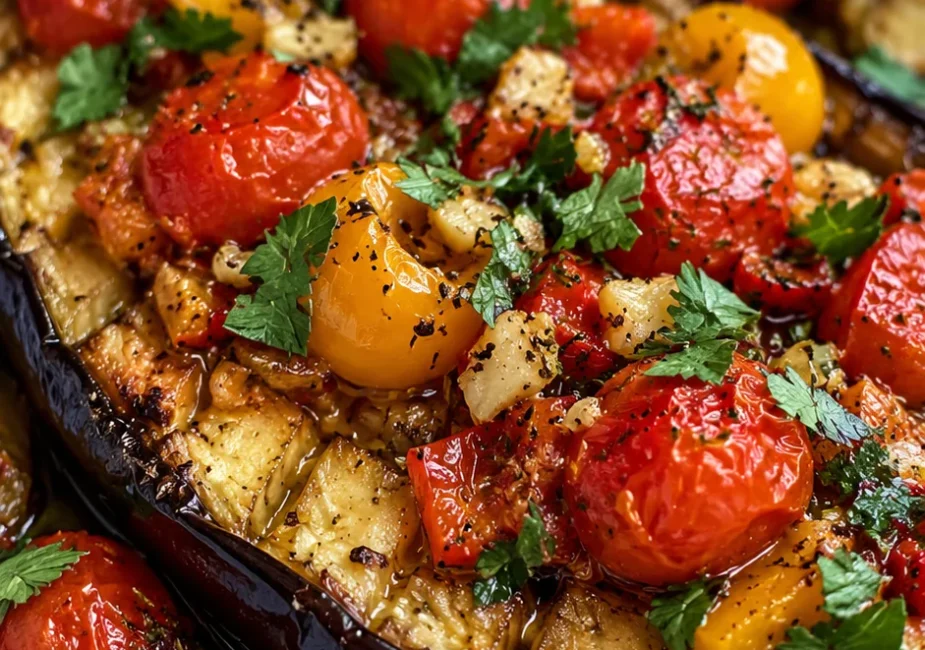
Eggplant has a reputation problem, and it’s mostly earned. Left to its own devices in a hot oven, it tends to either soak up an embarrassing amount of oil like a sponge or turn soft and watery before it ever gets any color. Neither version is particularly appealing, and it’s the reason a lot of people quietly avoid cooking with it at all.
The fix isn’t a different oil or a longer cook time it’s how hot the surface touching the eggplant actually is the moment it goes in. Here’s how it comes together.
Why You’ll Love It
- Caramelized, not greasy or mushy. A preheated pan is the small detail that keeps the eggplant from soaking up excess oil — more on why below.
- Bright, Mediterranean flavor from lemon, garlic, and fresh herbs without a long ingredient list.
- Naturally vegetarian and easily made vegan, with feta as an optional finishing touch rather than a core ingredient.
- Simple enough for a weeknight side, impressive enough for guests.
- Works warm or at room temperature, which makes it genuinely easy to prep ahead.
- A good way to actually enjoy eggplant if past attempts have left you skeptical of it.
Recipe At a Glance
- Prep time: 10 minutes
- Cook time: 30 minutes
- Total time: 40 minutes
- Servings: 4
- Estimated nutrition per serving: ~180 calories, 4g protein, 15g carbohydrates, 12g fat. These are estimates only and will shift depending on how much oil and feta you use.
Ingredients
- 2 medium eggplants, sliced into ¾-inch rounds
- 3 tablespoons olive oil, divided
- 1 teaspoon salt, divided
- ½ teaspoon black pepper
- 2 cloves garlic, minced
- 1 teaspoon dried oregano
- Zest and juice of 1 lemon
- ¼ cup crumbled feta (optional)
- 2 tablespoons chopped fresh parsley or mint
- 1 tablespoon pine nuts or chopped walnuts, optional
Ingredient notes: Choose eggplants that feel firm and heavy for their size, with smooth, unblemished skin. Older eggplants tend to have more seeds and a slightly bitter edge, which no amount of technique fully corrects — freshness matters more here than with a lot of other vegetables.
Equipment Needed
- Large rimmed baking sheet
- Cutting board and sharp knife
- Small bowl, for the dressing
Step-by-Step Instructions
1. Preheat the oven with the pan already inside. Place your baking sheet in the oven and preheat both together to 450°F. This is the detail that actually solves eggplant’s usual problems: eggplant flesh is full of small air pockets, and when it hits a cold or barely warm pan, those pockets act like tiny sponges, soaking up oil before the surface has a chance to sear and seal. Starting on an already-hot pan sears the cut surface almost immediately, which caramelizes it and slows down how much oil it can absorb, instead of letting it soak passively for the first several minutes of cooking.
2. Salt the eggplant slices. While the oven preheats, lay the eggplant slices on a clean towel and sprinkle both sides with about half the salt. Let them sit for 10–15 minutes — this draws out some excess moisture and any bitterness, and pat them dry before the next step.
3. Season the eggplant. Toss the dried eggplant slices with 2 tablespoons of the olive oil, the remaining salt, and the black pepper.
4. Roast on the preheated pan. Carefully pull the hot baking sheet from the oven and arrange the eggplant slices in a single layer directly on it — you should hear an audible sizzle as they hit the pan. Roast for 12 minutes, then flip and roast for another 10–12 minutes, until deeply golden and tender all the way through. Pro tip: resist crowding the slices — overlapping pieces trap steam between them and undo some of the crisping the hot pan is working to create.
5. Make the dressing. While the eggplant roasts, whisk together the remaining tablespoon of olive oil, garlic, oregano, lemon zest, and lemon juice in a small bowl.
6. Dress the eggplant while it’s still warm. As soon as the eggplant comes out of the oven, drizzle the dressing over it while it’s still hot — warm eggplant absorbs the garlic and lemon flavor more readily than eggplant that’s already cooled.
7. Finish and serve. Top with crumbled feta, fresh parsley or mint, and pine nuts or walnuts if using. Serve warm or at room temperature.
Common Mistakes to Avoid
- Roasting on a cold pan. This is the exact mistake that leads to greasy, oil-soaked eggplant — a preheated pan sears the surface almost immediately instead of letting it soak passively.
- Skipping the salting step. It draws out excess moisture and bitterness that would otherwise keep the eggplant from caramelizing as well.
- Crowding the slices on the pan. Overlapping pieces trap steam and prevent the browning that a hot, open pan makes possible.
- Cutting the slices too thick. Thicker pieces take longer to cook through and are more likely to stay soft in the center before the exterior browns properly.
- Dressing the eggplant after it’s cooled. Warm eggplant takes on the lemon and garlic dressing much more readily than cold eggplant does.
How to Store & Reheat
Refrigerator: Store in an airtight container for up to 4 days.
Freezer: Roasted eggplant doesn’t freeze particularly well — the texture turns noticeably softer and more watery on thawing — so this one’s best enjoyed fresh or within a few days.
Reheat: Warm in a 375°F oven for about 8–10 minutes to bring back some texture, or enjoy cold or at room temperature straight from the fridge, which actually works well with this particular dish.
Recipe Variations & Substitutions
- Vegan: Skip the feta or use a plant-based feta alternative; everything else is naturally vegan as written.
- Extra protein: Top with chickpeas or serve alongside grilled chicken or shrimp for a more complete meal.
- Spicier version: Add a pinch of red pepper flakes to the dressing.
- Different herbs: Fresh basil or dill work well in place of parsley or mint if you want a different direction.
- Balsamic twist: Swap the lemon juice for a splash of balsamic vinegar for a slightly sweeter, deeper flavor.
- Gluten-free: Already naturally gluten-free as written.
A Note on Nutrition
This dish leans on olive oil for healthy fats and gets a boost of fiber from the eggplant itself, with the optional feta adding calcium and a bit of extra protein. If you’re watching fat intake, using a light hand with the olive oil (rather than skipping it) still gets reasonably good results, since a little oil is genuinely part of what helps the eggplant caramelize. As always, these are general observations rather than medical advice a nutritionist or doctor is the right resource for anything specific to your own needs.
Frequently Asked Questions
Do I really need to preheat the pan?
It makes a meaningful difference in how the eggplant cooks a cold pan lets the eggplant soak up oil for several minutes before it starts to sear, while a hot pan sears it almost immediately. If you’re short on time, a regular preheated oven with the pan added right before roasting still helps, just not quite as dramatically.
Why do I need to salt the eggplant first?
Salting draws out excess moisture and any bitterness, which helps the eggplant caramelize better and prevents it from turning watery in the oven.
Can I use a different vegetable with this technique?
Yes zucchini and bell peppers both benefit from the same hot-pan approach, though they’ll need less cook time than eggplant since they’re generally more tender to begin with.
Can I make this ahead of time for a gathering?
Yes it holds up well at room temperature for a few hours, which makes it a genuinely convenient make-ahead side for a dinner or potluck.
What if my eggplant still comes out a little bitter?
This usually points to an older eggplant rather than a technique issue. Choosing firm, heavy eggplants with smooth skin and salting them before cooking both help minimize bitterness.
Can I skip the feta entirely?
Yes the dish is fully flavorful without it, and it’s an easy way to make this vegan if that’s what you need.
Final Thoughts
That preheated pan is doing more work than a small detail like that usually gets credit for it’s the difference between eggplant that caramelizes into something genuinely good and eggplant that turns greasy and soft before it ever gets the chance. Once you’ve tried it this way, it’s hard to go back to the cold-pan method. What are you serving this alongside grilled meat, a grain bowl, or just on its own?
Easy Mediterranean Roasted Eggplant
Last modified: September 29, 2026